Sunday, 19 January 2020

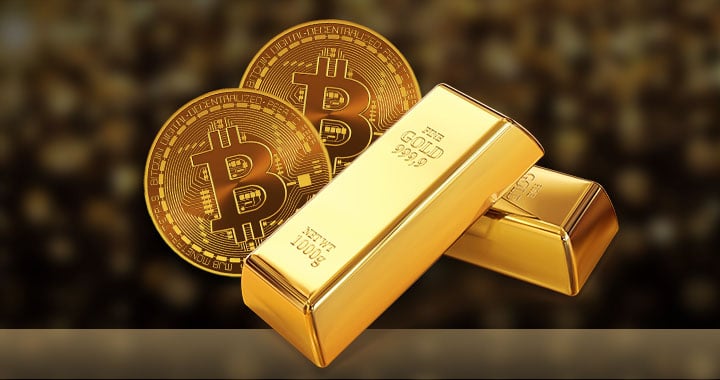
Why We Need Gold and Bitcoin

gsiexchange.com
Image result for Why We Need Gold and Bitcoin
In today’s digital age, we live in two worlds: the physical world and the virtual world.
The virtual world cannot exist without the physical world (power outages will attest to this).
But we cannot exist in today’s physical world without the virtual world (digital technology has embedded itself into every aspect of life from personal to social to commercial, etc.).
Money, too, now exists in both worlds as cash and metals are being digitized.
The problem: government and banks are finding ways to make the digitization of money work toward their interests and advantages…at the expense of the people (e.g. the “war on cash”).
Government’s monopoly over the creation, distribution, and regulation of fiat currency works against the principles of a free market.
“Free market” entails the “freedom” to use and hold any form of money that fulfills the demands of the market. The notion of a free society also implies the individual’s right to “privacy” (including transactions and asset holdings).  
Government has severely restricted the freedom and privacy of individuals to conduct transactions and hold assets.
Government has monopolized money, making the manipulation, management, and artificial creation of money its sole privilege. This is government’s way of saying to its people: we can manage your wealth better than you can manage it yourself.
Image result for we need both: Gold and Bitcoin
Gold and Bitcoin (and other acceptable “altcoins”) exist beyond this restrictive system.
Both operate outside the corruptive influence of government and central bank intervention and control.
Intrinsic Value: gold has physical intrinsic value—a commodity itself that has value beyond its currency value. Bitcoin’s intrinsic value is its generative process (algorithm) and coin limit as well as its underlying technological features and applications.
Scarcity: unlike fiat currency, gold is physically mined and finite; Bitcoin (and a few other altcoins) is algorithmically mined and finite.
Inflation Hedge: both gold and Bitcoin  are hedges against the inflationary degradation of fiat currency.
Universal Means of Exchange: gold and Bitcoin are recognized and exchanged across international lines.
Forgery-Proof: the quantity of gold can be reduced, but its material composition cannot be forged; Bitcoin cannot be forged.
Risk of Confiscation: it would be impossible for the government to confiscate your privately-owned “physical” gold; such a scenario would be virtually impossible with regard to cryptocurrencies. In contrast, digitized currency and metals (via CUSIP) can easily be tracked, monitored, taxed, and seized.
Gold is the ultimate measure of value in the physical monetary domain; Bitcoin and altcoins rule the digital monetary domain.
Wealth in today’s world means owning assets in the form of “sound” physical and virtual money.

Saturday, 11 January 2020

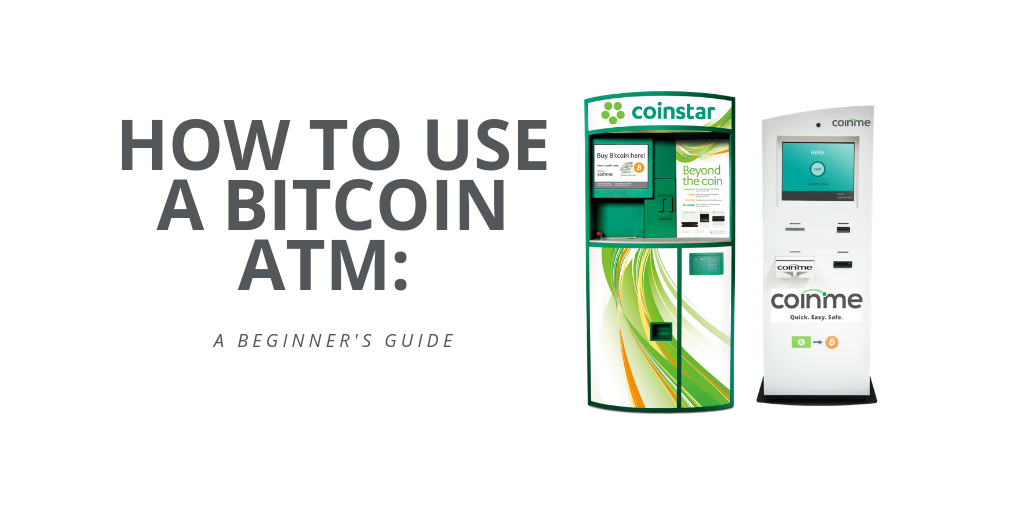
How To Use A Bitcoin ATM: A Beginner’s Guide

coinme.com
Image result for How To Use A Bitcoin ATM: A Beginner’s Guide
How did you first hear about bitcoin? Maybe you saw a story on the news and did some research. Perhaps a friend or family member told you about it, and you were intrigued. You might have even seen a bitcoin ATM in your local mall or grocery store and decided to check it out. 
No matter how you heard about bitcoin, you probably realize by now that bitcoin is here to stay. However, the steps involved in making your first purchase can appear to be daunting. But don’t worry!
In this blog post, we will explain the basics of bitcoin ATMs and kiosks and help you find your nearest kiosk. Most of all, we will give you the confidence to make your bitcoin purchase and join the financial system of the future!

What is a Bitcoin ATM?

Bitcoin ATMs and kiosks are much like the standard ATMs you see every day. When you deposit cash into a traditional ATM, you enter your debit card first to access your account. Once you have finished depositing money into the ATM (minus any transaction fees) it’s credited into your bank account.

Image result for How To Use A Bitcoin ATM: A Beginner’s Guide
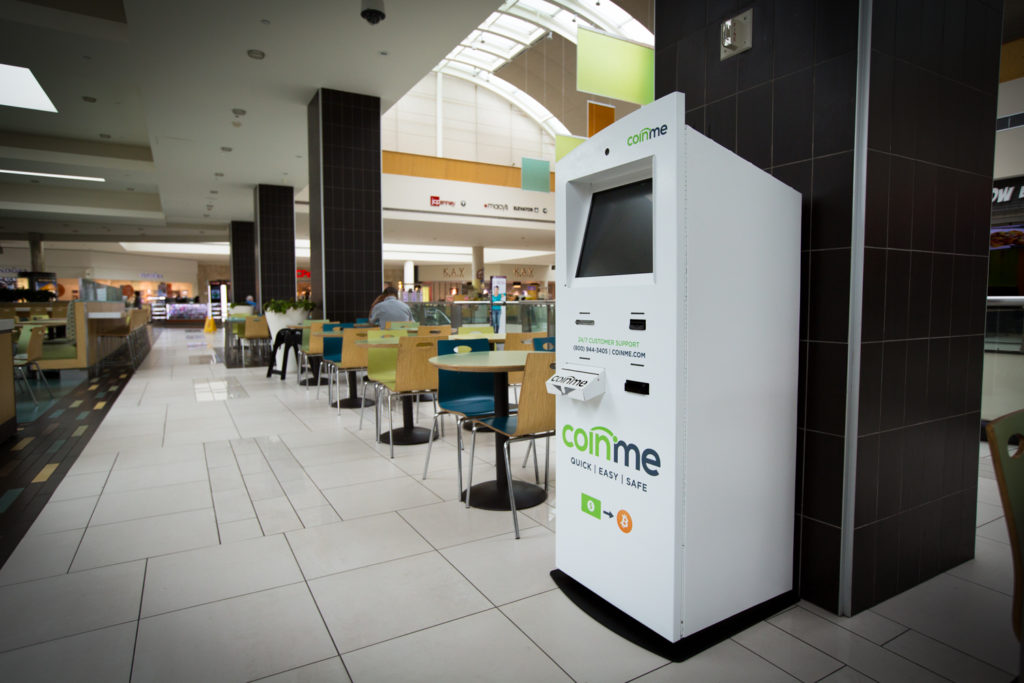
A Coinme ATM in a local shopping center
Bitcoin ATMs and kiosks work very much the same way with a few simple differences. Instead of a debit card, you typically scan or show your government-issued ID or enter your phone number, so the ATM or kiosk can verify where to send the bitcoin. Much like a traditional ATM, you will insert cash bills into the machine, but instead of depositing U.S dollars, it automatically exchanges that money for the equivalent amount of bitcoin. 
When using a bitcoin ATM, like a Coinme for example, you will receive a deposit of bitcoin directly into your digital wallet (which operates much like your bank account, but for storing digital currency like bitcoin.) When you are using a Bitcoin kiosk, such as a Coinstar kiosk powered by Coinme, you receive a redemption code on your receipt that you must enter online later to receive your bitcoin. 
Some Bitcoin ATMs also offer two-way functionality which allows for you to do the same transaction in reverse: Withdraw bitcoin that is immediately exchanged into US dollars that are then dispensed from that ATM.

How Do I Use A Bitcoin ATM?

Using a bitcoin ATM or kiosk is quite simple and often offers the easiest and most secure way to purchase bitcoin for cash. The screen itself typically provides a step-by-step tutorial, but for this article, we will show you how simple it is using a Coinstar kiosk, powered by Coinme.
When you approach the kiosk, you simple hit get started and select the option that says “Buy Bitcoin. After you review the brief terms and conditions, you are directed to enter your phone number. This part of the process ensures your security and links your phone number to the bitcoin purchase so no one else can gain access to your bitcoin. 
https://www.youtube.com/watch?v=P8ufuZZ9RUU
After that is complete, you will see on the screen the exchange rate for your bitcoin purchase, and you can then enter your dollar bills into the bill acceptor. Typically this is down and to the right of the screen. Once you have inserted all your bills, you can verify the amount entered and hit the buy bitcoin button on the lower, right-hand side of the screen. 
Once you have finished your purchase, the kiosk will print out your receipt. This is important to keep safe and secure, as it does include your bitcoin redemption code. As we mentioned above, you will need to visit Coinme.com/redeem and enter that code along with your phone number to have your bitcoin deposited into your digital wallet.

What Do I Do Next?

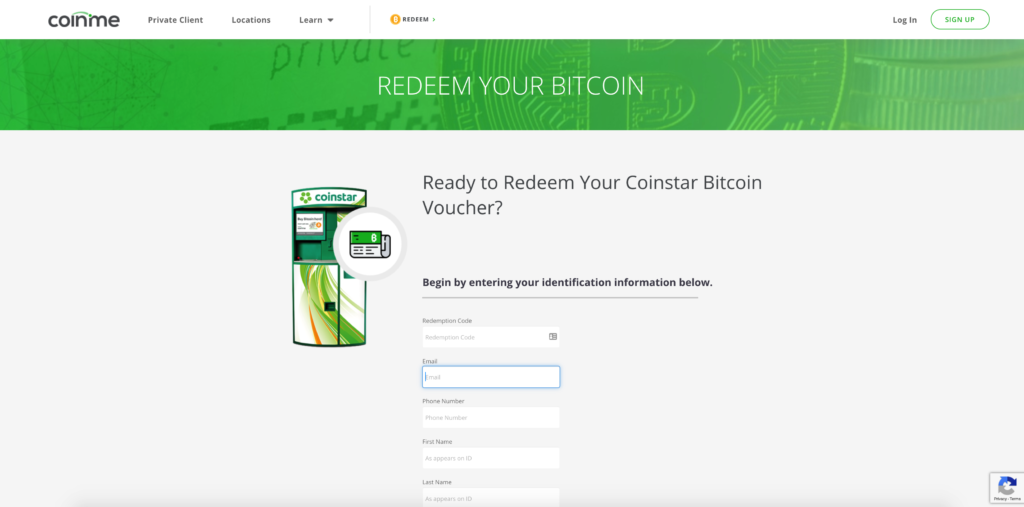
After you have finished purchasing your bitcoin, the process of redeeming the voucher is simple as well. Once you have your receipt, you can visit Coinme.com/redeem and begin the redemption process. 
After you have entered in the needed information, you will be directed to create your very own Coinme wallet. Follow the step-by-step guide on your laptop or cell phone. The entire process is simple, secure, and should only take a few moments. After that process is complete, you will be able to see your bitcoin balance in your Coinme wallet.
Redeeming your Bitcoin voucher is simple and easy with Coinme

If you are already a Coinme customer, log in to your Coinme Wallet and click on the tab that says “Redeem.” Enter your phone number and the redemption code you received at the kiosk. You can then return to the main account page, and your balance will reflect the purchase you just made. 

Is A Bitcoin ATM Safe?

While this does vary based on the company operating the machine, customer safety is a primary area of focus for Coinme. We take multiple steps to ensure the security of your account including ATM and kiosk locations and service and support from our team.
We have a dedicated team of developers and engineers continually looking at all aspects of machine security, providing a safe and secure user experience for all of our customers. Our support team is also available Monday through Saturday from 8 am to 7 pm PT.
We also ensure our ATMs and kiosks are in well-lit, public spaces like shopping malls and grocery stores, providing a safe and secure user experience for everyone.

Are Bitcoin ATMs Legal?

Bitcoin ATMs are legal to use, however, there are levels of regulations on both the federal and state level for ATM and kiosk companies to operate legally in the United States.
The primary federal law is Bank Secrecy Act (BSA) and operators like Coinme need to register with the Financial Crimes Enforcement Network or FinCEN and have Anti-Money Laundering (AML) and Know Your Customer (KYC) programs in place. State-level regulation varies from state to state, but typically, operators must register for money transmitter license (MTL) or as a money service business (MSB).
Coinme is proud to have been the first licensed Bitcoin ATM company in the United States and as part of our commitment to safety and security, all customers must submit their ID’s through our KYC verification process. The purpose of this program is to help prevent money laundering and other financial crimes and it adds an extra layer of security by ensuring no one but you can gain access to your account.

How Do I Find A Bitcoin ATM?

Bitcoin ATMs and kiosks have grown in popularity in recent years, making it easier than ever to find a location close to you. While there are websites like CoinATMRadar that show you ATMs based on your location, not all ATMs and kiosks listed are licensed and operating legally.
Coinme is the first licensed Bitcoin ATM company in the United States and thanks to our collaboration with Coinstar we now operate the largest bitcoin kiosk network in the United States with over 2,500 locations across 21 states and the District of Columbia.
To find the nearest location to you, visit Coinme.com/Locations  and enter your location into the search bar. You will find the closest location to you and can even click further to receive detailed directions via Google Maps. 

Conclusion

You now hopefully have the knowledge and confidence to make your first purchase at a bitcoin ATM or kiosk!
Hopefully, you will share your knowledge with others so everyone so your friends and family will also be able to join the financial system of the future safely and securely. 
This article originally appeared on coinme.com

Monday, 6 January 2020

Cryptocurrencies: A Pipe Dream Investment

gsiexchange.com
Image result for Cryptocurrencies: A Pipe Dream Investment
Investors across the globe have invested nearly $57 BILLION into cryptocurrencies
Among the 100 cryptocurrencies that make up this total market capitalization, Bitcoin, the most popular of these alternative currencies, makes up roughly 50% of this entire volume (over $28 billion).
Bitcoin’s market cap is so large that if it were a country, it would take its place among the top 50 nations in the world, according to World Bank statistics.
But despite the increasing popularity of these alternative monies, the question remains: are they sound? Can they even be considered as legitimate money? Sure, cryptocurrencies obviously have “money-ness,” at least enough to be used as a medium of exchange. But placing the speculative impulse aside, are cryptocurrencies sound money investments?
Before we answer this question, let’s think for a moment about why cryptocurrencies exist, how they actually function, and why their emergence has been greeted with such an immediate surge of interest and hasty investment.
Cryptocurrencies reflect a genuine need that fiat money cannot satisfy
Cryptocurrency demand has seen a tremendous rise, and for a good reason: people want to use money that  cannot be manipulated so easily by governments; money that cannot be artificially created or inflated; money that is not subject to coercive government taxing and control.
It’s about exercising free choice and possessing assets that exist beyond the reach of government control. People are simply tired of the Federal Reserve’s ineffective monopoly over the US Dollar. They want something better; something that stands apart from government’s interventionist tendencies.
In short, cryptocurrencies exist because people have lost faith in government-issued and government-controlled fiat money. People want “good money.” And there’s no other compelling reason for this rise in cryptocurrency demand.
But are cryptocurrencies money?
Here is where cryptocurrency experts have it all wrong: electronic money will most likely never replace fiat money or sound (commodity) money. People who think otherwise have a gross misunderstanding of the nature of money, how it functions, and how it becomes a common medium of exchange.
Throughout history, robust forms of money started as an actual commodity with a pre-existing exchange value. From its value as a barter item, a commodity then became a medium of exchange. It still had its value as a commodity, but it now has a second value to facilitate transactions for other commodities. The main point, all robust forms of money started as a commodity with a pre-existing exchange value.
Fast forward to the future, some commodity money–such as gold and silver–became more frequently used for their purchasing power rather than for their original commodity use (e.g. to make jewelry or to use for industrial purposes). This is why paper money, such as the US Dollar, is still used as a means of exchange despite it not being an actual commodity: people are aware of its purchasing power from when it once represented gold. Consequently, government manipulation of paper money has also weakened people’s view of this historical link in value.
In stark contrast to commodity money, cryptocurrencies have no form, shape, or weight–they are neither visible nor tangible. They have no pre-existing exchange value nor do they have a pre-existing use value (they are not, nor were they ever, “commodities”).
The only real measure of cryptocurrency value is its convertibility into paper currency. And paper currency itself is already an unsound medium of exchange.
So are cryptocurrencies money? The answer is a resounding NO! Instead, cryptocurrencies are merely a way of deploying paper money.
THIS MAKES CRYPTOCURRENCY INVESTMENT NOTHING MORE THAN A MERE PIPE DREAM.
Enter the Colored Bitcoin – a gold substitute
Recently, collective efforts have been made to create a gold-backed bitcoin. They are called “colored bitcoins.” To buy colored bitcoins, you have to first buy the gold to back it. Again: you first have to buy gold. A colored bitcoin is a “gold substitute.” Of course, you can imagine that transactions of various sizes or amounts may prove challenging, especially if physical gold has to be delivered for payment.
Better to stick with the real thing
If bitcoin’s reliability as money is held up by people’s faith in its ability to deploy or convert into paper currency, then its extreme volatility demonstrates the instability of that faith. And if bitcoin is the most liquid of all cryptocurrencies, then how much more unstable might be the other 99 competing cryptocurrencies?
Perhaps gold- or silver-backed cryptocurrencies may one day become a more reliable form of sound money. But you have to remember that its reliability will stem solely from the value of gold and silver–metals that you have to own in the first place in order to convert into something less stable.

Sunday, 5 January 2020

What is CRO (Conversion Rate Optimization)?

jefflenney.com
Image result for What is CRO (Conversion Rate Optimization)? jefflenny
As a full-time Affiliate ​Marketer, I've been ​utilizing CRO ​(conversion rate optimization) along with my SEO strategies for quite a few years now, with mind-blowing results.
It blows me away when I come across websites online that seem to "tick" all the right boxes when it comes to SEO, but their content strategy and CRO is pure horse-shit.
I've had online campaigns that have made me $250,000 in pure profit in just 7-Days time, not because I'm some sort of marketing genius (I'm really not), but because I was smart enough to incorporate CRO into what I was doing.
​Believe it or not, CRO does NOT take a lot of time, ​and the results of your ​work can easily 10x or more your profit margin.  
So, let's cut to the chase:

What is CRO ​Exactly?

In simplest terms, CRO describes the percentage of visitors to a website that becomes actual customers. The more customers, the better - naturally. 
In the online world numbers are everything. The more people that visit your website, the more potential customers you have.
For a lot of people, CRO is simply testing your forms and CTA's, but there is really quite a bit more to it than just that.

But having people visit your website isn't enough.

In this post, I'm going to address CRO from simply a blogging perspective.  I'm not going to go into the A/B testing and CTAs etc just yet.
Having a lot of traffic won't do you a whole lot of good if you're trying to make money with your website, but not optimizing properly for your traffic.
I can break down CRO into 2 very simple steps:
  1. What you need is to find a way to get as high of a percentage of site visitors as possible to become customers.
  2. The higher percentage of site visitors that become customers, the more money your online business is going to make.
It really is that simple.
Unfortunately, improving your CRO isn't as simple as wanting to do it.
You need to employ strategies designed to get site visitors to follow through and become paying customers.
Once you learn these strategies you will be able to maximize your profits and help your business to grow and thrive.

1. Make A Human Audience Your Priority ​

Image result for human audience
You need to implement an SEO strategy for your website.
​SEO is short for ​Search ​Engine ​Optimization. 
Basically, it's a way of arranging text and media on your website in a way that helps it to attract the attention of search engines. SEO is important for getting your business noticed. 
However, it shouldn't be the only thing that you focus on when putting content on your website.
Content that has been search engine optimized may be great at attracting the attention of search engines, but it's not often the best means of keeping the attention of visitors once you get to your site.
​Because of this, it's more important to focus on providing content that makes sense when read that it is ensuring that is is search engine optimized.
After all, if you keep visitors to your website interested then they are going to be much more likely to become a paying customer.

2. Provide Content That Is Useful And Integrates Conversion Links

Image result for What is CRO (Conversion Rate Optimization)? jefflenny
If you want visitors to your site to become customers then you need to give them something of value.
That means you need to provide them with content that they enjoy reading while also teaching them about the subject matter.
In addition to providing them with great content, you should also take care when placing links in that content that will lead them to become a customer.

What you ​DON'T want to do is to put a button or bold piece of text asking people to click on it.

Instead, you should make a keyword in the text a link that leads a site visitor to a portion of your website that will get them to become a source of income for you.
This approach is much more interesting than blatantly inviting them to click on a link. In this way, you are encouraging them to become a customer instead of outright asking them.
You also want to be sure to keep the links relevant to the content they're being placed in.
For example, those wanting to learn affiliate marketing may not be ideal for a post like this on CRO
​Instead, I'd want to ​present an offer that teaches advanced SEO and CRO Techniques, such as Robbie Richards SEO Playbook​ (which is also probably THE best course on SEO I've ever taken).

3. Use Photos, Graphics, Videos, And Other Visuals To Make Your Website More Interesting

If you want to get someone who clicks on your site to turn back quickly, then, by all means, have a boring website that presents ​the info in the form of giant blocks of text.
Boring Bored GIF - Boring Bored Yawn GIFs
Or, if you want a business that has an actual chance of succeeding then do the exact opposite of this. If there is one thing to remember about the online world it's that there is a huge amount of competition out there. ​
No matter what niche your online business occupies, there are going to be other businesses that are in the same niche that are fighting you for the same customers.
What you have to do is to make certain that your website is as interesting as possible.
How do you do that? ​
You do it by breaking up all of that text with visuals, like I'm doing with this very post.
Photos, graphics, and any other type of visual​ are great ways to capture the attention of someone visiting your website, while also breaking up the giant wall of text that will drive most people in the opposite direction.
The content you provide has to be compelling, but it also has to be visually appealing to the people that visit your site.  Study any post on my website (well, the newer ones) and you'll see exactly what I mean.
If your site doesn't use visuals to break up text, then you can bet your competitors probably are.
That means that they will likely be stealing business from you, which is the last thing you want.

4. Keep Your Website On Point

When you first decide to launch an online business your first instinct may be to try to capture as many visitors as possible by expanding the subject matter your site covers.
For example, if you have a website about camping equipment you may be tempted to expand into survival gear, then self-defense gear etc. While this may seem like a good idea, in theory, the reality is that doing this can actually decrease the amount of traffic your website gets.
How can trying to reach a wider audience decrease the number of visitors to your website?
Think about this, how often do you sit down and type in the web address for a site you are trying to visit if you have never visited that site before?
Your answer would probably be rarely, or even never.
So you use a search engine to find the type of websites you are interested in just like the rest of the population does.
The point here is that you, and everyone else that uses the internet, rely on search engines to find what you are looking for.
Do you know what the web crawlers that search engines use like when they are looking for a website? They like websites that are focused on their niche and that provide relevant well-organized content.
Not only will keeping your website focused attract more visitors to your site, it will attract the right kind of visitors.
When Someone Obnoxious Tries To Explain Themselves GIF - TheOffice MichaelScott SteveCarell GIFs
It will attract visitors to your site that are interested in the subject matter of your site, which means that they will be more likely to become paying customers.
So by keeping your website focused, you can actually really move the need in a positive direction in regards to how many visitors to your website become a source of revenue for you.

Monday, 30 December 2019

The Commodity/Cryptocurrency Evolution is Upon Us

gsiexchange.com
Image result for The Commodity/Cryptocurrency Evolution is Upon Us
2017 marks that year in which cryptocurrencies finally penetrated mainstream consciousness. A victory lap for the cypherpunk culture that pioneered its foundational technologies and underlying philosophy over twenty years ago? Sort of, but not quite.
A schism took place in the perception of the technology itself, widening the gap between two of its primary attributes: blockchain vs. digital currency; function vs. asset; categorical stasis vs. disruptive innovation.
On the one hand, blockchain’s multi-industrial applications gained immediate recognition. Corporations and governments were eager to explore blockchain capabilities to enhance or innovate their current processes and operations.
On the other hand, cryptocurrencies became less of a technological embodiment of libertarian free-market ideals, instead of becoming a vehicle for reckless speculation. A few governments were willing to regulate cryptocurrency speculation and investment; even fewer embraced them.
The irony of this last point is that government oversight and regulation–which the mainstream public seemed to be clamoring for–are exactly the things that the early cypherpunks were fervently working to oppose.
But let’s get back to the topic of crypto speculation. The appropriation or “hijacking” of any product, service, or “brand” is not an uncommon phenomenon; in fact, it happens all of the time, to the extent that it may even constitute a natural part of the product cycle.
But in the case of cryptos, its capacity as a “gaming” object (a wager; gamble) has diverted attention away from its original goal to establish a legitimate alternative currency system; one that is not subject to central bank manipulation or control.
Image result for The Commodity/Cryptocurrency Evolution is Upon Us
The exception to this appropriation is, of course, the HODLers, another word for the long-term devotees (“holders) whose investments stem from a more idealistic view of cryptocurrency’s future monetary potential.
So, what’s next with cryptocurrency? What might its next iteration–its next evolutionary step–look like?
Here’s the real question: what do cryptocurrencies need to transform from an object of speculation to a formidable challenge to “monopolized money”?
Okay, let’s get down to the crux of the matter. There are many characteristics that collectively “define” money (e.g., a unit of account, store of value, etc.). Fine. All are valid.
But ultimately, what matters most is that money maintains a stable level of “purchasing power.” Money is synonymous with purchasing power. Without purchasing power, money is useless.
Cryptocurrencies need a more widely accepted form of purchasing power.
Sure, cryptocurrencies (or rather, “blockchain”) may serve well as a unit of account, and perhaps a store of value depending on the outcome of a given altcoin. Cryptos are storable, transportable, and divisible.
Cryptos also provide heightened privacy and security, inflationary protection, decentralization, and independence from central bank intervention; all of these attributes positive; all more promising than the fiat system. Yet, cryptocurrencies don’t have the same level of purchasing power as cash. And that’s an issue.
So to answer the question–what might be the next evolution in the crypto space?–the answer is obvious if you compare the obvious need against the glaring absence: purchasing power.
In other words…
Cryptocurrencies backed by real assets–ideally gold and silver, but also industrial commodities, perhaps even “services”–may constitute the final iteration of an asset class whose potential to challenge and overtake fiat currency is almost 100% complete.

Wednesday, 27 November 2019

Exploring the Impossibility of Full Decentralization

This article is originally published in Albaron Ventures 
In our quest to escape from existing corrupt centralized systems, we may believe that it’s possible to achieve complete decentralization. However, recent academic research shows that this is unfeasible — at least sustainably.
For example, Bitcoin’s Proof-of-Work (PoW) mechanism relies on many different nodes to “mine,” or verify and facilitate transactions. These miners are rewarded a portion of transaction fees and a shot at winning the Bitcoin block reward, which is currently 12.5 bitcoins or about $115,000– a not insignificant prize dished out about 144 times per day. 
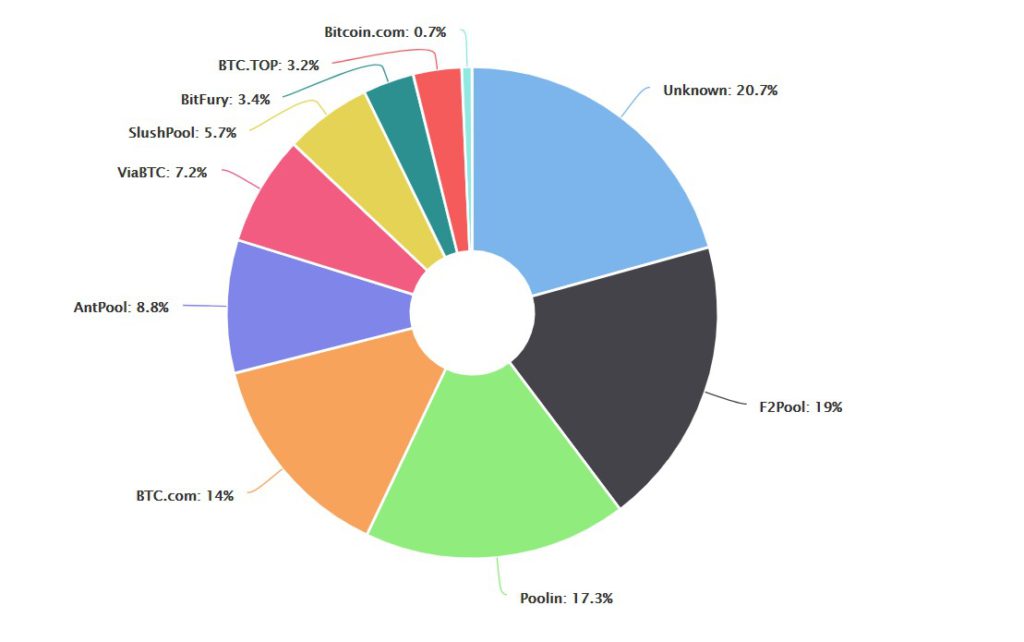
This has incentivized the creation of “mining pools,” or a collection of nodes that work together and divide the prize among the operators. Mining pools have taken what would otherwise be a decentralized utopia and coalesced a degree of centralization. The current state of Bitcoin mining is far from a single entity controlling the network with a  51% lion’s share, but it still highlights the downfalls of decentralization. 

Image via blockchain.com

There are cryptocurrencies that utilize different consensus mechanisms such as Proof-of-Stake and Delegated-Proof-of-Stake, and they manage to address some of Bitcoin’s drawbacks (such as high energy costs to mine), but they still leave the glaring decentralization issue. 
A particularly noteworthy concept is that Bitcoin, a network with no single individual party dictating its future, has gravitated towards centralization on its own. Centralized entities may receive some flak in the cryptocurrency and blockchain community, but they are at least able to enforce and control certain elements, a task nearly impossible for a theoretical, fully decentralized entity. 

Do we really need full decentralization?

The core tenet of decentralization, at least among the common blockchain ethos, is that decentralization insulates the network from tyranny and corruption, a duo that has plagued human governance and economics since the dawn of organized civilization. 
The same concepts that power Adam Smith’s “free market” philosophy that underpins modern economics encourage decentralization as long as every party is properly incentivized (mining rewards) and has access to somewhat similar resources (electricity, reasonable utility costs, etc) as the next. 
The glory of today’s blockchains isn’t so much derived from the idea of a utopian decentralization, but more so as a rebellion against the status quo of centralized banks dictating the economy, individuals being tethered to the success of their government, and the ability for large tech corporations and banks to shut down financial accounts at will. 
There are several degrees of “decentralization”, and even though not “perfect,” even smaller decentralization improvements can be disruptive to the existing “centralized” status quo. 
The goal is to figure out which areas will be impacted first; and which are the top use cases given the infrastructure’s properties (security, decentralization, scalability). 
For example, think of the idea of a decentralized “Uber,” a popular thought experiment in the blockchain entrepreneurial community. When someone needs a car to pick them up, what would they prefer: a nearly immediate connection to a driver courtesy of an efficient centralized server, or waiting for minutes and potentially hours for the transaction to be verified and processed? 

Final Thoughts

Although the push towards absolute decentralization is unfeasible, and in reality, decentralization benefits vary across use cases. Simply put, we don’t need decentralization for everything– centralization tends to work just fine for most things, and it shouldn’t be viewed as an enemy of what the blockchain movement seeks to accomplish. 
Ultimately, blockchain is simply just another technology to be leveraged to solve certain problems. 
Once upon a time, centralization was the solution to the disorganized chaos of the unpredictable. Our ancestors who lived in groups tended to live longer and better lives than individuals not in groups. 
These groups evolved into tribes that utilizes some form of centralization (leadership, hierarchy, enforced order) that protected its members and utilized resources more efficiently. Eventually, tribes expanded and, however indirectly, ended up becoming countries that function using the same centralized mechanics. 
Decentralization uses the evolution of the Internet and technological infrastructure to create systems that don’t require a centralized entity’s direct oversight. However, decentralized entities can only function within the scope of a centralized society.
Today’s projects are able to enjoy both the benefits of existing within the confines of a centralized society and the possibilities enabled by blockchain and the Internet. While full decentralization might be impossible, there’s no reason to fuss. 

The Best Affiliate Marketing Programs for 2019!

jefflenney.com
The Best Affiliate Programs
In this post I'm going to go into the Best Affiliate ​Programs for 2019 and beyond!
One of the BIGGEST Issues I find new Affiliate Marketers struggle with is WHAT products to promote, and where to find the best affiliate ​networks with the biggest payouts!
​That's why I created my most profitable niches ​blog post, and it's ​why I'm creating this one as well.
With so much BS, fluff and scams online these days, it's hard to tell what's legit...and what's not.
So - Without any Further Ado (Adu? Adoo? Adieu? How the hell do you spell it?)
Let's take a look at...​

​The Best Affiliate ​Programs

Finance/Investing/Trading Niche

One of the biggest markets in the world, and believe it or not - MOSTLY un-touched by affiliate marketers for some reason.  Maybe they're scared of it? I have no idea, enjoy! ðŸ™‚

​Regal Assets -​ ​​​#1 for Big Commissions (up to $30k​ Per Sale)

​When it comes to The Best Affiliate ​Programs in the financial space, Regal Assets is definitely at the top of my list.
​Regal Assets is ​​​one of the world's ​top rated investment companies and pioneers in alternative assets:  market investment in and purchasing of alternative asset classes including gold, precious metals, Bitcoin and other cryptocurrency for worldwide direct purchase investors, the vast US market of IRA and retirement account holders, the Canada market for RRSP and TFSA holders (precious metals only), worldwide high net worth individuals and families (HNWI), and more.
Regal provides landing pages galore, banners,  targeting and demographics info of their buyers, winning KEYWORDS from PPC Campaigns, and even a Mentorship Program for Affiliates that would like 1-on-1-help getting the ball rolling!
Regal Assets Affiliate Center
Here are some reasons you should become a Regal Assets affiliate:
  • ​ Life changing income potential: ​Up to $30,000+ commission for each referred customer transaction
  • ​Average sale = $65,000 = $1,950 commission; sales easily include 6 and sometimes 7 figures. (Their Target demo have money, and are actively looking to invest)
  • ​Up to 3% commission on the gross amount per sale, for all present and future customer sales
  • You are also paid $30 - $100 for each qualified lead​
  • Some affiliates have made $40,000+ to $100,000+ commissions in a single month
  • ​Lifetime revenue share on ALL customer transactions
>>> ​Become an Affiliate Here: https://www.regalgoldaffiliates.com/

​eToro - Over $87M Paid to Affiliates So Far!

​eToro is the world’s leading social trading platform, which offers both investing in stocks and cryptocurrencies, as well as trading CFD with different underlying assets.  They're another solid contender for my ​Affiliate ​Programs list!
  • ​Promote a trusted broker regulated by CySEC, FCAGet
  • Get Support from their experienced Affiliate and IB Managers who are dedicated to your success
  • High Performing and unique banners, landing pages, Videos, E-Mails and widgets
  • Enjoy a great self-converting product
  • ​Detailed Reporting, fast and simple to use
  • New! Gain a competitive edge with the help of ​their education center

​Capitalist Exploits Insider Program -Up to $1,750 Per Sale!

​The ​Capitalist Exploits Insider referral program presents you with a way to monetize your website audience or list effectively. Unlike other referral programs which require a high volume of referrals for it to be profitable, ​they've designed ​their referral program to be attractive to partners for the following reasons:
  • A high payout, meaning you don’t need to refer thousands of people per month to make it worth your while
  • ​They’ll help you with material, promotions and campaigns
  • ​Their product is unique, so you will not be cannibalizing your audience
  • ​I love that they understand that a referral reflects on you and your brand. You’ll never feel as though you are recommending a product for the money only – ​their product and reputation speak for themselves.

Blogging/Make Money Online Niche

This is where I got my start online back in 2007 when I started tinkering with Affiliate Marketing.  The MMO (Make Money Online) Space is Evergreen, meaning it's probably not going anywhere for a long, long time.
Below, I've listed out some of the BEST MMO and Blogger friendly types of affiliate programs and companies!

​Clickfunnels - #1 in the Make Money Online ​Space

Not only does Clickfunnels provide amazing FREE training for affiliates of all levels, but you ​can promote Clickfunnels for a cool 40% commission, ​AND ​you get paid on their back end offers and up-sells as well!
It's easy (and quite common) to earn thousands of dollars per day or week as an affiliate of theirs, you just need to put in the work first.  
​Clickfunnels offers a TON of Free Training for their affiliates, and have a daily plan to become a ​Clickfunnels super affiliate in just 100 Days! Join for free at ​​https://affiliatebootcamp.com​/
Clickfunnels Affiliate ​Benefits:​
​​>>> Join the Clickfunnels Affiliate Program here: ​https://whatsyourdreamcar.com​/

​Thrive Themes and Page Builders

​This is what I use for ALL of my websites now, and I've used it to improve my commissions 5 fold on affiliate sites in some cases.
I'm using ​the thrive focus theme, and the thrive architect page builder to (easily) design this blog post, and most other new ones you see on this site.
  • At Thrive Themes, ​they're obsessed with conversion rate optimization and customer happiness. 
  • As an affiliate, you can rest assured that ​they're working hard to convert any visitors you send us into customers who will be thrilled to stay with us for a long time.
  • ​Earn 35% of each Thrive Themes sale, plus 25% for recurring commissions.
  • ​Thrive University is a Virtual LIBRARY of Affiliate Blogs, Videos and Training on not only the thrive products, but marketing in general.  They really should charge for this stuff, but it's free to join!

Shopify -ECommerce Giant, Amazing Payouts!

Use your voice to inspire entrepreneurship with the Shopify Affiliate Program
  • Average of $58 Per User (Monthly), and $2,000 for each Shopify Plus Referral.
  • Save time and money on content creation by linking to blogs, webinars, video tutorials, tools, and automated funnels developed by Shopify for your audience.

WPX Hosting - Best WordPress Hosting on the Planet (I'm Not Kidding)

>>> https://WPXHosting.com/  (Click on the "Become a WPX Affiliate" link in the footer!)
I've used many different hosting companies before switching to WPX in 2018, and I haven't looked back since!
Not only should you promote them, but I recommend switching your hosting to them as well!
Their team (chat/email) usually responds within ​seconds (i'm not kidding) and are usually able to fix issues on the spot.
I've NEVER had better customer service with any company online, period.
More Reasons to Promote Them:
  • Up To $100 Commission Per Referral
  • Commission Payouts As Soon As 35 Days After Signup
  • Direct Skype Access To Your Affiliate Manager Mon-Fri
  • ​The Only Hosting Service Recommended By Thrive Themes
  • Unlimited FREE Let’s Encrypt SSL Certificates
  • ​Sub-30 Secs. Average Support Response Time
  • ‘Fixed For You’ Service: ​They Fix Technical Issues For ​their Customers
  • Enterprise-Level Ddos Protection
  • Free Unlimited Site Transfers Within 24h
  • USA & UK Hosting Locations

Health/Fitness Niche

Market Health - Health & Beauty Products (SkinCare)

MarketHealth ​claims to haveThe Leading Health and Beauty Affiliate Program since 1998.
Benefits:
  • ​Industries Highest Commissions: Work Direct with Market Health to ensure the highest payouts.  All of their offers are exclusive with the guaranteed top payout on the offer.
  • ​Highest Conversions: By being in tune with the latest product trends and customer behavior as well as utilizing real time optimization software, Market Health always has the offers and pages that convert.
  • Over 200 Health & Beauty Offers: For ​years Market Health has been the industry leader in the performance based Health and Beauty space. ​They manufacture, own, and operate over Health Beauty 200 products in over 100 countries.
  • Reoccurring Income: Cash In On Product Subscriptions ​- The money doesn't stop once you had made a sale. ​You can earn recurring income on remarketing to customers via newsletters and coupon offers.
  • ​Free Resources - Landers, Banners & More​: In addition to providing a complete advertising creative suite for all of ​their products, ​their in-house design team can be available for your custom needs.

Sell Health #1 Health Affiliate Network, Since 2001

​Benefits:
​​
  • Top commission payouts – up to $350+ per sale
  • Industry leading conversions of your referred traffic to sales
  • A dedicated Affiliate Support Team, available by email and phone
  • In-demand products, sold with innovative, proven marketing collateral
  • Sophisticated affiliate order tracking & commission payouts
  • Commission payouts on fax, phone, and mail orders – not just Web
  • Accurate real-time statistics provided 24/7 on every sale you make
  • Friendly, responsive customer service
  • Some of the best product guarantees in the industry
  • Real people with real phone numbers to answer your questions

MoreNiche

Earn as much money as you’re willing to work for. Some of the highest commission rates in the industry and unrivaled support mean MoreNiche affiliates are earning more. The live earnings stats speak for themselves.

​Benefits:

  • ​​​​High Commissions - you can snag yourself between 30-80% commission per offer and pocket ongoing commissions from re-orders across all offers.
  • ​Lifetime Cookies -  Most affiliate networks only give you a measly 30-day cookie period. Which means if someone clicks your affiliate link, but doesn’t actually buy within 30 days, you get nothing. Boo! ​MoreNiche gives you lifetime cookies. Which means it doesn’t matter if someone buys weeks, months, or years down the line after clicking your affiliate link, you’ll still bag your commission. ​
  • High Converting, Global Offers  - They’ve got offers in the health, weight loss, beauty, skin care, male enhancement, fitness and bodybuilding industries.
  • Unlike other networks, you won’t find hundreds of offers. Because ​they believe you deserve quality over quantity. Keeping ​their offers pool lower means ​their traffic and conversion teams can give each individual brand the ongoing attention it needs to continue performing highly. ​​
  • A Ton More, read them at https://moreniche.com/why-moreniche/

​​Multi-​Niche Affiliate Networks

Unlike the above Affiliate Programs which are product specific, the below are more "general" affiliate networks, many with HUNDREDS of offers available to promote in a variety of niches.
(If you're still stuck on picking a niche, check out my Top Niches Article)

Clickbank

Clickbank is a MAJOR Affiliate Company, and the FIRST one I ever joined as a complete newbie in 2007 or so.
They hundreds ​of digital products (e-books, training videos, etc) in ​a huge variety of categories.
​They also offer Clickbank University, which is geared towards helping newbies make their first dollar, and then some online.

​​Amazon Associate Program

They don't really need an introduction, the LARGEST shopping website on Earth has a pretty decent affiliate program too! I made $4,000 this past month with them with 2 old websites I set up a year ago, so it's fairly passive for me since doing the work to get it built.
  • Free & Easy to Join
  • MASSIVE Product Catalog
  • Most commissions are on the lower side (2-8%), BUT amazon tends to convert somewhere between 3-10% of all users for at least one purchase .

​ShareASale

​This is another one I signed up for "back in the day" when I first started, I believe I was promoting Youtube Recording Software, and iPhone 5s Cases at the time! LOL
Anyway, Shareasale literally partners with THOUSANDS of different vendors online, from Airlines, to Hotels, SAS (software) companies, sports gear, luxury stuff, Cell Phone Case Manufacturers, and a ton more.  At last count, they had around 5,000 Vendors, and growing every month.  

More Worth Looking at

​Anything I MISSED?

Let me know what niches you want info on or what affiliate networks or programs I should add to the list!
This is Version 1.0 - I will be updating this as I find new worthy networks! ðŸ™‚
One last thing...I put a lot of time into this, share or link back if you found it useful!