Friday, 21 May 2021

Facial Recognition Technology: Developments and Concerns


Corporate bodies and governments all around the world are discovering the endless benefits of facial recognition technology. As with every other ground-breaking technology, especially those relating to data, privacy concerns are often raised.

Over the past couple of years, airports authorities have increased the use of security cameras in their facilities not only for security reasons, but also to speed up identity verification for departures. Organizations on the other hand are harnessing several biometric solutions – including facial recognition technology in a bid to properly checkmate the menacing problem of cyberattacks.

Prospects of Facial Recognition Technology

A Mordor Intelligence report predicts that the facial recognition technology market is expected to rise from $4.51 billion in 2018 to $9 billion in 2024. This technology is expected to have attained massive adoption within the next couple of years because of its numerous advantages. A couple of them are:

        ability to match multiple IDs even in a crowded area;

        provides highly accurate results even when used from a distance and;

        real-time correspondence with databases.

Public fear over misuse of Personal Data

Matters regarding privacy, especially when it involves the government, never sits right with the general public – at least not since Edward Snowden’s revelation on surveillance concerning the NSA and the Facebook Analytica scandal which arose subsequent to the United States presidential election in 2016.

Data breaches, hacks and leaks have suddenly become the order of the day, leaving several people scared for their personal data. A lot of people are also concerned about how the data collected by applications, websites and institutions are handled and disposed of. The fear of personally identifiable information being used to commit fraud isn’t the primary concern for people these days.

Knowing fully well that their browsing history, social media likes, and content being consumed can all be warped up to form a close match to the behaviors and personality of an individual – is really what scares people. These data, when gathered from several users can be sold to advertising agencies or to some random person on the darkweb.

Using Blockchain Technology to Secure transactions and data

These numerous concerns have led researchers to explore the option of using blockchain technology to return the power of content control back to the users. Kairos believes in “Anonymous Digital Identity” for all – and in their opinion, the ability for users to verify important transactions with their digital identity is what sets the technology apart from the traditional networks used for storing data.

Just like Kairos, Aetsoft, a blockchain development company buttressed the security prowess of blockchain technology – characterizing it to be fast and secure. They highlighted the fact that the use of smart contracts can increase the effectiveness of the technology. Of course, the transactions and storages are secured with cryptography and a transaction trail that cannot be altered.

In Saudi Arabia however, the use of this blockchain facial security technology has been extended to other use-cases. This technology is being included in an authentication method for the use of ATM machines in the country. Some other ATMs now access blockchain network instead of the bank’s database and this helps in:

        protecting customers’ identity and;

        combating card fraud.

Stay Anonymous on the Web

The woes associated with this technology are numerous and it is only necessary that one doesn’t be a victim of the bad side of this technology. Hiding from online surveillance can truly be achieved through the use of encryption software.

It helps encode messages as they travel from sender to receiver. An application that does the job of this and more is a VPN. Apart from the traditional use of VPN which is to change IP addresses and offer anonymity, downloading a VPN can be used to hide your location and activity using encryption technology.

There are only so many individuals who can do concerning privacy regulations regarding the use of facial recognition software and personal data. The best that can be done is to endeavor to stay anonymous on the Internet and to keep clamoring for better reforms regarding the use of facial recognition technology.


Tuesday, 11 May 2021

Keeping Your Cryptocurrency Safe


Cryptocurrency has come a long way. So many people use currencies like Bitcoin for purchases and it is also a common investment instrument.

While this popularity is generally good, it has made cryptocurrency a target of criminals. What makes this particularly troubling is that it is close to impossible to recover stolen coins once they are gone.

While exchanges and cryptocurrency services have gotten better at security by using Infrastructure as Code tools and other measures, there is still some risk. If you are going to invest in cryptocurrency or even use it for spending, you need to take measures to keep it secure.

Don’t Use Wallets from Providers

Most exchanges will offer a free crypto wallet that comes with the account. These can be convenient because they are already connected to the exchange and it makes it easy to handle transactions. They are also attractive for people new to cryptocurrency because they are simple and they do not require any technical knowhow to set up.

As attractive as they are, the provider-hosted wallets are probably the least secure. The risk with these is that all of your information and security keys are secured on the provider’s server. If there is a breach, you could lose all of the currency you have stored in the wallet.

Research Cryptocurrency Wallets

If you are going to use cryptocurrency, a wallet is a necessity. Before using the free wallet from the exchange or signing up for the first digital wallet you find, you should do a little research to find out about different wallets and what they have to offer.

The first thing you need to understand is that the right wallet will depend on your needs. Some people might be served better by a hardware wallet and others might prefer one that operates from an app on their phone. Assess your needs, learn about the different wallets, and make an informed choice.

Cold Wallets and Hot Wallets

One point to consider is the difference between hot wallets and cold wallets. A hot wallet is what most people think of when they think of crypto wallets. It might be a web-based application or it could be an app housed on your phone or personal computer. A cold wallet is physical storage that is not connected to the internet.

Since they are not connected to the internet, cold wallets tend to be more secure. With that said, they are less convenient for making transactions. A cold wallet could be an encrypted USB device or it could be a paper crypto wallet.

Consider Hybrid Storage

You don’t have to choose between just one type of wallet. If you own a lot of cryptocurrency, it can be a good idea to go with a hybrid approach to storage. You could keep the bulk of your coins in a cold storage device while using a hot wallet for the convenience of day-to-day transactions and trading. You just need to evaluate your daily needs and then store the appropriate amount in the hot wallet while keeping the rest of your coins secure offline.

Strong Passwords and Two-Factor Authentication

Your cryptocurrency is only going to be as safe as you make it with your security keys. Create the strongest passwords possible and use two-factor authentication. You should also make sure to use different passwords for all of your accounts and change the passwords at least once a year.

You could also consider a password manager to ensure secure passwords for your crypto wallets and accounts. However, you will need to make sure to keep the master password secure. If the master password is compromised, it could have an impact on all of your accounts.

As a final point, make sure all of your devices are secure. If you are handling transactions on an insecure phone or laptop, something like a keylogger could be used to comprise your accounts. Make sure to follow the best practices for device security and install an antimalware program on any device that is used for cryptocurrency transactions.


Thursday, 6 May 2021

THE IMPORTANCE OF BRAND CONSISTENCY AND THE BASIC APPROACHES REQUIRED


Brands are signatory designs or symbols used to identify a company, line of product, or service. People can identify your brand using your logo, trademark, or slogan. Building brand consistency involves a steady pattern and regular practices such as elements, values, and brand strategy services (digital strategies and offline strategies) implored in publicizing the brand and winning the attention of your target audience.

Having a brand is one thing, and sustaining the trust of people in your brand is another thing, and you can only do that through brand consistency. You cannot be on one day and off in one week, or a yellow design today and a blue design tomorrow, and expect people to trust and stick to you. In publicizing your brand, digital marketing strategies such as email marketing, content marketing (e-books, articles, webinars, blog posts), video production, amongst others are taken into consideration. For professional guidance in brand consistency, you can employ the services of a digital strategy agency.

4 Importance Of Brand Consistency

Here are reasons why you should maintain brand consistency.

1.       Recognition

Consistency in branding makes it easy for people to notice or recognize your brand. It spreads the gospel of your brand so far that one can easily tell it from just a glance.

2.       Trust

People tend to prefer and trust brands that maintain quality to brands whose quality fluctuates. Naturally, people go for what they are sure of in terms of expectations to what they are not sure of. Consistency builds trust.

3.       Gives You An Edge Over Your Competitors

People only know who or what they often see and hear about. If you can regularly dish out things about your brand, especially with your trademark on it, you will be the best amongst your competitors.

4.       Builds A Connection Between Your Brand And The People

People patronize things based on what they feel about the product or services. If you can win the hearts of people towards your brand, then naturally they'll patronize you.

3 Basic Approaches To Brand Consistency

There are a number of things you can do to maintain brand consistency. Here, we'll be giving you the fundamental steps to take.

1.          Constantly Use Your Brand Symbol (Logo, Trademark, Or Design Element)

When marketing or publicizing your product using any of the digital strategies, ensure that your brand logo or design element is included; this helps to boost brand recognition. Nothing beats easy recognition of a brand at a glance. For example, when you see products, designs, videos, and text contents carrying the Apple logo, you don't need to be told that it is a product of Apple Inc.

2.       Ensure A Consistent Style Of Publication

Create a style guide for your Content and make sure that it is applied in all content creation and delivery; this applies to any form of marketing strategy you employ. Your style guide helps your employees know how and when to use your style. A typical example of a style guide is the Mozilla writing style guide. See to it that everything you publicize including images, emails, text contents, amongst others has a consistent style.

3.       Use A Consistent Brand Tone And Personality

When distributing content across all your offline and online channels, see to it that your brand tone and personality remain the same. If your brand depicts professionalism, ensure that your tone is formal, or professional across all your distribution channels.

If you are working towards building brand consistency, the basic approaches listed above are steps you must take to achieve positive outcomes. 


Thursday, 29 April 2021

The Most Influential Business People Driving Blockchain Adoption


Why has bitcoin's market valuation soared past $1 trillion? Why is cryptocurrency a $2 trillion asset class today? Why are people suddenly going bonkers over a meme coin named DOGE? Why are NFTs making front-page headlines on every major news daily?

Because of a few people who are putting their weight behind the digital asset space and directly influencing the growth of the blockchain industry.

But who are these people? We’re profiling five of the biggest names in the industry below!

Elon Musk


Elon Musk, CEO, Tesla, CTO, SpaceX, Source: CNBC

The suave and dapper CEO of Tesla, CEO, CTO, and chief designer of SpaceX, founder of The Boring Company, co-founder of Neuralink, and co-founder and initial co-chairman of OpenAI doesn't need any introduction.

Well, that was an introduction. Besides the said positions that Elon Musk holds, he is a long-term believer in cryptocurrency and blockchain technology.

Everyone in the crypto community is well-versedwith Elon Musk's Dogecoin obsession. Such are the effects of his tweets that people not owning any cryptocurrencies have started taking an active interest in crypto prices and markets. You know where they headed first, right? Of course, Dogecoin!


Source: https://twitter.com/elonmusk/status/1382552587099062272

Musk has garnered a reputation for being a straight-on DOGE "shiller." Thus, curious folks find themselves searching for "elon musk dogecoin investment" on Google. And not just DOGE.

Musk's company Tesla announced a $1.5 billion investment in bitcoin on its balance sheet more than two months back, along with the addition of BTC as a payment option for purchasing a new car. Musk and company understand that the cryptocurrency asset class is a great way to open up finance for all individuals irrespective of nationalities and geographies. Although we may never know whether or not Elon Musk does have any cryptocurrency, he indeed has pushed people enough to join the blockchain bandwagon.

Michael Saylor


Michael J Saylor, founder and CEO, MicroStrategy, Source: Wikipedia

Another business executive and American entrepreneur who took the world by storm with his company MicroStrategy's massive bet on bitcoin is Michael J. Saylor. But initially, the billionaire was a hardcore skeptic.


Source: https://twitter.com/michael_saylor/status/413478389329428480

His public disdain for BTC has now become ancient history. He admitted that his comments were unfounded (in an interview with CoinDesk last year):

"I went down the rabbit hole during COVID-19," Saylor said, admitting he "was wrong" to have doubted bitcoin back in the $600 range.

"I wish I knew then what I know now," he said.

Last year he kickstarted the massive institutional bitcoin investment and blockchain technology adoption drive, which inspired many other prominent corporations such as Jack Dorsey-led Square to add bitcoin to their balance sheets.

Michael Saylor has now become the poster boy of bitcoin institutional investment, and his reasons are pretty much logical. Unlike all fiat currency-based assets, BTC is deflationary as it has limited supply, and that the Bitcoin blockchain network is highly secure and permissionless. In the same interview with CoinDesk last September, Saylor expressed his "primary concern" is to "move away from the dollar."


Jack Dorsey


Jack Dorsey, founder, Twitter and Square, Source: Britannica

Jack Dorsey is the founder of social media giant Twitter and payments firm Square. Jack has been a bitcoin advocate for quite a long time.

Square's subsidiary firm Cash App has set an example in blockchain adoption in financial services by letting customers buy and sell bitcoin. Apart from this, the parent firm announced a $50 million investment in BTC, followed by an additional $170 million investment this year in February. And it just doesn't stop at bitcoin investment.

Square Crypto, the BTC focussed arm of Square, has established a record by giving out 26 grants to boost the development of Bitcoin and recently announced funding for the team behind a popular Bitcoin blockchain explorer.

Mr. Dorsey is behind all these developments. He recently partnered with popular musician Jay-Z to set up ₿trust, a 500 BTC endowment to fund bitcoin development and boost blockchainindustry growth. African and Indian teams will be the initial recipients of a chunk of the fund. The Silicon Valley-based billionaire tech entrepreneur has done and is still doing what it takes to boost crypto and blockchain adoption.

Recently, Mr. Dorsey sold his first tweet as an NFT for over $2.9 million, converted the proceeds to BTC, and donated to the GiveDirectly fund to help alleviate poverty in Africa. 

The Winklevoss Twins


The Winklevoss twins with the Gemini bus in New York City, Source: MarketWatch/Twitter

Losing the ownership of Facebook to Mark Zuckerberg didn't stop these two Olympic rowing and investor twins. Instead, they entered the cryptocurrency race intending to spur solid blockchain industry growth. In 2012, both bought bitcoins for $10 million when the top cryptocurrency's price was trending at around $8.

What followed is the cryptocurrency market's rise across nine years and the ballooning of the Winklevoss twins' worth, to the point (around $6 billion) that they have now made the Forbes list of global real-time billionaires. As per the latest accounts, both have invested in 25 crypto firms. Apart from their investments, Tyler and Cameron Winklevoss actively promote crypto purchase and adoption through Gemini, the cryptocurrency they own.

In a development that would make blockchain part of the banking industry, in October 2015, Gemini became one of the first cryptocurrency exchanges designated as a trust bank by the New York State Department of Financial Services.

The Winklevoss twins also support the current NFT trend through their acquisition of Nifty Gateway.

The twins ran "full bus" cryptocurrency advertisements encouraging people to buy BTC and other crypto assets and "fuel the open finance movement."

While these were all successful individuals who have helped elevate cryptocurrency and blockchain technology and advocated their adoption, certain firms are operating with the same goal.

AIKON is one such firm that specializes in providing secure blockchain identity services through ORE ID, its proprietaryblockchain authentication system. The AIKON team has partnered with AllianceBlock, which wants to enable anyone and anybody to benefit from secure access to the trillion-dollar capital market without having to jump through needless hoops to do so. AllianceBlock's objective is to build the world's first globally compliant blockchain-based capital market. ORE ID, which impresses on using blockchain for authentication, will play an instrumental role in the project's identity management system.

What becomes quite clear is that blockchain technology adoption is at a nascent stage. Of course, an increasing number of business bigshots are helping catapult the ecosystem to mainstream prominence. Still, the effects of their actions have barely covered the tip of the adoption iceberg.

There's a long way to go. This drop may seem minuscule and insignificant, but it will pave the way for the ocean's formation.


Wednesday, 28 April 2021

Soft Skills for Success: Identifying, Developing, & Selling

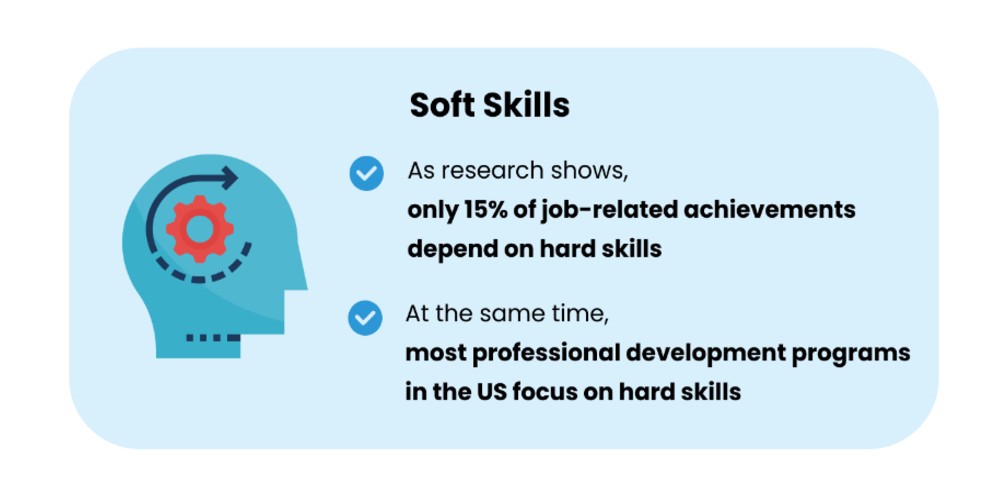
In 1918, the Carnegie Foundation published A Study of Engineering Education. This research found that only 15% of job-related achievements depend on a person’s knowledge and technical skills. As much as 85% of success in the workplace is due to soft skills. The irony of these numbers is that they are over 100 years old, but they still apply. 

Nowadays, workers are becoming more critical of the evolution of economics, the mechanization of manual labor, and the personalization of goods and commodities. Some have predicted that over 40% of business tasks will rely on robotic automation or AI by 2022.Meanwhile, more than 70% of professional development programs in America are focused on hard skills. Professionals are expected to dedicate their personal time and resources to develop soft skills.

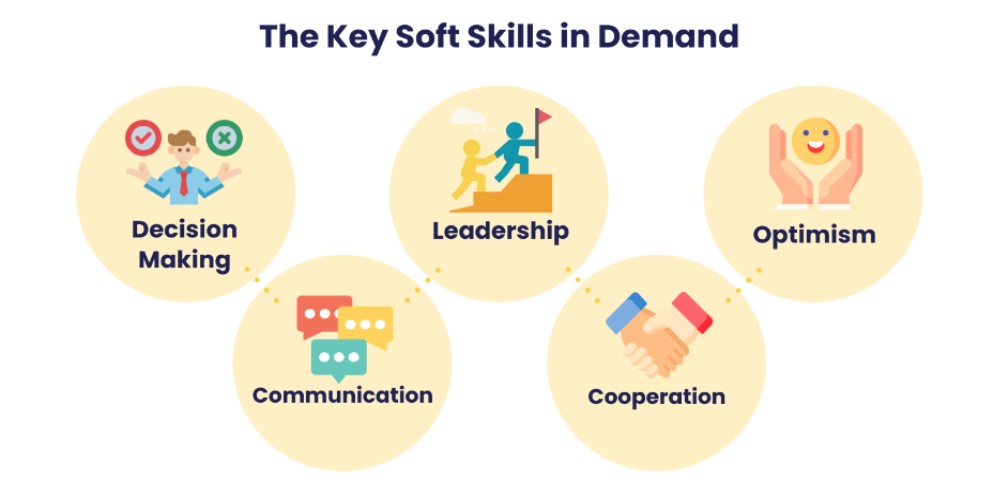
The key soft skills in demand are: decision making, communication, leadership, cooperation, and optimism.
  • What are the soft skills that are currently in high demand? 
  • How can you market your abilities to potential employers? 
  • How should you include your strengths in your resume? 
  • How can you develop your soft skills to become successful in life?

Below you will find detailed answers to these questions.

❓ What Are Soft Skills?

Soft skills are also called emotional intelligence, or EI. They measure how flexible, social, empathetic, and motivated you are. 

The easiest way to understand soft skills is by comparing them with hard (or “technical”) skills. Imagine you have a leaky faucet. You hire a plumbing specialist to fix it, but when the man enters, he does not greet you. When the work is done, he says, “Give me my money.” He leaves, slamming the door. Meanwhile, he did his job perfectly well. Would you hire him again? Not likely. You would probably look for another plumber with more emotional intelligence.

This fictional situation illustrates the importance of soft skills in daily life. A plumber’s ability to use the grip wrench is a hard skill. At the same time, his ability to communicate with his clients is a soft skill.

Why Are Soft Skills Important?

Companies hire people based on their qualifications and knowledge (i.e., hard skills), but they often dismiss employees because of a lack of soft skills. 

Emotional intelligence is essential in any environment. It makes you a comfortable speaker and an easy-going person. Strengthening your EI will help remove drama from your personal life and make you happier. 

Psychologists consider soft skills to be the opposite of hard skills, which are tangible and easily evaluated. People perceive EI as a set of subjective factors about a person, but this view doesn’t give them the importance they deserve. Due to their subjectiveness, soft skills are often disregarded during the hiring process. But, for example, it’s better for a manager to understand how to motivate people and organize teams than it is to have technical know-how. Hard skills can be learned, but no employee with poor soft skills can become a successful leader.

Modern Human Resource departments know that a professional with a lack of soft skills is like a time bomb. More often than not, candidates with less knowledge and professional history but greater emotional intelligence are chosen instead of more experienced candidates with fewer soft skills. Those with high EI know how to motivate themselves and inspire their coworkers. A healthy emotional atmosphere at the workplace increases the general productivity of any business.

🔑 The Key Soft Skills in Demand

Which qualities do you need to become a sought-after employee and a high-performance student? There are five groups of skills: decision-making, communication, leadership, cooperation, and optimism. Each is important and relates to the others in unique ways.

The key soft skills in demand are: decision making, communication, leadership, cooperation, and optimism.

Decision Making 

The bigger the company, the harder it is to control every decision. As an employee, if you can analyze a situation independently and find what works well and what doesn’t, then you are a valuable asset. According to a PayScale survey, more than 60% of graduates lack critical thinking skills. Developing this ability doubles your chances of getting a well-paid job. Problem-solving skills are mainly used as a synonym for critical thinking, but they include more aspects as well.

  1. Logical reasoning helps us to follow another person’s train of thought. With this skill, you can examine separate details and find a link between them. Logic also encourages you to remove your emotional perception in conflict situations. A cool, rational approach works better when the situation has escalated. When you are on the verge of losing your temper, try to examine the reasons for your anger. Logical thinking can help you to cool down and compose yourself, allowing you to make better decisions.
  2. Critical thinking helps us to find the pros and cons of any situation. Being skeptical of problems and their solutions develops your critical thinking skills and helps to find new, better ways of completing habitual tasks. 
  3. Curiosity is the least expected skill when it comes to decision making. Still, being curious keeps you open-minded and ready to practice empathy. Curious people search for innovative solutions to old problems, and as they say, where’s a will, there’s a way.  
  4. Creativity is intimately tied to curiosity. This skill helps you to combine ideas to develop new, unique solutions to common problems. To be creative, you must pay attention to details and practice introspection. Businesses often use brainstorming techniques to boost their employees’ creativity.

Communication

We learn to speak when we are about three years old, but we continue to develop our communication skills throughout our lifetime. To be an effective communicator, you need to understand the balance between what should and should not be said. A verbal exchange is only successful if each participant thoroughly conveys their thoughts and is correctly understood. Below, you can find a list of communication skills that are critical for both students and professionals.

  1. Non-verbal communication includes your body language, tone of voice, facial expression, etc. It is a powerful means to hold the attention of your audience. For this reason, non-verbal skills are essential for teachers, public figures, and any person who aspires to become a leader. The following abilities are important examples of non-verbal communication:
    • Posture
    • Expression
    • Mimics
    • Gestures
    • Active listening
  2. Verbal communication skills are used when you speak. They are critical for jobs that require extensive telephone and in-person communication, including customer service support, sales managers, HRs, and educators. For students, these soft skills often define academic performance. The following examples are essential to verbal communication:
    • Conversation etiquette
    • Articulation
    • Public speaking
    • Presentation
  3. Written communication is more than writing messages and emails. The ability to write well highlights your intelligence, and the opposite is true too. We almost always communicate through email or messages to arrange meetings or resolve follow-up questions. Thus, the following abilities help mold your image as a professional:
    • Emailing
    • Content management
    • Content strategy
    • Editing
    • Correspondence
    • Advertising
    • Speech writing
    • Business storytelling
  4. Conflict management is the most challenging skill to master. It involves resolving problems between other people whose behavior is hard to predict. Multinational companies always look for people who are able to reconcile conflicts, especially between cultures and worldviews. The following list details aspects of conflict management:  
    • Diplomacy
    • Politeness
    • Friendliness
    • Negotiation and persuasion
    • Open-mindedness
    • Empathy

Leadership 

A prominent leader has specific qualities that make them stand out, including the ability to motivate people, instill confidence in their team, and inspire their employees to do their job with passion. Leaders are ready to take risks and bear responsibility for the outcome. They are quick problem-solvers, which is crucial in today’s constantly changing world.

  1. Delegation is a skill that needs to be trained. Leaders who do not delegate tasks can quickly become overwhelmed and experience professional burnout. A proficient leader should know the strengths of their staff and be able to assign specific tasks to the right people.
  2. Integrity manifests itself in strong ethical and moral principles. Moreover, integrity facilitates mutual understanding between people, which benefits everyone. In business, it is essential to know what to expect from your leaders because they are the ones who dictate the rules.
  3. Coaching is important for leaders in terms of motivation. If you control your company’s performance by punishing those who fail to complete a task, your leadership is lacking. Proper coaching encourages your subordinates to overcome their obstacles. It makes people believe in their strengths and work on their weaknesses to become better professionals.
  4. Building relationships is a must for any leader. Our world depends on human interaction. The more people you know and can call upon in a complicated situation, the more successful you will be. This skill needs a long-term mindset, but it brings high dividends with it.
  5. Self-management is the ability to be your own boss. Time-management is a critical part of this skill. Successful leaders plan their days, weeks, and years. That is why you are often asked to include your plans for the distant future in your resume.

Cooperation

Very few jobs do not require cooperation. In most cases, you are supposed to engage in teamwork, whether you like it or not. The COVID-19 pandemic has taught us to cooperate online. The importance of time zones and geographic locations is fading. Employers expect you to recognize diversity and use it for the benefit of the team. You also should be able to give rational feedback and listen without becoming antagonistic.

  1. Teamwork means that you know how to distribute duties and take responsibility for your share of work. It also comprises the ability to work on the same task with other people. This is not always as simple as it seems. You often need to respect another person’s point of view and professional experience even when you disagree. 
  2. Feedback competence helps you to offer criticism politely and receive it about your work. We often overlook our flaws and mistakes. Detaching your mind from your emotions can reveal what needs improvement. 
  3. Diversity awareness means that you appreciate and understand the differences between people, including those with disabilities. The best approach is to ignore the traits that limit our communication and focus instead on our commonalities. Besides, most aspects of diversity contribute to curiosity and creativity.
  4. Corporate culture awareness is applicable to any situation in life that involves a group of people. Colleges also have their internal culture that their members recognize and observe. When in Rome, do as the Romans do.

Optimism

Optimism is contagious, often bringing a positive attitude to everyone around you. All the skills above are useless if you don’t believe in your success. The following features characterize an optimistic person.

  1. Respectability and respectfulness manifest themselves in the ways you treat people, and people treat you. They are often a consequence rather than a cause of optimism, but they can also be developed as skills. Show respect to others, establish your boundaries, and defend them.
  2. Friendliness makes you a pleasant interlocutor and a “nice person.” Being courteous and open to conversations with strangers can encourage people around you to be friendlier as well.
  3. Enthusiasm is often regarded as a trait you are born with, but it can also be developed with practice. It stems from the belief in a positive outcome as well as a proactive approach to life. Enthusiasm also depends on self-motivation and personal energy levels.
  4. Humor is a communication facilitator. It raises team spirits and makes any interaction more pleasant. Humor is one of the most complicated psychological techniques, but it can be learned

🚀 12 Ways to Develop Your Soft Skills

Is there a way to build soft skills? Yes, there are many ways, which will all help you become a more valuable professional and a better person. Emotional intelligence goes beyond the technical domain, so a textbook and a pen will not do for this purpose. Remember that soft skills are not optional; they are vital. Do not shift the responsibility for their development to your employer, teacher, or life coach. 

  1. Learn even when it seems like you’re wasting your time. All learning is cyclical. While improving any skill, you will come across many setbacks as well as successes. In either case, do not stop trying. Success is not equal to excellence, and a setback does not mean failure. 
  2. Communicate whenever you can. When you want to learn to play the piano, you play it over and over again. If you would like to acquire communication skills, you can do it only by practicing communication techniques. Ask people for help, how they spent their vacation, or about their interests. Evaluate the conversations later. What did you say correctly, and what could have been better? How clear was your message? Were your body language and tone of voice appropriate?
  3. Find a role model. Nobody is perfect, but some people have that mystical trait we call charisma. It seems they naturally know what to do in any given social environment. Their reactions are to the point, and they feel in their element. If you analyze their behavior patterns, you will find a lot worth learning. 
  4. Welcome any feedback. Most people receive feedback as unwanted advice. But if you are wise, you will accept it with appreciation. Not all feedback is accurate or worth analyzing, but you will know the difference. Every time someone comments on your work, think about what they said and what you can learn from their statement. Develop a plan for improving what they criticized. 
  5. Adapt to changes. Harvard Health Publishing recommends challenging your brain to help it grow. Our life is changing many times faster than the life of our grandparents did. Use this to your benefit and develop flexibility and open-mindedness. Adaptability is useful because it teaches you to invent alternative solutions to any issue. Dedicate your time to mastering new technologies. It will save you time later.
  6. Never avoid teamwork. For many of us, it seems more convenient to do everything on our own, but this means we don’t develop our ability to cooperate. You need to learn how to manage tasks and share responsibilities. Successful teamwork at college or university facilitates your learning process and teaches you a priceless skill for your future job. Cooperate with your classmates even when the teacher does not require you to do so. Share tasks and prepare presentations together.
  7. Build a network of relationships. Keep in touch with people with whom you feel comfortable. Most of the soft skills you use come from the relationships you have with your friends. Positive communication makes you a happier person and a skilled speaker. Extend your social circle through shared experiences. Large companies use this strategy at team building events. If you are a student, arrange extracurricular activities to strengthen and develop friendships. When you do something new together, you see how different personalities learn and how they react to various factors. This will help you as a future leader and professional.
  8. Leave your comfort zone as soon as possible. This does not mean moving to the woods and abandoning civilization. But it does mean that you should face your fears. If you are afraid of public speaking, attend the respective training courses. Meet new people, undertake new responsibilities and leadership roles. At work, placing yourself in an unfamiliar setting demonstrates your determination to your manager.
  9. Observe others. You already know which soft skills are essential for your emotional intelligence. Watch how other people cope with complicated life situations. Analyze their mistakes and do your best not to repeat them. Note how they interact with friends, relatives, coworkers, and classmates. Everyday communication is the best place to train your emotional intelligence. It’s a good idea to make a list of the people you know and their soft skills.  
  10. Analyze each conflict as a referee. Everyone has conflicts once in a while. If you analyze such cases like a psychologist, you will discover other people’s patterns and habits. This knowledge will help you settle complicated conflicts and remain on good terms with everyone. A peaceful environment fosters productivity in work and education. This method also trains your leadership abilities.
  11. Be a leader. To develop your leadership skills, it is not necessary to take a managerial position. Tell your instructor or manager that you want to lead a project or mentor newcomers. As a rule, few people want to dedicate time and effort to control the effectiveness of others and motivate them. This means, however, that you will never face much competition to take on those roles. Be proactive, and opportunities to develop your leadership skills will show up sooner than you expect.
  12. Commit to doing everything on time. Time management skills do not come by themselves. Some people develop them in childhood because of strict parenting. But not all of your childhood habits extend into adult life. Following a schedule will show you how much time can be saved if you have a plan. As a bonus, this approach will make you more proactive and decisive.

🤑 How to Sell Your Soft Skills: 2 Steps

Step #1: Identify Your Strengths

  1. Ask others. The fastest way to receive criticism concerning your work is to ask those who deal with its results. Some people will be too shy to offer their opinions, but if you ask, they will give you valuable insights that you would have never noticed otherwise.
  2. Analyze feedback. You can find out what kind of person you are by listening to feedback about your work. People who interact with you every day are the most reliable source of useful criticism and praise. Which aspects of your effort are appreciated? These are your strengths. 
  3. Think of your passions. When you do what you enjoy, you develop your abilities more quickly. Discover what inspires you and follow your passion. If there is something you do well, dedicate more time to it. In this way, you will become better at these activities. Meanwhile, do not waste your time on things you struggle with. Delegate them or find another way to cope with them quickly. 
  4. Take a personality test. There are lots of career guidance and personality tests. Even if they are not always accurate, taking several ones will show you the general tendency of your personality. You will figure out the areas in which you are well-developed and will also identify your weak points. Many American companies use MBTI personality tests to hire appropriate candidates.

Step #2: Show off Your Soft Skills on Your Resume

  1. List only the skills required for a particular job. Ignoring this rule tells the employer that you are inattentive to details and disrespectful of other people’s time. Select which of your strengths applies to the vacancy. The following list contains examples of key soft skills for specific job openings:
    • Sales and customer support managers:
      • Respect
      • Empathy
      • Active listening
      • Verbal and non-verbal communication competence
      • Constructive feedback
      • Conflict management
    • Software engineers, market research specialists, event coordinators:
      • Delegation of activities
      • Logical reasoning
      • Teamwork
      • Idea exchange
      • Negotiating
      • Diversity awareness
      • Mediation
    • Public relations experts, nurses, social workers:
      • Self-management
      • Curiosity
      • Positive thinking
      • Self-motivation
      • Critical thinking
      • Empathy
    • Healthcare, law enforcement, and IT specialists:
      • Logical reasoning
      • Proactiveness
      • Persistence
      • Attention to details
      • Negotiation
      • Decision-making 
    • Architects, artists, designers:
      • Creativity
      • Unconventional thinking
      • Questioning
      • Mind mapping
      • Innovativeness
      • Experimenting
  1. Never make unsubstantiated statements. If you consider that you have a given skill, illustrate it. If it is inconvenient to do so in your resume, be sure to write an explanation in your cover letter. Every time you add a soft skill to your CV, consider why you think it applies to you. Try to use more specific characterizations than just “skilled manager” or “experienced communicator.”

As you can see, soft skills are more than just knowing how to read and write. We are social creatures, and our happiness depends largely on the “success” of our interaction with other people. The information above can be the first step to improving your communication at home, work, or college. You will become a valuable asset in business if you show emotional intelligence.

How do you develop your soft skills? Do you know about any online training that helps develop emotional intelligence? Please share your know-how in the comments below.

Original Post: https://custom-writing.org/blog/soft-skills-for-success