Monday, 15 October 2018

What Are Blockchain Confirmations and Why Do They Matter?

coincentral.com
Image result for What Are Blockchain Confirmations and Why Do They Matter?
All public blockchains make use of blockchain confirmations. These are important since they can help you understand how confident you can be when making a transaction. When any transaction is first broadcast to the blockchain it starts with zero confirmations. This number then increases as the information is added to the first block, confirmed, given a permanent place, and followed by more blocks.
Blockchain confirmations are vital since they are a way of verifying and legitimizing information that will then become immutable. If a transaction is deemed fraudulent, it will be rejected from the blockchain: zero blockchain confirmations means zero transactions.
On average, cryptocurrency exchanges require a minimum of three confirmations until a transaction is accepted. Coinbase, for example, does not consider a Bitcoin transaction as final until it has received at least three confirmations.
However, the larger the transaction, the more blockchain confirmations are required. This is because the more confirmations there are, the harder the transaction is to reverse. For a transaction of $1 million, it’s not uncommon to wait for at least 60 confirmations. The amount of blockchain confirmations required to verify a transaction varies by blockchain. Let’s take a look at Bitcoin and Ethereum here.

Bitcoin Confirmations

You probably already know that Bitcoin’s blockchain creates a new block about every 10 minutes through the mining process. This block then verifies and records new transactions and appends them to the Bitcoin blockchain. This means that a transaction is unconfirmed until the new block is generated. Therefore, if you’re sending or receiving Bitcoin, it’s essential to wait until you see that the transaction has been confirmed.
One confirmation usually takes up to 10 minutes. But, since one confirmation is not enough to be confident about the validity of the transaction, users have to wait for each new block to be created and verify the information. Depending on the amount being sent, this may take anywhere between 30 to 600 minutes. Ten hours is a long time to wait for a transaction confirmation!
Some Bitcoin services are instant and require only the first confirmation, however, the majority ask for more, with some companies requiring at least six Bitcoin blockchain confirmations before accepting the transaction.
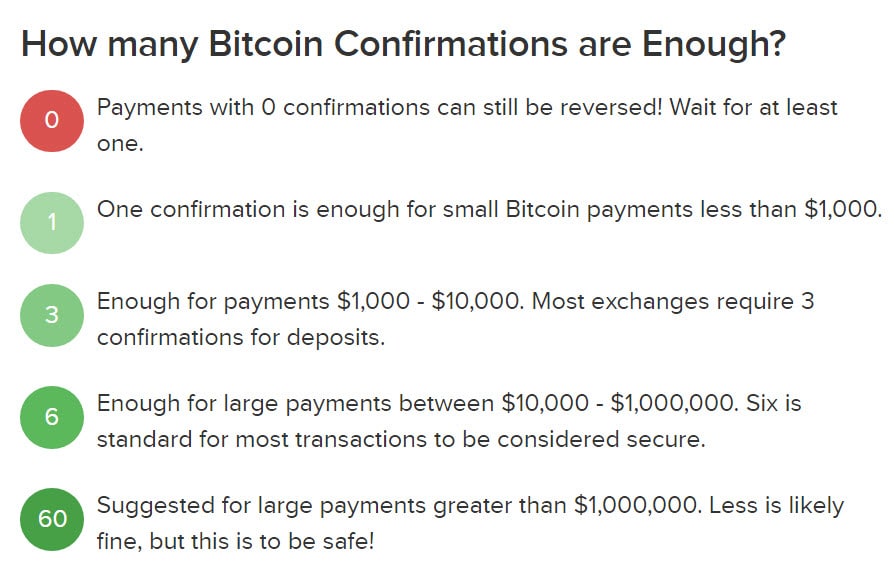
Image result for What Are Blockchain Confirmations and Why Do They Matter?

What Is the Bitcoin Mempool?

The Bitcoin mempool is the sea of unconfirmed Bitcoin transactions on the Bitcoin network. As explained above, once a transaction is uploaded to the blockchain, it is not confirmed immediately but is released into the mempool of transactions, which are considered in-motion.
All nodes on the Bitcoin network are connected to the mempool, and that includes the miners who collate transactions from the mempool into a block. The miner who first solves the mathematical equation and adds the block to the blockchain is the first to confirm the block. Therefore, the first to receive the miner reward of 12.5 BTC.
This is fairly straightforward, however, some transactions are picked out of the mempool faster than others. Why? Because miners also earn a bonus percentage of transaction fees (called the Bitcoin mining fee).
Miners will pick out the transactions with the higher fees first to earn a higher bonus. It also explains why not paying transaction fees can lead to your transaction getting stuck. In fact, as more people join the Bitcoin network, this bottleneck is one of the greatest challenges to the Bitcoin community.

How to Speed Up Blockchain Confirmation Times

The higher the fee you pay, the more likely your transaction will be confirmed in a timely manner (there is a 60 percent chance that it will take 10 minutes or less). However, if your transaction remains unconfirmed, the recommended wait time is 72 hours before sending it again.
If you want to avoid paying fees, however, you can check to see how many unconfirmed transactions there are at a given moment and calculate how long it will take.

Ethereum Blockchain Confirmations

When it comes to Ethereum blockchain confirmations, the agreed-upon number seems to be undecided. According to the Ethereum white paper, 7 confirmations should be enough to confirm the transaction (about 2 minutes).
However, Ethereum miners must check the parameters of the last 250 blocks. So, if you want to err on the side of caution like the miners, you should wait for 250 confirmations. This sounds like a lot, but in practice is only about an hour.
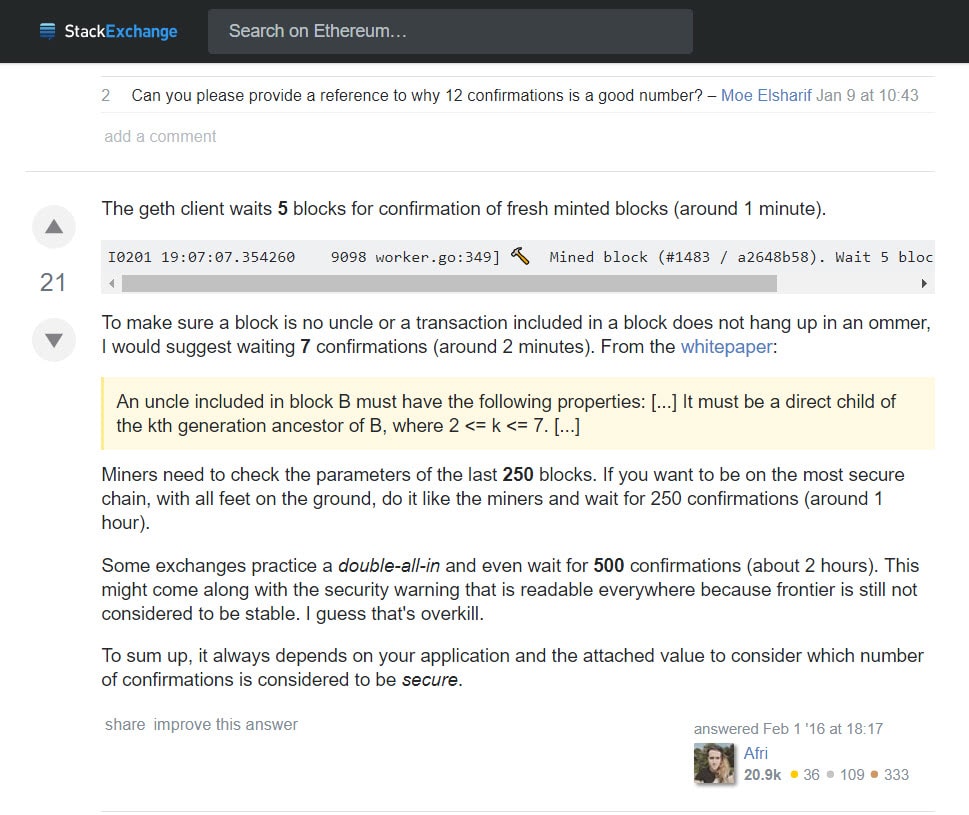
Image result for What Are Blockchain Confirmations and Why Do They Matter?
Coinbase requires 50 ethereum confirmations before considering a transaction complete. It should also be noted that the Ethereum blockchain faces significant scalability issues as well. Ethereum is working to scale quickly to take on more users, and through Proof of Stake, confirmations should be even quicker.

Etherscan and Ether Gas

Ethereum doesn’t have a mempool for pending transactions; it’s simply called the transaction pool. The pool contains all the transactions submitted that haven’t yet been assigned to a block.
There are multiple methods for speeding up your transaction and deciding on the best gas price when sending your Ethereum transaction. You can try ETH Gas Station to see an overview of gas usage, and you can see how many transactions are pending by using Etherscan.
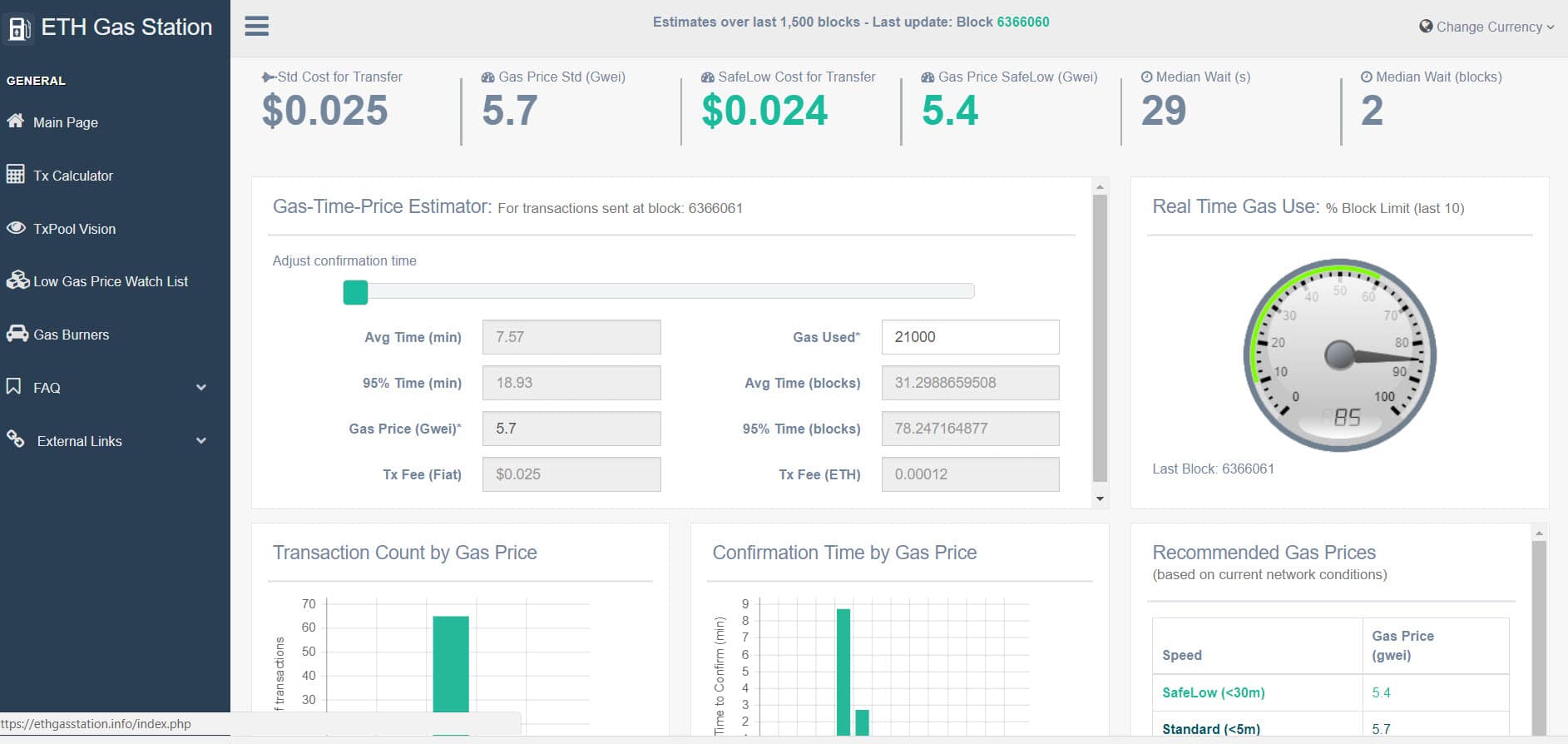
Image result for What Are Blockchain Confirmations and Why Do They Matter?
Etherscan is particularly popular since you can order transactions by gas price (simply click on the GasPrice column). You’ll then see more or less the same list that miners see and, if you select a gas price that is within the first couple of pages, you should enjoy short confirmation times.
This article by CHRISTINA COMBEN was originally published at "CoinCentral.com: https://coincentral.com/blockchain-confirmations/

Thursday, 11 October 2018

Crypto Market Tumbler Services and Exchanges Used to Launder over $80 Million

coincentral.com
Image result for Crypto Market Tumbler Services and Exchanges Used to Launder over $80 Million
A crypto market investigation launched by the Wall Street Journal has revealed that almost $90 million worth of cryptocurrencies has been laundered through cryptocurrency exchanges based in the United States within the past two years.
According to the investigative article, tens of millions of dollars worth of ill-gotten Bitcoin and an assortment of other cryptocurrencies have been converted into the Monero privacy coin. This is via 46 cryptocurrency exchanges based in the United States. 2,500 crypto wallets were tracked during the course of the investigation, and their transactions dating back to 2016 scrutinized.
The crypto wallets were purportedly involved in hacks and blackmail schemes and were traced using blockchain technology. Some of the exchanges found to have been used by criminals to launder ill-gotten digital currencies include Binance, Bittrex, ShapeShift, Gemini, Bitfinex, BTC-e, ChangellyBitstampKuCoin, and HitBTC.
Focusing on ShapeShift, a company that is based in Denver and backed by Pantera Capital, the FundersClub, and Access Venture Partners, the investigation revealed that shadowy characters, including North Korean agents, Ponzi scheme masterminds and credit card fraud schemers used the platform to launder crypto.
They apparently chose ShapeShift because of its loose Know Your Customer (KYC) policies that do not require the provision of Personally Identifiable Information. To make things harder for the authorities, cyber-criminals apparently carried out the transactions outside the United States’ sphere of jurisdiction, and mostly in China or Eastern European countries.
The investigation alleges that the North Korean actors who unleashed the WannaCry ransomware attack last year, while requesting payments in bitcoin, converted their illicit proceeds from bitcoin to Monero through ShapeShift.
The conversion to Monero made it virtually impossible to trace the hackers, thanks to the cryptocurrency’s robust pseudonymization features. Of the overall $89 million in illicit funds laundered through American exchanges since 2016, ShapeShift is alleged to have processed about $9 million, while Bittrex handled about $6.3 million.
ShapeShift’s CEO, Erik Voorhees, countered the allegations with a stinging rebuke of the WSJ report, dismissing it as misleading and disingenuous. Through a blog post on the company’s website, he asserted that the publication’s investigation omitted important information about the company’s efforts to combat crypto laundering.
He also stated that the investigators showed a lack of understanding on how blockchain works, explaining that the suspicious transaction cited was not sent to the exchange by cybercriminals but by another exchange. Erik argued that even if the claims were true, the illustrated volumes were abysmal and only accounted for 0.15 percent of the total volume traded by the exchange at the time.
The CEO added that ShapeShift has always complied with law-enforcement requests and has collaborated with the authorities in over 30 investigations spanning over 13 countries across the world. Voorhees reiterated his company’s commitment in stopping money laundering, saying that it uses sophisticated internal anti-money laundering and blockchain-based forensics instruments to detect suspicious accounts and transactions.
The company apparently also shares information with other exchanges to bolster AML efforts. Voorhees explained that ShapeShift only deals in crypto to crypto transactions and has no fiat exchange dealings. As such, no fiat currency can or has ever been laundered on the network.
On how the exchange maintains transparency, all transactions are made public, thereby making them traceable. The irony of the situation, according to the CEO, is that the Wall Street Journal used this public information to launch its investigation, and yet accused the crypto agency of lacking transparency.
He also fought back claims of illegal activity, stating, “ShapeShift has always been in favor of complying with the laws of the jurisdictions in which it operates, even though many of these laws are unclear, ever-changing, contradictory, and in some cases ineffective.”
The company’s chief legal officer, Veronica McGregor, told WSJ that ShapeShift had indeed received the list of suspicious accounts alluded to by the investigation, and said that the company had banned them from the exchange.
ShapeShift's CEO and Ron Paul.
ShapeShift CEO, Erik Voorhees (Left), with retired politician Ron Paul (Right).
That said, ShapeShift has announced that it will be changing its modus operandi amid the money laundering allegations, and is currently trying to pioneer a new exchange system that will ensure greater transparency.

Cyber Criminals Use Tumbler Services and Abuse Exchanges to Launder Crypto

About $266 million worth of crypto was apparently laundered last year. However, 2018 figures are much higher at $761 million, and this does not include transactions done using harder to track cryptocurrencies such as Dash, Zcash and Monero.
According to Dave Jevans, CEO of CipherTrace, a cryptocurrency firm that specializes in tracing crypto and undertaking advanced forensics, mixing services are to blame for the sharp increase in cyber crimes involving crypto. Cryptocurrency tumbler services take digital currencies from a wide range of sources and mix them together in a combined pool.
The coins are then scrambled and redistributed into different pools on the blockchain, thereby rendering them untraceable. The services effectively erase the link between the contributors and receivers. Such services reportedly operate using complex formulas written by highly skilled experts in the area, some who probably have Ph.D.s.
In the case of ShapeShift, Dave expressed that although such exchanges offer legitimate services, they can be abused by malicious actors to conceal the origin of fraudulently acquired funds. This is because clients can use such services anonymously as well as undertake cross-currency flips to switch between cryptocurrencies. This makes the digital coins untraceable.
In one case illustrated by the WSJ investigation, an online company called Starscape Capital fraudulently collected $2 million from investors, with the promise of outrageously high returns. Investors were apparently required to send payments in Ethereum. However, the website associated with the project went offline, leaving its backers in limbo.
According to the investigation, coins from the venture were soon funneled into two crypto exchanges using different streams. ShapeShift was among them. The other was KuCoin, an exchange based in Hong Kong. Some $517,000 worth of Ethereum was allegedly sent to ShapeShift and converted into the Monero privacy coin, at which point the trail went cold.
From there, the coins could be exchanged for bitcoin or fiat with no trace of their origin. And so to date, none of Starscape’s founders have ever been identified.

Wednesday, 10 October 2018

15 tips for app store optimization (Infographic)

Many businesses today have a web presence and a subsequent search engine optimization (SEO) strategy. It is important to meet your customers where they are searching for keywords relevant to your business — the top of Google’s search results page.

As the global adoption of mobile continues to grow and take more browsing market share away from desktop computers, this migration to mobile will further ripple throughout the business world. Having a mobile app is becoming increasingly important, and a subsequent app store optimization (ASO) strategy should be equally as important as SEO.

How important is it to be featured in the App Store search? Search continues to be the largest contributor of app discovery, with search for non-game apps accounting for 69% of installs, and game apps slightly less at 56%. These statistics underscore the necessity for mobile marketing teams to include a strategy for ASO.

In this visual from CleverTap, they outline 15 tips for app store optimization, from the title, keywords, and icon, to the importance of updates. Learn more and consider implementing these tips as you navigate the App Store.


app store optimization tips infographic with examples

Tuesday, 2 October 2018

INTERCONTINENTAL EXCHANGE LAUNCHES BAKKT ECOSYSTEM

mintdice.com
Image result for INTERCONTINENTAL EXCHANGE LAUNCHES BAKKT ECOSYSTEM
Digital Asset market is worth $270 billion now. Eyeing this massive opportunity, Intercontinental Exchange, the parent company of the New York Stock Exchange (NYSE), has launched the Bakkt ecosystem which will provide a marketplace for digital assets like cryptocurrencies. This ecosystem will be federally regulated to ensure full legal compliance. The Intercontinental Exchange has joined hands with big companies like Microsoft, Starbucks, and BCG to provision various services required for the success of this project. The Bakkt ecosystem is expected to incorporate federally regulated markets and warehousing along with consumer and merchant applications.
Achieving mainstreaming of leading cryptocurrencies like Bitcoin is the founding imperative of Bakkt. The Intercontinental Exchange intends to transform Bitcoin into a highly trusted currency with a global usage. At present, most of the big financial institutions shun it due to various reasons. The aim to offer Bakkt is to enable significant money managers to offer Bitcoin ETFs, pension funds and mutual funds. Jeffery Sprecher is at the forefront of this project, which is expected to create a considerable influence of Wall Street on cryptocurrencies. =

ABOUT THE INTERCONTINENTAL EXCHANGE

The Intercontinental Exchange is a Fortune 500 and Fortune Future 50 organization, which was established in May 2000 in Atlanta, Georgia to revamp commodities markets. In the year 2013, The Intercontinental Exchangeachieved a substantial milestone by acquiring NYSE Euronext, the parent company of the NYSE. Currently, it is the second-largest exchange group globally and controls 23 regulated exchanges and six clearing-houses located all over the world.
The Intercontinental Exchange began with a primary focus on the energy market with products like natural gas, oil, power, jet fuel, and emissions trading. However, with gradual acquisitions of other entities, the Intercontinental Exchange has expanded into other commodities like coffee, sugar, cotton, commodity derivatives, and futures contracts as well. Moreover, they also provide trading of interest rate products and foreign exchange.
Greater price transparency, efficient trading platforms, and enhanced liquidity helped the Intercontinental Exchange in getting the required trader confidence, helping it to cement its reputation as the leading commodities exchange. It has enabled companies to trade various types of commodities without any time or space constraints, assisting them to generate more capital than any other exchange in the entire world. The Intercontinental Exchange joins various markets to let them trade and manage risks across the global commodity market.
Information services are pivotal for traders for making their investment decisions and managing risks associated with commodity markets. The Intercontinental Exchange Data Services is a subsidiary of, which was formed in the year 2003 and provides the connectivity and information services across nearly all types of asset classes. It was established considering the ever-rising demand for data exchange as various markets become more automated. The Intercontinental Exchange continues to invest in its data arm to cater to the fast transforming regulatory environment and market diversification, along with a growing need for data security and independent valuations.  

BAKKT ECOSYSTEM PROS

  1. It will help in curtailing the rivalry between Wall Street and cryptocurrencies. With a financial industry giant like the Intercontinental Exchange launching a cryptocurrency ecosystem there is an increased likelihood of more institutionalized investor making investments in cryptocurrencies.
  2. Introduction of Bakkt by various established players points to the fact that traditional investors are joining the crypto bandwagon and they want to regularize this industry through enhanced participation.
  3. Currently, the underlying technology of cryptocurrencies, blockchain, is inherently slow as every transaction is broadcast to every node on the network. However, with the introduction of Bakkt, the speed problem can be resolved to a great extent. There would be no need to broadcast all the transactions occurring inside the Bakkt ecosystem. Only the payments coming in and out of the Bakkt’s warehouse would need to be broadcast on the blockchain.
  4. Bakkt will also act as a qualified custodian for cryptocurrencies enabling various institutions to make investments in the crypto asset class. According to SEC rules, the presence of a qualified custodian is mandatory for investment advisors managing above $150 million.
  5. Financial regulators will be more comfortable with the whole crypto sector due to the involvement of the Intercontinental Exchange.
  6. Lower frictional costs associated with cryptocurrencies will allow investors to raise capital using the Bakkt ecosystem. With cryptocurrencies, there are no trustees or transfer agents. Moreover, counterparty risk is also minimal.   

BAKKT ECOSYSTEM CONS

  1. Traditional cryptocurrency supporters are staunchly against the idea of placing a large exchange in the middle of Bitcoin payment systems. They argue that the Bitcoin was created with a decentralized architecture in mind, without the need for a centralized custodian acting as the middle-man and charging a transaction fee.  The idea of creating a giant regulated crypto exchange may be a popular step in the short term, but in the long term, a decentralized peer-to-peer network is the only mechanism which will fulfill the ultimate goal of creating Bitcoin.
  2. Experts believe that Bakkt is Wall Street’s attempt to control cryptocurrencies through financialization via leverage. This tactic involves the creation of more financial claims to the coins when there are less underlying coins in actual reality. Wall Street can easily influence coin prices through derivatives markets.  

HOW BAKKT WILL EVOLVE THE CRYPTOCURRENCY INDUSTRY

The Bakkt ecosystem is expected to unite several financial players together in their quest for cryptocurrency trading profits. The diversity of services in the form of custody solutions, asset-tokenization and derivatives will substantially attract consumers, merchants and institutions towards this trading platform encouraging mass crypto adoption.
It is further predicted that Bakkt will help in curtailing cryptocurrency volatility, at least for the Intercontinental Exchange customers. Several experts consider volatility as the most significant barrier to entry. This reduction will be achieved by profiting from Bitcoin volatility through hedging against Bitcoin.
Bakkt will significantly boost the number of applications which can use cryptocurrencies, through its consumer and merchant applications. The system will enable any institutional investor or company to profit from both digital assets and fiat currencies and that too with minimal volatility and regulatory hurdles.
Bakkt has scheduled to launch Bitcoin’s future contracts and warehousing solutions in November 2018 depending on CFTC’s approval. This ETF factor will lead to a heightened demand for digital assets especially when there would be a physical delivery of that asset. There are several advantages of cryptocurrency ETF. Additional security layer provided by the custodian bank saves investors from several types of risks. Moreover, crypto ETF will enable investors to easily track many different digital tokens simultaneously.
Tokenization is another feature which is expected to come from this platform. Various physical assets can be tokenized through Bakkt which can allow investors to tap untapped liquidity.

FINAL THOUGHTS

Bakkt is definitely a giant leap towards formalizing and regulating cryptocurrency trading. Due to the backing of several financial industry giants, this platform is sure to get lots of attention, both negatively and positively. However, the struggle between Wall Street champions and cryptocurrency purists should not hinder the progress of this long-awaited development.  

The Advantages of Blockchain Beyond Speculation

coincentral.com
featuredimg-v1
The advantages of blockchain often become a secondary topic each time prices cycle through a new bubble. Public eyes shift away from the advantages of blockchain and towards the advantages of speculation. The good news is that a burst bubble in the market often shifts the attention back to the more interesting topics.
Bubbles or not, crypto exchanges still remain the single most potent use case for distributed ledger technologies. But in the grand scheme of blockchain’s potential, speculation and value trading seems underwhelming, completely missing the mark.

Medicine and Health Care

The medical system is under colossal stress to scale to the demands of the growing population. Medical identity still lags way behind with archaic record sharing networks and insecure databases. However, the elephant in the room is the medical supply chain: a behemoth of an issue that is actively being repaired

The Supply Chain

The supply chain within the healthcare industry, compared to other supply chains, is particularly sensitive for reasons that should be clear: your health is at stake. However, the issues that face the medical supply chain are much the same as many other large-scale supply chains. Issues that all stem from one foundational factor: trust.
The advantages of blockchain in trust
Building trust in the medical supply chain
The objective is to increase the trust in a supply chain and improve all components that contribute to the strength of the trust economy. For example, stronger communications and higher levels of transparency and accountability lend support to building trust.
The advantages of blockchain are well suited for the topic of trust, as it’s one of the novel solutions distributed ledger tech brings forth. Traditionally, trust within an expansive system is achieved through access control and well-vetted participants. But in the case of a dynamically growing system like a medical supply chain, utilizing siloed control points like this can be clunky and wildly inefficient.
Instead of these centralized points of trust and control throughout the supply chain, blockchain allows for their replacement and complete dispersion. Trust in other humans is replaced with a decentralized model of trust-by-computation.
“Here’s the most important effect of this new trust model of trust-by-computation: no one actor is trusted, and no one needs to be trusted. There is no central authority or trusted third party in a distributed consensus network.”
– Andreas M. Antonopoulos | Bitcoin security model: Trust by computation

Medical Identity and Records

At the core of the medical-data economy is an imbalance of interests not unlike that seen on Facebook. Centralized medical user data, our identities and records, are often unwittingly being used in larger research studies. Although using our medical data certainly isn’t ill meant, when monetized the issues begin to manifest. Like the for-profit data collection system Facebook, the user stops being the customer and instead becomes the product. The data we willingly supply is mismanaged and sold to a new end user.
A database seeded with a blockchain could be used to shift the power dynamic away from the data collectors and back to the data suppliers. However, mass data is still useful for research, for-profit or not. Instead of personal medical data being repurposed without direct consent or even our knowledge, blockchain has the tools to give the power to choose back to the user and create new economic incentives to for participation in research.
Embleema is an active example of a project that is tackling the issue of personal health record data. The Embleema blockchain, built on Ethereum, provides users with a trustless solution to selectively supplying health data to research projects they support. Right now, the project, called PatientTruth, can be used to collect all sorts of medical data points, from more serious chronic conditions and vital signs to more active data like daily steps and heart rate readings.
The advantages of blockchain, like Embleema’s use of smart contracts, could be the key to creating a better environment for patients, practitioners and researchers alike. Patients gain more transparency and control over their medical records, practitioners are less burdened with consent and internetwork compatibility, and researchers get access to better vetted and more secure data.

Humanitarian Projects

Blockchain tech is being expanded to worldwide humanitarian efforts and has already begun to see frontline use. Refugees are being supported with biometrics and blockchain data management to empower their financial decisions. Likewise, blockchain is enabling new fundraising methods by harnessing the idle processing power of a donator’s computer.

Blockchain in Refugee Communities

Recently, Building Blocks, a World Food Programme (WFP) pilot project, has seen success in helping facilitate and secure money transfers using blockchain tech. The program is part of a goal to safely and reliable scale up the number of direct money transfers refugees and displaced people receive.
These types of money transfers have been increasing as the favorable option over distributing goods like food and water directly. Instead, recipients can use their money transfers as they see fit for their individual needs and those of their families. Often the use of cash is more empowering than being delegated rations of particular products or services. Money transfers as a form of crisis relief can be a powerful vehicle for restoring individual confidence and procreating local economic activity back into the communities.
Building Blocks, after finding success in two other pilot programs in Pakistan and Jordan, is looking to expand their service to another community of over 500,000 Syrian refugees within Jordan. In addition to using blockchain for money transfers, the WFP program is hoping to expand the tech into other areas like supply management and digital identities.

Shifting Fundraising Models

The advantages of blockchain in humanitarian projects can be further realized as fundraisers find new potential. UNICEF Australia currently runs a unique fundraising program which takes full advantage of donator’s computer processing power.
The advantages of blockchain in fundraising
Donate passively with your computers processing power on UNICEF Australia’s Hopepage
Visitors to UNICEF Australia’s Hopepage can elect to donate some of their own computers processing power. The processing power is then used to mine cryptocurrencies with proceeds being automatically donated back to UNICEF Australia to fund their various programs.
As a new vehicle of fundraising, donating your processing power is still quite early to the scene. Doing so doesn’t yet garnish the same benefits for donors that more conventional methods typically receive. Most notably, donating your processing power doesn’t get you a tax benefit, so UNICEF Australia still asks that you make larger contributions directly to them.
However, donating your computer’s processing power is super accessible and has low barriers to entry for those already on a computer.

Entertainment and the Arts

The advantages of blockchain in entertainment and the arts have mostly come in the form of the ERC-721 token on the Ethereum blockchain. ERC-721 tokens are non-fungible meaning each token is unique to itself and never repeated. 
Within the digital universe, the applications of non-fungible tokens seem a bit endless. Virtually any digital asset that is meant to be limited in quantity could be built as an ERC-721 and monitored on a blockchain which supports it. Some that come to mind: Ebooks, digital art, in-game items, creative design assets, audiobooks, movies, and basically anything else that is meant to have some form of copyright protection.

Digital Copyright and Ownership

Without a doubt, listing off the potentials of non-fungible tokens like the ERC-721 is far easier than the actual task of bringing them to life. However, there are a number of projects that are already using the advantages of blockchain and non-fungible tokens.

Decentralized Asset Registry

With their mainnet launch just happening this past July, the Codex Protocol is still young. The platform is positioned to be a blockchain for the registry of real-world assets like cars or fine wine. Along with creating an ecosystem of validators and rewards, Codex aims to address the issue of provenance within collectibles. Provenance (the history of ownership of an item and associated documentation) accounts for almost the entire monetary value of an item because it is the most important indicator of authenticityaccording to Codex’s whitepaper.
The advantage of blockchain as a copyright service
Binded is a blockchain backed copyright service for your images

Copyrighting on a Blockchain

Binded, the company behind image copyrighting on the blockchain is not currently using a non-fungible token to achieve their proof of ownership, but by using the Bitcoin blockchain, Binded is able to secure the copyright of individual photos. The free service even integrates with Twitter and Instagram accounts and can be used to instantly copyright a new image using #binded.
Additionally, Binded mentions in their FAQ that they are open to moving to Ethereum when they start developing smart contracts. For now, the hash of each copyrighted image is batched and recorded on the Bitcoin blockchain. Each record contains the hash and image file along with the owner’s name and email.
The advantages of blockchain in video games
Zombie Battleground is a trading card game on the Loom blockchain.

Games on the Chain

There are a number of games that are committing ownership of in-game assets to a blockchain. The most notable currently is the famous Cryptokitties, however, there are a number of projects that are gamifying scarcity on the blockchain. Zombie Battleground recently raised over $320,000 on Kickstarter to build out their vision of a Hearthstone style game. The project is built on and by the Loom Network and is currently in closed access for early adopters.

Where to Next?

Speculation as the dominant use case is likely to continue while alternative applications grow and catch up in popularity. Ideally, the speculation and price action will increase overall adoption. If adoption can grow across the board than it’s possible that more development and innovation would follow along.
Blockchain is a lot better suited to improve our lives beyond speculation and trading. Just like email and web browsing were the first applications of the internet; cryptocurrencies are the first use of blockchain. The really exciting stuff is what is next.
This article by MARSHALL TAYLOR was originally published at "CoinCentral.com: https://coincentral.com/advantages-of-blockchain-beyond-speculation/