Tuesday, 23 August 2016

App strategy: The next stage of consumer loyalty

marketingtechnews.net

What does brand loyalty mean to you? Does it equate to money off vouchers, in-store credit and points accumulation, or should loyalty be rewarded with behavioral change that makes our lives easier, more meaningful and improves our wellbeing?

For anyone with a plastic brand loyalty card that’s always impossible to find in a bag or wallet when you’re called upon to present it at the check-out, loyalty may have lost its appeal and can often be associated with follow-up junk mail or offers you would never consider using as they haven’t been targeted specifically for you.

For brands fully embracing the mobile revolution however, apps are an opportunity to change the way we all think about loyalty by redefining the customer relationship and rewarding loyalty with more personalized experiences.

Take Starbucks for example. 'Mobile Order and Pay' allows Starbucks’ customers to order in advance via the app and pick up their food and beverage from the chosen location, thus eliminating waiting time.

The loyalty reward isn’t cheaper coffee or collect 20 stamps for a free latte. It’s removing the need to wait in line, which in turn improves not only the customer experience but also the brands’ operational efficiencies.

Coffee shops and loyalty apps

Recently, I had a truly terrible experience in a Starbucks at Chicago airport involving uncooked food. The app allowed me to report the incident and as a result, Starbucks customer services immediately reached out to me, refunded my expense, apologised and turned a bad experience into a positive.

When you think about loyalty as part of your mobile app strategy, don’t opt for simply moving the discount loyalty card schemes of old onto the mobile platform

Most of us would never return to a restaurant or retail outlet as a result of something like this occurring. The app however enabled Starbucks to maintain and build on its relationship with me as a customer and more often than not, this is what inspires brand loyalty.

As our world grows increasingly more depersonalized, we are constantly looking for more personalized experiences.

Harris + Hoole, a chain of artisan coffee shops has put personalization at the heart of its mobile loyalty strategy. Through the app, customers can check-in to a local Harris + Hoole, request their usual beverage or build their perfect tea, coffee or hot chocolate remotely.

Then, not only do they get an alert when it’s ready but the barista is able to address every customer by name without having to ask or scribble it on the side of the cup.

Hotels and other retailers

For hotel chains, rewarding regular stays and loyal app users may take the form of mobile check-ins, which alert you when your room is ready, transforms the app into your personal room key and avoids you having to queue-up at reception.

While major retailers may wish to use granular app data to reward customer profiles with truly relevant experiences.

This is what Harvey Nichols began doing in May 2015 when it launched its mobile app after discovering that 80% of its customers didn’t want another loyalty card.

Instead of offering the usual in-store discounts, Harvey Nichols focused on tailoring personalized experiences to user profiles. This allowed them to offer pedicures, blow-drys and other beauty treatments as well as dinner for two at London’s Oxo Tower or tickets to the Monaco Grand Prix for top spending customers.

The largest in-app experience loyalty scheme in the UK in terms of registered and active users is, of course O2 Priority. They’ve mastered the physiological aspect of how loyalty makes someone feel and as a result, an offer is redeemed every 12 seconds, with those app users much less likely to ever change their mobile network.

However, many brands aren’t able to offer money-can’t-buy experiences or incur the costs involved with changing all hotel door-locks to make them app compatible.

For these brands, sometimes just having a well-designed app that people actually want to use can have its own positive impact on customer loyalty.

EasyJet’s app for example has made it so easy to check-in, change allocated seats, add additional baggage and all the other functionality that you would associate with the airport experience.

If you simply have to target the price sensitive customer, then providing a seamless experience through an app’s functionality is certainly the way to go. It gets me choosing EasyJet for all my short-haul European travel.

So when you think about loyalty as part of your mobile app strategy, don’t opt for simply moving the discount loyalty card schemes of old onto the mobile platform.

That’s no longer what loyalty means. Think beyond the plastic to the customer experience and consider, what meaningful improvements to their daily lives can your app offer in exchange for their long-term loyalty?

What's Up With App Fatigue?

lightreading.com
Resultado de imagen de app economy

Over time, pay-TV has gathered a plethora of channels that satisfy a varied set of customers. However, the conundrum proven through data has shown that any one individual household generally watches only about 20 of those channels. This has been the motivation behind the quest for small bundles. Cable and satellite TV providers are now exploring how to address the consumer's desires by developing apps, some of which allow for smaller channel bundles, that will run on commercial retail hardware.
Apps are the "channels" of next-generation television environments. Unfortunately, apps have a similar construct as channels. In a recent study, Forrester Research Inc. reported that consumers now spend 85% of their smartphone time engaged in apps, but spend the vast majority of that time -- 84% -- in just five apps, while other studies have reported abandonment rates as high as 90% for downloaded apps.
While building apps seems to be the solution of choice for content and service providers, the reality is that apps are generating more clutter and making it hard to find content of interest expediently. In an environment in which a) every content provider has their own app and b) the same content can be found on multiple services, apps are proving to be a barrier to ease of use, not a solution.
No wonder consumers are getting "app fatigue." Opening and closing apps in search of content has become as tedious as scrolling through the traditional grid guide. Looking for a specific episode of The Blacklist? Finding the episode you want to see might be a ten-minute process of searching through five or six different apps or services. We are right back where we started: Viewers are spending more time looking for what they want than watching the desired programming.

The problem will be compounded in an IoT world. App growth will continue as apps for home security, appliance and system controls and more will provide operations for automation. Got milk? Even in a high-tech app world, a good old-fashioned peek in the refrigerator may remain the fastest way to answer the question.
All of us have apps we use regularly: Facebook, preferred airlines and hotel chains, sports scores and your favorite trending game. But with seemingly every website prompting you to download its own app, there is a thicket of apps on most of our devices. What’s needed is a way to cut through those that remain to optimize their functionality.
Where pay-TV can differentiate itself is in helping customers find needles in haystacks. As the primary service provider in most households, the operator is positioned to consolidate content metadata, personal information and established subscriber preferences to streamline search, discovery and recommendations.
Using the set-top box as the gateway to the home, operators can deploy next-generation solutions that can contextualize viewers' TV experiences to deliver comprehensive views across multiple channels, SVOD apps and subscribers’ personal libraries.
In the same way, operators will be able to leverage WiFi-enabled next-generation STBs as hubs that collect data from connected devices in the home. Rather than sifting through a basket of apps for each controllable service, subscribers will be able to manage all of their home services on the television or from their handheld devices through a visual application that provides integration and access for a variety of services.
When Appl created the App Store eight years ago, there were 552 apps available for download. Since then, more than 2 million apps have become available for IOS alone and the total downloads have surpassed 130 billion. For cable, the secret to building more value is not by delivering more, but by helping subscribers find the cure as app fatigue sets in.

Monday, 22 August 2016

The moral mobile wallet: Striking the right balance with end users

mobilepaymentstoday.com
By Sirpa Nordlund, executive director, Mobey Forum
Even though studies are showing that an increasing number of users are giving the mobile wallet technology a try, only a few are reported to be using it on a continuous basis. Consumers say their top two reasons for not regularly using their mobile wallet are either that they forget to do so (the question of value) or that they are uncertain as to which merchants will accept the payment.
Value added services, 'VAS' for short, have been widely held as the enabling force that will drive mass market adoption of mobile payments and mobile wallets. It isn't hard to see why. After all, who doesn't like bagging a bargain?
As far back as 2010, Mobey Forum has been theorizing about VAS. What services would be the most attractive? What form would they take? How would they be integrated with the mobile wallet and, crucially, what role could they play in helping banks and other mobile payment service providers establish a point of difference in a contested and fragmented market?
Fast forward to 2016 and mobile wallets and their services are developing largely as anticipated: the user accumulates value, generated over time through repeat payments, which can be redeemed in a related form, usually at a time of the user's choosing.
But something is nagging me. Something that hasn't yet been discussed. 
As the years go by and NFC-enabled devices filter through to the mass market, the mobile payments user demographic is diversifying. What began with a select few affluent, financially astute and mobile tech-savvy early adopters, now encompasses those challenged by their finances, including those that struggle with credit-related problems, often due to rising living costs, unemployment or, notably, poor financial management.  And then, of course, there is everyone in between.
First of all, the words 'value added services': whose perspective do they reflect? Do they really mean what they should mean? To whom are they adding value? Who are they designed to serve? What should they achieve?
For those providing the payment service, the answers are fairly clear: More customers, more customer data. Increasingly targeted marketing and product development. More purchases. Increased revenue.
But on the other side, what's in it for the customer? The opportunity to obtain a discount, of course.
Perhaps we should be talking in terms of incentives, instead. What are the various types of incentives being deployed to encourage regular use of mobile wallets?
Firstly, there are financial incentives, which provide users with a cash-back deal when they use their mobile wallet for payment, instead of a plastic card or cash. Then, there are product or service incentives: Android Pay has introduced the Tap10-promotion, for example, which offers consumers a free song for every tap&pay transaction performed. Elsewhere, Chase offers consumers a free album download to users that enroll their cards with Apple Pay.
For me, however, a far more thrilling incentive a bank could offer would be to take a completely different look at the scene to the retailers. Instead of encouraging consumers to spend, spend, spend, they could instead incentivize them to save, save, save. After all, the freedom generated by increasing one's savings is arguably a far bigger incentive than a 'free lunch' triggered by the purchase of a certain number of goods or services. One could even foresee a situation where banks are giving their mobile wallet customers a saving incentive to help them fulfill their true dreams (and not just the dreams of retailers).
Getting customers to love their bank
There are already several fintechs offering money management services to consumers. Mobile wallet use and VAS could similarly be used to promote sound financial management, potentially to a wider audience. Then, at the same time, the bank would position themselves as being on the side of their customers, protecting them from frittering away their hard-earned money, and instead encouraging savings and investments via regular use of their banking app.
I'd like to see VAS providers follow this lead. Executed sensitively, I believe customers would respond favorably. Many banks already have reputational issues relating to trust, so is it wise to issue VAS that solely encourage customers to spend? It doesn't feel like the most effective way to win them over.
Perhaps VAS could be designed to reward savings deposits instead ('interest' for the mobile age). Maybe mobile money management services could be 'unlocked' within the wallet, just like in-app purchases, to reward daily balance checks or the regular viewing of transaction histories. Perhaps loyalty points could be gifted to those that successfully clear their credit card each month.
The mobile wallet is shaping up to be a hugely powerful customer interface. For banks with the creative vision to think a little differently, VAS could be a golden opportunity to demonstrate that they really are on the side of their customers.


What it takes to build a successful branded mobile app

marketingmagazine.co.uk
Starbucks: mobile app is a win-win for consumers and the brand
With app install ads having been introduced to both Google's Double-Click bid manager and Snapchat already so far this year, it's clear that the popularity of apps is on the rise, writes Shenda Loughnane, global strategy director at iProspect.
Apple announced that it passed the 100bn mark on app downloads via its App Store midway through last year. That means the App Store has seen roughly 14 times the amount of app downloads as there are people on the planet.
Developing apps is clearly top of mind for brands then, and a set trend for this rest of this year. The appetite is there, phone memory is increasing – but what actually makes for a successful branded app, and what is likely to see branded apps left downloaded, but largely unopened?
While consumers are indeed downloading more and more apps, branded apps in particular have to do three things.

Be personalised

Consumers are unlikely to download or use an app if it isn’t differentiated from the mobile browser experience. They’ll want to see curated suggestions on purchases, or location-based information that makes using the app worthwhile, for example.

Be adaptive

Consumer demands on apps are constantly changing, and new competitors enter the market constantly. Any branded app needs to move with the times, and follow the changing behaviour of a particular consumer in order to survive. Being open to integrations with new apps should be on the agenda, for example – so think about how Facebook Messenger is integrating with Uber, and how partnerships like this add value.

Be valuable

Branded apps need to add value, and do so consistently. The overall objective of developing them is to differentiate and elevate the position of the brand within the market. If the app is downloaded and used once by the majority of users because it’s got a poor value proposition or is a novelty, then it’s simply not worthwhile.
With this in mind, here’s a few branded apps that I think really work, and serve as good examples of how to ride the app zeitgeist – and avoid falling off.

Charmin – SitOrSquat

Spotting a gap in the market, Charmin helps you find public toilets when you’re on the go, and even lets users rate the bathrooms. Who would have thought that a toilet paper brand could develop an app that’s so relevant and useful?

Hilton – Hhonors

As a fairly frequent traveller, I really appreciate apps that make the whole process easier. Hilton’s Hhonors does that – you can check-in via the app, it acts as your door key, but you can also manage bookings and loyalty points. It’s an app that’s so entwined in the Hilton brand, while helping the hotel go above and beyond in terms of customer experience.

Nike – Nike+ Running

Nike was really ahead of the game in moving in on the ‘quantified self’ and understanding that its audience of fitness fanatics love tracking their progress, competing with their friends and publishing their success online. It’s created a whole culture of Nike fans that sits outside of just buying its sports gear. Although it does allow for logging trainers and prompts users to replace them frequently, so it has savvy commercial elements too.

Hotel Tonight

Hotel Tonight is a really useful app that allows hotel brands to advertise any remaining rooms for that evening at cheaper prices. Great for hotels looking to fill rooms, and for travellers looking for a deal at short notice. However, its positives also come with a side dollop of caution. Google is increasingly making app content searchable via the same process that it uses for sites – so in the case of Hotel Tonight, unless it offers something more in terms of content and utility, its app may become redundant.

Starbucks

Starbucks processes millions of mobile payments via its app every week. In fact, it saw around a fifth of its US transactions take place via its mobile app in Q4 2015, which has been downloaded by 11.1m Americans. It’s a resounding success because it speeds up orders (meaning you get your coffee quicker, and Starbucks can sell more coffee, faster) whilst offering a rewards scheme, that gives something back to the most loyal Starbucks fans. Win, win.

Driving change in times of organisational transformation

forbesindia.com
 Refine or if needed redo the change management plan to eliminate the most critical friction points and then to reduce or eliminate the remaining friction elements
Refine or if needed redo the change management plan to eliminate the most critical friction points and then to reduce or eliminate the remaining friction elements (Shutterstock.com)
We often hear that “Change is the only constant” or during a business transformation, that “The key to success of this transformation will be effective change management”.
Given the degree of leadership focus we see on this topic, it’s unfortunate that most of the times this is just lip service, with neither the thought nor the investment of people and resources being put behind these statements.
The key is in understanding that CHANGE needs ADOPTION to sustain.  So you need a framework that drives adoption and interestingly applying key PRODUCT ADOPTION principles for change ADOPTION during transformation actually works.
change
1. End users adopt “Experiences” not service, product or initiative
If you study services or products that have been adopted rapidly it emerges that end users are attracted not only to the product but to the entire user experience. For example, Apple products provide a unique and seamless experience through the user interface and App ecosystem, allowing for much more pervasive adoption than competitors.
In the context of adopting change, the same logic of focusing on the “experience”, is key.  Change is tough, but if leaders focus on breaking down the problem and understanding what stakeholders will undergo as an experience, half the battle has been won.
This is easier said than done, but keeping it simple works well as an approach:
1. Deconstruct what the change means from each stakeholder’s perspective
2. Focus on how the stakeholders will typically experience the change
3. Once you have a clear tested hypothesis on elements to drive a great experience, build your change management plan accordingly
2.  Ease of use makes adoption go “viral”:
A product or change initiative that is easy and intuitive to use is more likely to get adopted very quickly and enjoy viral propagation.  For example, the App ecosystem of Apple is so easy to use, build on and consume that it has led to viral growth of apps being developed and consumers downloading and paying for them.
Applying this to managing change, the key is how easy you make adopting the change through process, phasing, incentives and tools.
So in the change adoption context:
1. Prioritize and phase the change plan to make it super easy for stakeholders to adopt the change
2. Test that plan with stakeholders to validate what would make it easy for them to adopt the contemplated change and to get their input on the change plan
3. Refine the plan and execution on scope, and phasing. Most importantly focus on the actual execution i.e. the tools, organizational support and communication
3.“Friction” in any form kills adoption:
Unwavering focus on reducing “Friction” in any form, towards change adoption is critical. This friction could come from the organization, customer, technology or human interface, sales & distribution, or organizational processes.
Imagine a product / service that is great, fulfills a critical unmet need, is easy to use but that has other “friction” issues, such as an App crashing frequently or being too slow.  In this situation, adoption of the product / service would suffer hugely, even if the first 2 conditions are met fully. In a nutshell, friction in any form kills adoption.
When it comes to change adoption, the same principle applies. Thus, focus on identifying ALL relevant friction issues preventing adoption
1.Classify these friction issues by their criticality into “critical nonstarters”, “key to sustainability” and others
2. Refine or if needed redo the change management plan to eliminate the most critical friction points and then to reduce or eliminate the remaining friction elements
As we applied this to our breadth of experience with managing change, this construct fits perfectly both in successful and unsuccessful change management initiatives. However, we also find that in successful change initiatives, this is usually intuitive and not implemented as a structured process. The risk with not formalizing it, is that it could lead to a change event failing if for instance a “critical nonstarter” was overlooked.
Every change event is unique and complex, but a structured and powerful framework outlined above, in conjunction with a robust change management process & resources, definitely ensures a higher change implementation success rate.

Monday, 8 August 2016

Turning Mobile Banking into a Sales Machine

thefinancialbrand.com
Combining demographics with account level insight, transaction history and locational data can make your mobile banking app your most effective and efficient sales channel.
With the overwhelming acceptance of the smartphone and the increasing use of mobile banking applications, progressive financial institutions have moved beyond traditional marketing channels and are leveraging the mobile phone as an important sales channel. No longer just focusing on the mobile Web, integrating marketing messages within the mobile banking app itself offers a better opportunity to target the right audience at the right time.
For years there’s been a disparity between the amount of time people spend on their mobile device and the actual ad dollars allocated to this medium. No place is this more true than the banking industry, where there has been a hesitancy to use this powerful channel beyond basic banking tasks. It is expected that this gap will narrow as bank and credit union marketers become more adept at using mobile to reach their audience.
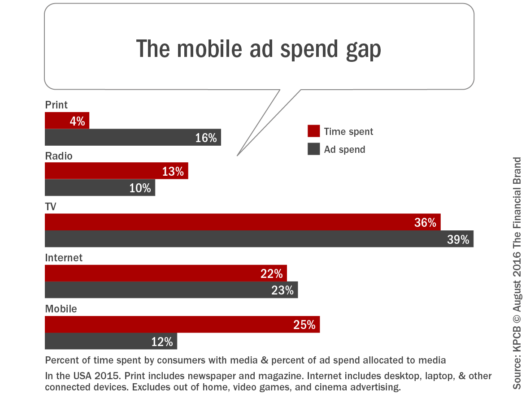
The_mobile_ad_spend_gap
The primary reason for the increased focus on in-app mobile banking offers is that this channel can provide a solution that can capture the targeted consumers’ attention and encourage them to interact without interrupting their mobile banking transaction.
“In-app mobile ad spend is really the future of the mobile advertising category. Considering that people with access to a smartphone or tablet now spend an average of three hours on them per day and 84% of all smartphone time is spent in-app, in-app engagement is increasingly critical for brands, advertisers, marketers, and agencies,” says Chad Gallagher, director of mobile at Advertising.com.
Compared to other marketing channels, it is estimated that the growth of mobile advertising will increase significantly more than any other channel, While the banking industry doesn’t anticipate this significant of a shift from traditional channels, it should be noted that the marketing world has noticed the sales potential of connect with consumers on their channel of choice.
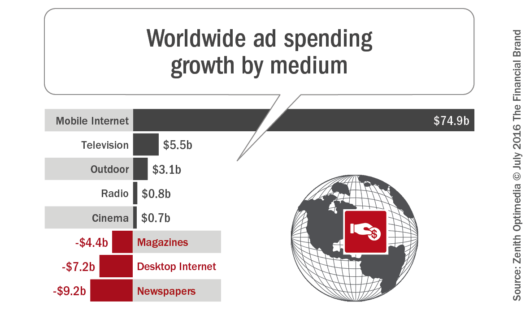
Worldwide_ad_spending_growth_by_medium
Avoka | State of Digital Sales Report 2016

Why In-App Mobile Banking Marketing Works

In-app mobile banking marketing works well because it combines the power of rich customer insights already on file with location data, which allows a bank or credit union to better understand context and increase engagement. So, while the best financial marketing can leverage both internal and external insights such as demographics, account ownership, balances and behaviors, in-app mobile banking marketing can add an additional data layer that can be delivered at the exact time of need.
Moreover, in-app mobile marketing also improves tracking, attribution and targeting, since a marketer can pinpoint exactly when and where an offer was clicked as well as what occurred before and after the engagement. This insight can be used to improve the offer selection and delivery via the mobile channel while also helping the targeting of other digital and traditional channels.
Finally, unlike most other channels, financial marketers can use in-app mobile marketing to determine if the digital sales process is overly complicated, causing abandonment of engagement and the loss of a potential sale. By understanding the stage of the sales process that causes abandonment, marketers and product managers can simplify the process and improve sales effectiveness.

Pre-Login Sales Opportunities

According to the Insight Series Report, “Sales Opportunities in Mobile Banking,” done by Mapa Research, which researched 44 banks and 8 other financial service institutions across 8 countries, there are many places within a mobile banking app where marketing can occur. Some brands use the pre-login area for promotional messages, while the activity in the post-login space appears to have more potential with more variety of engagement tools
There has been a significant increase in the number of banks using the pre-login space to promote new products and services, with 60% of financial institutions monitored by Mapa using some form of a promotional banner that appears behind or on the main login screen. Given that the log-in screen is seen most often by the customer, this is an obvious space to use for promotional banners.
Mapa warns that the generic nature of most banners can make them feel like internet pop-up ads and can detract from the aesthetics of the app and be a deterrent to those customers who are particularly sensitive to the feeling of being pushed to buy. To avoid this issue, some banks are using public-site product menus on the pre-login page, including market trends, community events, etc. In fact, 45% of organizations monitored offer more than just promotional banners on the log-in page.
Other strategies used by financial institutions as part of the pre-login process include:
  • Linking social media
  • Appointment scheduling
  • Tools and calculators
  • Rewards/Offer section
According to Mapa, banks need to be wary that significant investment in the pre-login space may go to waste as biometric authentication methods replace the need for passwords and speed up the login processes. “With instant access into the app, customers will be less inclined to browse the features of the pre-login space”, says Mapa.
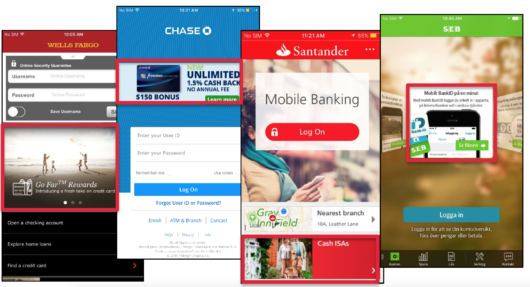
Mobile Banners - Mapa
Mapa Research

Post-Login Sales Opportunities

The main areas for post-login promotional messages are alerts and push notifications (managed in the app but received at any time). Both approaches are designed to keep the brand in the customers mind. Some providers are even using the customer spending and account activity to send timely notifications.
Beyond simply using alerts to warn a customer about a recent transaction or when an account falls below a certain threshold, organizations are also using these types of post-login messages to inform about a new product or service or to encourage the use of rewards. For instance, Bank of America uses alerts to inform customers about the status of their BankAmeriDeals rewards.
Post-login notifications are primarily used to engage with customers regarding the activity on their accounts. Not only can these notifications encourage customers to think more actively about their finances, they can also provide recommendations about services that could assist in these efforts.
In order to meet “unmet needs”, providers are making use of customer data to get to know their customers. Using this data wisely allows brands to deliver promotions tailored to each individual.
According to Mapa, “Every push creates trust between the user and the app because it delivers immediate value. Due to the trusting nature of this relationship, if the customer was to then be sent a notification alerting them to a new product that could further improve the health of their finances, the customer is likely to react positively to this, and see it as an extension of the existing relationship instead of an obvious sales push.”

Interstitial Messaging

Financial institutions are not only focusing on the pre- and post-login opportunities to market products and services. Some organizations are leveraging the space between between pre- and post-login for using interstitial messaging. These are screens that pop-up after the consumer has logged in but before they can continue their transaction.
A well done interstitial only causes a minor interruption in experience, with the customer having the option to skip the message with a simple ‘swipe’. This has the benefit of balancing experience with effective selling.
This technique can be used to inform the customer about a recent update of the app, a major product announcement, a community event, etc. Some organizations provide the opportunity to ‘see more’ before they move forward with their transaction. Although ad formats are less important than relevancy, research shows that in-app banner ads don’t generate as much revenue as personalized ads and both of these formats are much less effective than an interstitial.
Mobile _sales_channel_do’s_and_don’ts

Tailored Marketing Messages

Optimally, customers should receive marketing messages based on their spending habits and marketing preferences. The latter is an important point, since even tailored messages can become intrusive if received too frequently or in a format/channel that the customer is not comfortable with. As a result, some banks provide customers with the option to control how and when they receive marketing messages.
Banks and credit unions can also tailor product offerings to specific consumers. such as loans with predetermined values based on consumer spending data. “By using customer data that the bank already has access to, the bank can expedite the application process and significantly reduce the likelihood that a customer would go looking elsewhere when thinking of applying for a similar product,” states Mapa.
Done effectively, selling within the mobile banking app dramatically reduces the inconvenience of applying for financial products or services through other channels, meaning that the number of customers that abandon the process and ‘quit before the check-out’ is lessened considerably.
Mapa research manager Jess Morley comments: “Consumers and financial solution providers have become wary of the ‘hard sell’ when it comes to financial services. As a result, there has been a move towards selling by identifying unmet consumer needs, using data to identify products that could improve a consumer’s financial situation.”
He continues, “When products are suggested to consumers in this evidenced-based manner within a mobile app, the sale seems less forced and consumers are more willing to trust the suggestion. This is a sales technique that banks have adopted from e-commerce providers like Amazon, which provides customers with a list of suggested products based on their browsing history.”
At the end of the day, it is best to target the best way possible and experiment with all kinds of ad formats and placements. Try pre-login and post-login and use banners, lists, interstitials and maybe even a video. Then, conduct A/B testing them.
While the placement and ad format may be important, making sure that an ad is relevant to the user while simultaneously presenting it in an non-invasive manner is more important. It is the relevancy of the message that makes it compelling as opposed to the ad type.
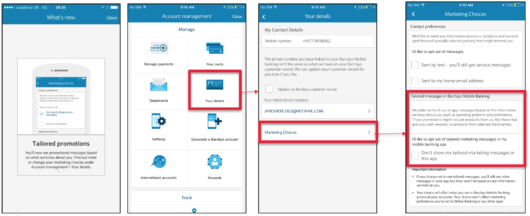
Tailored Messaging
Mapa Research

Wednesday, 9 March 2016

WHAT DOES IT COST TO DEVELOP AN APP?

fueled.com
Author: Mary Hurd
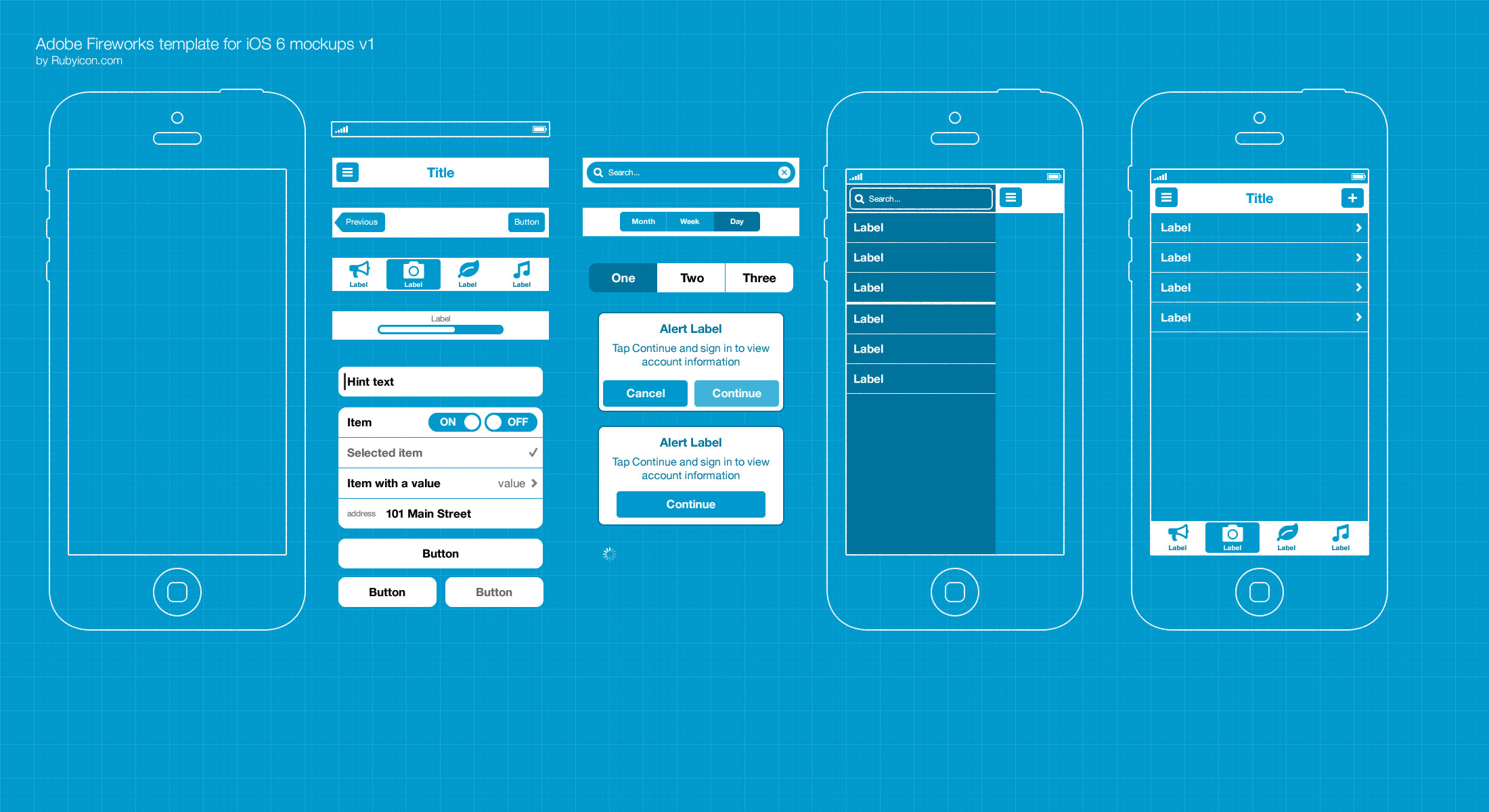
mobile app wireframe
It’s official: mobile apps are now integral parts of life (even old ladies gossip about them at country clubs). Formerly a millennial phenomenon and currently a multi-billion dollar industry that is clearly here to stay, the mobile app industry is the way of the future (and the present).
So, how can an entrepreneur achieve longstanding recognition in this crowded field? What are consumers looking for? How can you build a successful app?
We enlist the help of Rameet Chawla and Ryan Matzner, who run the show at Fueled, our mobile development shop that works with startups and more established enterprises alike, to give us some insight. With over a decade of experience in the technology industry and relationships with hundreds of startups in New York City, the duo boasts an understanding of both the technical and social aspects of app building. Who better, then, to share all of the industry’s secrets?
Ladies and gentlemen, here’s your everything guide to building your very own (and very successful) mobile app:

HOW DO I FIND A GOOD DEVELOPER?

Remember: credentials precede promises… and reputation supersedes all else. Chawla suggests reaching out to agencies that have won awards, have been mentioned on tech-related news sites, and, most importantly, have the sort of experience that your specific app requires.
“If [your] app [has] a heaving programming or coding component to it, [you] don’t necessarily want to go after an agency that only has experience with more simplistic apps,” he says.
shutterstock_119236960

CAN I START BUILDING THE APP MYSELF BEFORE REACHING OUT TO A DEVELOPER?

Yes. “We call [them] ‘rescue projects,’” says Matzner. “[These are projects that] people have started elsewhere and they end up coming to us because they realize that these promises someone else made were completely empty, or they didn’t know about us when they started and they have figured out some pitfalls with their current setup.”

HE CONTINUES, “THEY’RE LOOKING FOR SOMEONE WHO CAN ACTUALLY FINISH THE APP AND GET SOMETHING RELEASED. OR, THEY’VE RELEASED SOMETHING AND IT JUST DOESN’T WORK AND HAS ONE STAR IN THE APP STORE, AND THEY NEED HELP FIXING IT.”

ALTHOUGH STARTING TO WORK ON THE PRODUCT ON YOUR OWN IS NOT IMPOSSIBLE, MATZNER EXPLAINS THAT THE APP WILL MOST LIKELY NOT POSSESS “THE SAME POLISH AND QUALITY AS A PRODUCT BUILT BY PROFESSIONALS.” A SKILLED PRODUCT TEAM WILL UNDOUBTEDLY BRING MORE EXPERTISE TO THE ENDEAVOR.

HOW IS A MOBILE APP DEVELOPMENT TEAM SET UP?

Matzner breaks it down for us: “A development team […] is sort of like a Broadway play. You have the actors on stage, but then there’s a whole bunch of stuff happening behind the scenes. An app that gets built properly is sort of similar.”
A successful team should include:
  • A designer who creates all the visual content that will be coded into the project
  • An account manager who acts like a liaison for clients and works with product managers and producers to coordinate the completion of different tasks
  • A product manager who executes the functions of a director by overseeing the app

HOW MUCH DOES IT COST TO BUILD AN AVERAGE APP?

Aaron Cohen, a highly-respected top representative at Fueled, gives us some insight: “With Fueled’s experience you’re going to find that you’re going to need at least $150,000 to build the first version of your product.” This budget, he continues, would probably be the same regardless of the shop hired.
Although Fueled has built version one products for as little as $150,000, the agency has also catered to customers who had more extensive requirements for their minimum viable product (MVP)–costing them as much as $500,000 for their first version app.
shutterstock_158600417

WHAT QUALIFIES AS AN MVP?

“As we like to say, the definition of MVP is completely context dependent,” explains Cohen.  “If you are going for a social media play, you want to test assumptions about how people want to share content, then you can probably get your app out of the door for $100,000-$150,000. But if you’re an e-commerce play, you need to integrate advanced payment services, profiles, databases, perhaps an email marketing system, then you’re looking at involving back-end engineers, creating custom back-end systems, and the price tag can very quickly escalate.”
One way to estimate the amount of resources needed in the first 18 months of operation “is to look at the amount of money that successful startups raise for the first year or two of their operations,” explains the expert. “Traditionally, a startup will get going with a seed round or a friend-and-family round of $250,000 to $500,000. That will allow them to run the company for 6 months or so. Generally, they then need to raise a bridge round. Another $500,000 to a million dollars, which will really let them take whichever prototype or proof-of-concept they validated in the first phase, take that to a higher level, [and] really polish it up for widespread consumer release.” The result? About a million and a half dollars to operate a startup for the first 18 months.
A deeper analysis of an app’s cost and development time.

WHAT IF I HIRE A FREELANCER OVER A SHOP?

Hiring a freelancer results in a decrease in costs… and an increase in risks. Risks may include inefficient work ethics and habits, miscommunications, and a lack of consistent efforts and availability. Unless catching a lucky break, hiring a freelancer will most likely lead to an end product that won’t match its original footprint.
Think of building an app as you would think of filming a movie from scratch. Budget and motivations are key components, and your dedication to the task at hand will be of paramount importance. You will be putting as much effort into a one-dimensional app as you would when scraping together a casual student film. On the other hand, if you’re working on the next world-changing app, the time and power invested in the product will resemble that required to roll out the next summer blockbuster.
When employing all these resources and energy into the product… wouldn’t you want to rely on a company whose entire day is dedicated to you as opposed to a freelancer who constantly deals with other clients as well?
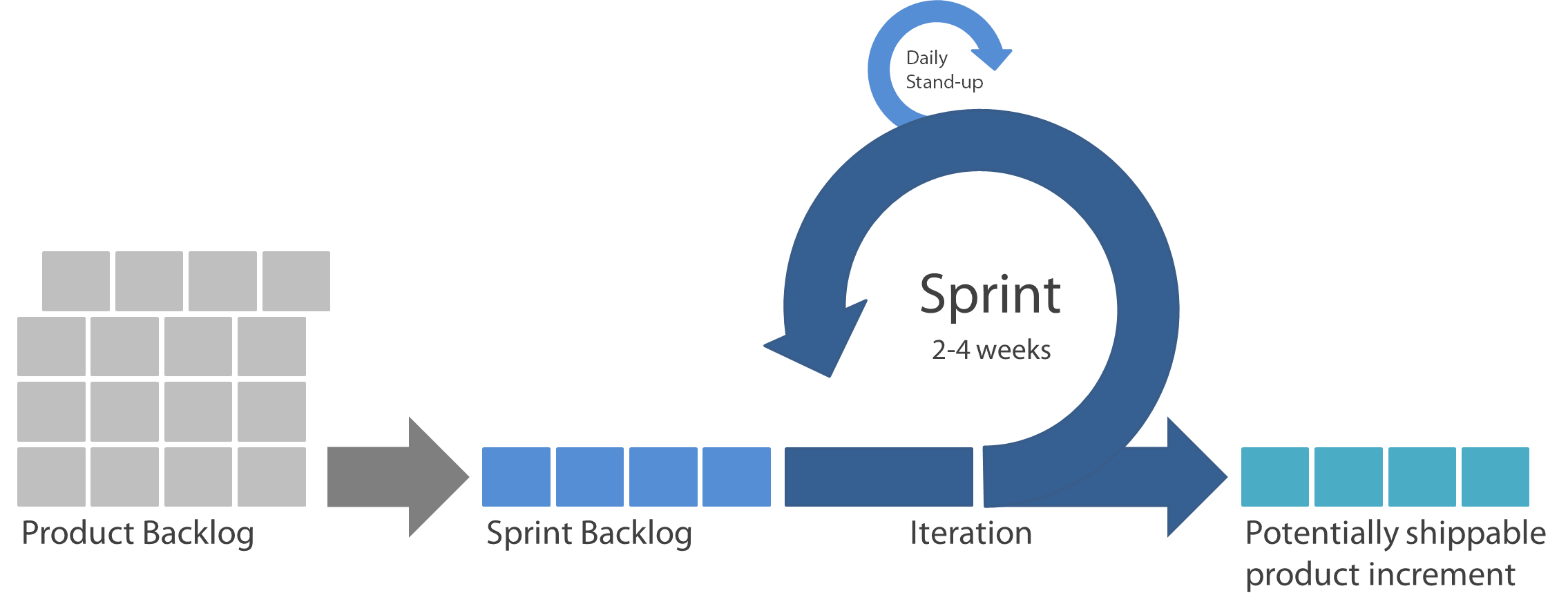
Agile Mobile app development

ULTIMATELY, WHAT IS THE SUCCESS OF MY APP TRULY BASED ON?


App development is a science based on trial and error. The secret to eventual success involves tempered expectations. The most common success stories are based on a solid beta test or a proof-of-concept that is splendid enough to generate another round of funding and maybe even attract some press.
Most app developers have big dreams for their grand product before even entering the scene. But, remember: to traverse a mile, you must take your first step. So come up with a grand idea, believe in yourself, and enlist the help of professional developers who can turn your vision into a reality that will change both the mobile app industry and the lives of the consumers.