Monday, 13 October 2014

Retailers must keep the shopper in the middle

(theguardian.com)
It’s easy to be seduced by the idea that we are falling out of love with shopping as an activity, but it remains one of our favourite pastimes. However, we are losing interest in outdated modes of shopping. A trudge around a dreary shopping centre can pale in comparison to the almost infinite variety of online.
As shoppers we are becoming increasingly wedded to new forms of retail experience. Powered by smartphones and new technology, modern, agile consumers are searching, shopping and sharing wherever they are and whenever they want to. They demand a seamless experience that allows them to flit between channels and touch points at will, with no loss of quality or momentum. They want to be recognised and allowed to pick up experiences where they left off, without having to start their journey afresh.
Rather than seeing technology as something that is destroying their business, savvy retailers are looking at ways of harnessing it to enhance the overall shopping experience. Where retailers tend to think in channels – physical stores, e-commerce, direct selling and third party agents – the consumer only sees a means to an end in achieving a purchase. They don’t care where it comes from, only that it fulfils their needs as a shopper.
There are plenty of opportunities at the intersection of retail and technology that can serve the shopper better
Harris + Hoole coffee shop in London
There are plenty of opportunities at the intersection of retail and technology that can serve the shopper better. Loyalty cards may seem old hat, but if you embed a loyalty app in your smartphone it can learn from customer behaviour in both the physical and digital worlds. By responding to a click, a tap or simply just being in a store, the device can serve up smart offers, inspiration and product recommendations in real-time. Coffee company Harris + Hoole’s mobile app is a great example, allowing customers to check in to the store and order their favourite drink without queuing.
As well as better service, technology is helping shoppers find what they want faster and more directly, often with the help of their peers. Rather than try to stifle those who bypass traditional communications channels to find out about their brands, retailers need to find ways to let consumers share interesting, fun or positive experiences and content.
Only a tiny proportion of cosmetic content on YouTube is from brands. The majority of reviews, tips and makeup lessons are from fans, some of whom have millions of followers. Working with these advocates can provide “social proofing”, where people feel they are arriving at their own decisions rather than being ushered there by a faceless corporate entity trying to sell them stuff.
Elsewhere, shoppable content is promising to throw open the doors of retail possibility further. Asos, TK Maxx and H&M have all experimented with ads that allow direct purchasing to be made. Soon consumers will expect the act of clicking on an image to start the purchase process.
The possibilities to enhance the shopping experience continue to abound with new technical expressions by the week. For retailers, the key is to not get sidetracked by the gimmicks and remember that whatever else changes, the consumer needs to remain at the centre of the equation.

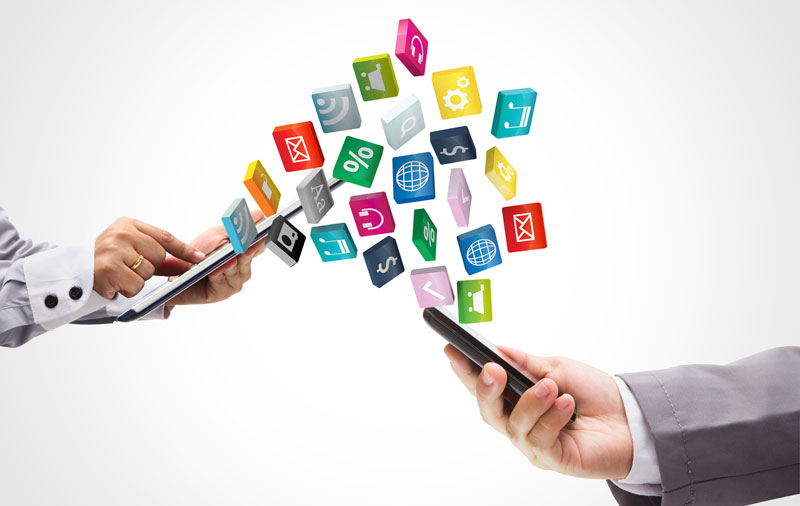
11 Steps to Getting More Money Out of Your Mobile App

(phunware.com)
Mobile-Apps-Features

$2.4 million dollars.

At one point, that’s the amount of money Clash of Clans (a combat strategy game) made…in a day. That success led Supercell, the game’s developer, to a $3 billion valuation.1
That’s a lot of money. You’d probably be okay with a fraction of that success.
To get there, it’s up to you to create a compelling app that attracts a large, engaged audience. But it’s also your responsibility to use tactics and strategies that will allow your app to produce ongoing revenue.
Monetization is more than just making money with your application. It comprises an evolving, complex set of opportunities to boost your profitability. Advertising is the primary component of monetization, but not the only one. Let’s take a look at how to turn your app into a consistent revenue stream with a comprehensive range of monetization tactics.

Steps to Mobile App Monetization

  1. Start with strategy.
    Without a monetization strategy, driving business success isn’t likely. Application development and monetization need to be part of the same overall strategic plan. Your plan must fit your target audience and overall objectives. What are your revenue goals? Which audience segments do you want to target? Do you want to increase your reach into certain demographics?
  2. Consider freemium.
    Many publishers today use a freemium model, in which the application download is free and there are items available for purchase within the application itself (extra features and functionality, virtual purchases, etc.). This friction-free download model lets you turn samplers into committed, engaged users. From 2012 to 2013, freemium saw 211 percent revenue growth, while paid and paidmium (in which users pay for the app and in-app purchases) declined.2 Once you have an audience’s attention, there are many ways to monetize it, including mobile advertising, in-app purchases and subscription models.
  3. Find the right monetization partner.
    Advertising within your mobile app is a common monetization strategy, with click-through rates that exceed 12.5% in some cases.3 Since mobile app developers aren’t advertising experts, it’s critical to find a partner that understands both app development and advertising. Are you going to devote some of your app’s real estate to advertising? Are you going to purchase mobile ad space in other apps? The right mobile ad network will be able to help you with both strategies, and will offer features like:
    • A brand-safe publisher network to make sure your ads don’t appear anywhere you wouldn’t want them to.
    • Deep data sets that enable predictive mobile ad targeting for the highest ROI.
    • Stateside account managers who are available when you need them.
  4. Pick the right kind of in-app ads to fit your preferences and goals.
    For mobile advertising, one size doesn’t fit all. Maybe you don’t want your app to display banner ads, but you do want to use cutting-edge video ads. There are many kinds of mobile advertising, and each has its own benefits and drawbacks. Some come with higher development costs than others, but may drive higher click-through rates. You’ll have to find the right mix of ad types to hit your objectives. You may also want to consider native advertising options, where in-line or other native ad types mesh more seamlessly with your application experience.
  5. Don’t let advertising wreck your app.
    If the ads displayed in your app are relevant, attractive, appropriate for your customer profile, and they don’t block basic usability, many of your app’s users may end up tapping on them. But if ads pop up too often in your app, are ugly, block app functionality, or don’t align with your customer profiles, they may actually work against you. Your choice of ad network can play a role here, too: The right partner will help you make sure that your mobile ads are as successful as possible.
  6. Localize your advertising.
    Relevance is the core of successful advertising. Some mobile advertising partners can localize (or hyper-localize) your advertising to make it more relevant using technologies like beacons, Wi-Fi, and GPS. This technology allows real-time mobile ad targeting that connects to real-world customer experiences. Think about it: Would you be more likely to respond to a mobile ad containing a coupon for a certain store if you saw the ad when you were in the parking lot of the shopping center, rather than sitting at home in your bathrobe? Of course you would. And so would your users. In fact, 63 percent of smartphone owners say they are more likely to click on a mobile ad that offers a coupon to a nearby store.4
  7. Consider advertising outside your application to grow your audience and increase revenue opportunities.
    Look into CPI (cost-per-install) advertising, where you pay to promote your app in other applications, leading the audience to install your app. Since the cost of CPI depends on the number of installations the ad generates, the ad network has skin in the game. In other words, it’s in the best interest of the ad network to place your ads where they will be successful—the network only gets paid when someone installs your app.
  8. Push relevant information outside the app.
    Push notifications don’t necessarily generate immediate revenue, but they do improve long-term engagement with your app, giving advertising more time to work. Users who enable push have 88 percent higher engagement and nearly three times higher retention than those who disable it.5
  9. Explore in-app purchases and mCommerce.
    You can encourage users to spend money within your app. This approach works better for some apps than others. If you play mobile games, you know all about upgrades, consumables and in-app currency. Maybe your app isn’t a game, but think deeply for a moment about what you could sell through your app. Examples include extra functionality and tools, enhanced features and deeper content. Aside from their revenue potential, in-app purchases are also great for giving you insight into what interests your users—so you can do more of it.
  10. Look into offbeat monetization tactics.
    Consider some unusual ways to make money. For example, traditional media relies on subscriptions. Could you create a premium subscription model for your app that provides behind-the-scenes information or strategies, unlocks codes, or gives access to hidden levels? Could you develop auxiliary apps that attract new users and drive cross-promotion? Could you “white label” your code (license it to developers who use it as the core of their apps)? Are there opportunities to sell the data your app collects to marketers?
  11. Optimize your efforts.
    It’s much easier to optimize and track your efforts with robust analytics, and a data-driven strategy gives you better results and a better ROI. Learn which efforts are most successful with your audience, pursue those, and your margins will increase accordingly.
Finally, there’s one major consideration to keep in mind. Mobile monetization is an evolving space, with lots of innovation and evidence to help you tune your efforts. You need to keep in touch with trusted advisors who can help you stay attuned to emerging capabilities. There’s no reason your app can’t turn into a dependable revenue generator.

Overstock.com tests the combination of TV and mobile commerce

(internetretailer.com)
The smartphone is the best option for consumers wanting to buy what they’re watching on TV, says Overstock’s marketing chief.
Overstock.com Inc. is testing a combination of TV commerce and mobile commerce to get couch potatoes with smart TVs and armed with mobile devices, or just the TVs, to buy what they see on Overstock.com’s latest TV ad campaign, dubbed “Overstocktober.”
Overstock.com, No. 30 in the recently published 2015 Internet Retailer Mobile 500, is using TV commerce technology and services provider Delivery Agent Inc. for the campaign. Delivery Agent first added Overstock.com to Delivery Agent’s ShopTV smart TV app, which features a variety of retailers and brands including Wal-Mart Stores Inc., Fanatics Inc., Wayfair.com, Ticketmaster, Pepsi, Cuisinart and Schwinn. ShopTV appears on close to 20 million smart TVs and related devices, and expects that number to double next year. So any consumer with a smart TV with the ShopTV app now can shop Overstock.com through the app.
But buying via the TV commercial requires a technology that Delivery Agent says is critical to the future of TV commerce: ACR, or automatic content recognition. Television networks, content producers and advertisers embed their programs and commercials with what amounts to an electronic fingerprint. Delivery Agent uses what it calls a proprietary data engine to identify these fingerprints that tell the smart TV what is being displayed, like an Overstock.com commercial. Automatic content recognition technology also can be used to enable a “handshake” that links a smart TV and a mobile device.
When the Overstocktober commercials appear on a smart TV with ACR technology (about 50% of all smart TVs today, Delivery Agent says), an overlay appears, showing a special offer on a bed with three choices: Shop Collection, Exclusive Offer for Mobile and Exit.
A consumer can use her remote control to click on Shop Collection and be taken to the ShopTV app to shop the advertised products, click on Exclusive Offer for Mobile to be texted a hyperlink to the special pages on the Overstock.com mobile commerce site or app, or click on Exit to dismiss the overlay. Consumers with existing ShopTV accounts will not have to enter their phone numbers to receive the text; other consumers can use their remotes to enter their mobile numbers. Also, the text links are deep links, meaning they can sense if a smartphone user has the Overstock.com mobile app on their device and instead of opening a mobile web page send that user to the page in the mobile app.
The smartphone is the best option for shopping for a TV viewer: She already is familiar with how to shop on a smartphone and she doesn’t have to interrupt what she is watching, Saum Noursalehi, senior vice president of marketing at Overstock.com, tells Internet Retailer.
23% of U.S. Internet users browse the web or apps on their smartphones while watching TV and 19% do the same with their tablets, according to a June 2014 Harris Interactive poll. 26% shop online (via PC or mobile) while watching TV, the poll says.
“The smartphone likely will be the preferred method for shopping,” Noursalehi says. “But we will be experimenting with various options with Delivery Agent, including opening a web browser on the TV screen and shopping there. But I think the phone is the best. It does not interfere with the TV experience, and so many people have become accustomed to using their mobile devices while watching television.”
Noursalehi adds that the big benefit of TV commerce may not be the commerce itself but the engagement and transactional data retailers glean from TV shopping activity. TV advertising has always been a “black box” to marketers—difficult to target, measure and quantify, he says.
“But with all the data generated by the smart TV and smartphone interactions, we will be able to much more intelligently know which channels, times of day and so forth perform best,” he says. “Being able to measure the click-through rates and transactions a TV campaign generates will enable us to turn around and be smarter about our ad purchase decisions. On the surface, TV commerce seems like another selling channel, but the bigger value is in the data we will get out of it.”
For this test, Overstock.com is paying Delivery Agent a fee for each thousand impressions, the CPM model standard in online advertising, but the retailer may turn to an affiliate relationship in the future. The two companies will be testing different language on the TV overlay and can make changes to the campaign as it runs.
Delivery Agent says it is finishing a study with Nielsen that shows consumer engagement levels with TV commerce to be very high.
“We need to make it easy for users, and that means a multi-device experience: a smartphone, a tablet and a remote control,” says Delivery Agent chairman and CEO Mike Fitzsimmons. “Shopping is a form of entertainment, and when done correctly, bringing the two together can be a powerful thing.”

Friday, 10 October 2014

How Proximity Marketing Is Driving Retail Sales (forbes.com)

Dating back to 1960 and E. Jerome McCarthy’s concept of the “Four P’s of Marketing,” using Product, Price, Promotion and Placement as the primary pillars of marketing strategy has served companies and their investors very well. And although the Four P’s have gone through various iterations over the years, I believe that another “P” – “Proximity” – is most relevant to investors today, as it represents the final connection between companies and consumers. With Bluetooth-enabled devices and a consumer who has expressed a willingness to receive ads (“opted-in”), leading retailers and brands including Apple AAPL +0.47%, Macy’s, Coca-Cola and Procter & Gamble PG +0.84% are utilizing Proximity Marketing to close the last gap between the customer and the register.
The idea of Proximity, the physical location of a product with respect to the consumer, involves a new dimension previously untapped given the limits of technology until recent years. Sometimes called hyperlocal marketing, Proximity Marketing uses cellular technology to send marketing messages to mobile-device users who are in close vicinity to a business.
Via a Wi-Fi or Bluetooth signal, proximity marketers can send content similar to a mobile application program (app) that appears automatically on the mobile devices of consumers. While the audience is limited to those in the proximity of the business and those using its wireless signal, the message is very user-friendly and reaches those most likely to buy.
Why Should Investors Care?
According to JiWire, the facts are clear as it relates to the value of Proximity Marketing:
53% of consumers are willing to share their current location to receive more relevant advertising.
57% of consumers are more likely to engage with location-based advertising.
62% of consumers share local deals with friends.
63% of consumers feel a coupon is the most valuable form of mobile marketing.
Targeted offers based upon proximity leads to higher conversion rates, which is the ultimate goal for brands and their investors.
In an article on iMedia Connection, Yory Wurmser talks about Apple and its role in Proximity Marketing. “Apple created a wave of excitement in the retailing world last fall when it released iBeacon, a proximity messaging system based on Bluetooth Low Energy (BLE) location beacons and integrated into iOS. By baking hyperlocal messaging into the operating system and letting apps send push notifications seamlessly, iBeacon and similar capabilities in Android promise to make hyperlocal marketing a much bigger reality.” Even if you are not pushing offers to willing consumers, a big initial contribution of hyperlocal tracking may be improved analytics rather than proximity messaging.
bag_low
Macy’s, an early adopter of Proximity Marketing, announced in September that it will be rolling out the technology to all of its stores after a successful pilot last holiday season. Shopkick ’s shopBeacon technology, an enhanced mobile location-based feature built upon Apple’s iBeacon, will be placed inside certain store departments and allow Macy’s to send personalized department-level deals, discounts, recommendations and rewards to customers who opt-in to receive the offers.
In addition, brands such as Coca-Cola, Procter & Gamble, Levi’s and Kraft have implemented InMarket’s version of the technology. InMarket has reported that interactions with advertised products increased 19 times and in-store app usage was 16.5 times higher for users who received a beacon message.
In casinos, beacons can be placed at the entrances to engage customers as they enter (or exit) the casino. Further, beacons can be placed in the slots and ER gaming area, the poker room, the gaming tables, the bars and restaurant. This allows casino operators to engage with customers depending upon their gaming and visitation behaviors.
A large casino in Las Vegas is using Proximity Marketing to tailor messages to customers of all types. For example, someone could enter who is not a member of their players club, and a reminder could be sent on the benefits of joining and instructions on where to sign up. On the flip side, VIP customers could come in and be sent a welcome greeting. In addition, VIP hosts could be alerted and meet the VIP guests with their favorite drinks.
An Effective Tool For Generating Higher ROI

Proximity Marketing has tremendous revenue-producing potential, allowing everything from retailers, hotels, casinos and more, to deepen their connection with consumers, encourage more loyalty and greatly improve the customer experience. Importantly, all of these factors combine to make Proximity Marketing a very effective tool to generate higher ROI for businesses and advertisers.

The Ultimate Wearable? It's 'Invisible' (informationweek.com)

Wearables and other digital devices should be heard and not seen, says product design consultant Stuart Karten.
If you build wearable devices and haven't yet seen the 2013 movie 'Her,' in which a lonely writer falls in love with his computer's "virtual human" operating system, perhaps you should.
Or so suggests Stuart Karten, president of Karten Design, a Los Angeles-based industrial design consulting firm that's worked with a variety of major consumer and medical device manufacturers, including Samsung, Procter & Gamble, and Medtronic.
Karten was one of several speakers at last Friday's Body Computing Conference at the University of Southern California in Los Angeles (USC). His message: The best digital devices are unobtrusive and integrate seamlessly into our daily lives. In a sense, they're "invisible."
Which brings us "Her." So what's the connection?
"It's a love story between a man and his technology," Karten told the conference audience of medical, investing, and tech industry professionals. "Technology is seamlessly integrated into his entire life."
(Image credit: Keoni Cabral via Flickr)
Samantha, the voice-controlled OS and object of the protagonist's affection, is a powerful "virtual human" capable of complex interactions that seem effortless.
[It is hard to make drones invisible. Read A Drone To Watch Over Me.]
"First of all, she's powerful -- huge computer platform in the background, algorithms at work," said Karten. "She's ubiquitous, she follows him everywhere, and she's intuitive. He speaks to her in natural language, and there's no friction between him and the interface."
But what's most compelling about Samantha and the digital devices of "Her" is what you don't see.
"You don't see sensors, you don't see electronics, and even the devices are minimalized," said Karten.
The hardware, in fact, isn't designed to stand out or make a statement, nor is the user interface.
"There's no glossy white, matte black, glass, aluminum," Karten added. "It's so human. It's informal. It's natural. No awkward sentence constructions like 'open Google' or 'weather in Detroit.'"
By comparison, today's device makers (and many consumers) are "obsessed" with screen size, resolution, thickness, gestures, and "bendability," Karten said.
This may change soon enough, though.
"I believe the future of our interaction with technology will … be invisible," Karten predicted. "We will need to camouflage our devices. We will need to make them less intrusive."
Today's wearables have many good qualities, of course, such as the ability to affect behavior change (e.g., exercise daily) and deliver fast access to relevant data. But their truth value as a mainstream digital device is still unclear.
Said Karten of wearables: "You put them on your body and you can take them off. They're not fully integrated into your life. So my perspective is that wearables are a step toward something much bigger and better."
So what's really the next big thing? Perhaps a natural-language audio interface not unlike what's shown in "Her."
"What everybody wants is to bring information to people -- when and where they want it -- to allow us to interface with the digital and real world," said Karten.
But today's wearables often create a barrier between those worlds, resulting in a public boredom or backlash. Consider, for instance, the "glasshole" pejorative hurled at early adopters of Google Glass. (Karten wondered if people who check their wrist wearables too often might soon be labeled "glanceholes.")
Device designers must move beyond wearables and focus on "invisibility" to keep users engaged, Karten stressed.
"As a designer, I'm keenly involved in the interface between technology and people," he said. "We design to surprise and delight people. We also design products that have to do with life and death. And the ability to reduce the friction between people and technology has a huge effect on whether or not people will adopt that technology."

7 Tips for using Kickstarter to fund your app development (appclover.com)

My first experience was a lot of mistakes and a lot of research, but I wanted to share what I’ve learnt thus far with anyone else that may be taking the Crowd Funding route. Here is a set of SEVEN tips and advice that will hopefully help some of you out there when starting your own Kickstarter Campaigns!


1. PLAN IN ADVANCE!
There is just so much out there, and seriously, no one is going to back your campaign if they don’t know you’ve already done something. From my own experience, I went into my Kickstarters with work already started. People want to see something, a prototype, a concept, something that will show them how your final product will look.

2. CREATE A BEAUTIFUL PRODUCT, EVEN IF YOUR PRODUCT IS VIRTUAL!
Kickstarter has (in my own opinion) become a “shopping” website rather than an actual crowd funding website. People from my own experience, have been using the site as a means to shop for the latest gadgets and items that are unique and one of a kind. Those who DO support you without purchasing tend to be friends or people you know who really may not understand what you’re really doing or what they are getting in return other than “I was able to support my friend in their project”. So for end users, create beautiful product images that make even your digital or virtual items look like a physical product. If you have to, get a box and make it look like it’s something a person could hold. VISUAL is the key here, as people want to see what they are getting at the various levels rather than reading all the extra text from the various backer levels you’ve placed.

3. IGNORE THE SPAM!!
Right off the bat, when I launched my project, I was bombarded with so many emails and messages from people trying to sell me on promotion and marketing services to my Kickstarter campaign. I even got lured into several of them and paid and got ZERO (0) Results! Don’t fall for these $10, $5 scams in my opinion, as they tend to add up and by the end of it all the only people making money are the people who are TAKING it from you. I actually l got some great advice from the web which was basically to think about the services you’re using to “Promote” your Kickstarter campaign for you…YOU’RE NOT THE ONLY CAMPAIGN THEY ARE PROMOTING!!!! Which means that even if they have 250k users, those users are seeing MANY projects, including yours, and in some cases (in many in fact) the users may not even be real users!!! But hey, spending $5-10 really makes you feel like you’ve accomplished something in the short term, but long term if you get no pledges, then you’re wasting your time and money. Facebook and social media worked way better for me than spending money on these so called promo services. But once again, this is just from my own experience thus far
.
4. MAKE A VIDEO!!!
Kickstarter even tells you this itself, and it’s not a joke, using video is a very powerful tool and can get more users engaged with your campaign. Not making a video is a complete waste of time in my opinion and you should not start a Kickstarter campaign without it. It doesn’t have to be fancy, just stick to the final product and vision you’re trying to convey to backers. Think of this like investors looking at your idea. Would YOU want to purchase this if you saw this video? Also KEEP IT SHORT! 3 min max approx. Anything longer and it REALLY gets boring (in my own opinion) unless there is something you really believe will create a buying decision for a potential backer.

5. CHECK YOUR DASHBOARD AND KICKTRAQ DAILY!
I found out about these two after running my first campaign (which I’m now redoing – I’ll post the link below). Dashboard is an area right inside your Kickstarter project page that allows you to view a lot of solid data on your campaign! http://www.Kicktraq.com is another website that also has INCREDIBLE information about your project and can even give you predicitions on if you’re going to hit your target or not! Really solid stuff, I recommend checking it DAILY!

6. DON’T POST TOO HIGH A BUDGET – YOU CAN’T CHANGE IT AFTER!!! (YOU HAVE BEEN WARNED!)
This was my big mistake on my end. I put out a budget that I was not going to hit, and unfortunately, I had to cancel the project early in order to re-start it again with a new budget and also to change a lot of things inside of my campaign (From shorter text to smaller images to a better page). Lower budgets will help you hit your target faster and on the Kickstarter website this REALLY helps get users to want to back you.

7. KEYWORDS AND SEO!
YES This does work as well! Kickstarter has a search engine, and I realized that if you throw in keywords that users are going to type in, you’ll get listed higher! My own title I adjusted to add my game name PLUS the mobile platforms and several other keywords as follows:
Armies of Riddle Mobile Card RPG Game iOS & Android Redo
As you can see above, I’ve underlined the keywords that many of my target market will be typing into the search engine if they are looking for similar kickstarter campaigns. The neat thing is if you type in ANY of those right now (Sep/Oct 2014) while the campaign is active, my own campaign shows up within the first 10 results (Except for RPG)! HOW COOL IS THAT!?

BONUS TIP 8: SOCIAL GROUPS
Using facebook and google+ groups targeted towards your specific market can help you gain more backers and eyeballs to your campaign as well. Just be kind and don’t spam. I find that if I ask the group creator if it’s okay to post my campaign or if they state it there that it’s okay to do so, then I will go ahead and do it.

BONUS TIP 9: MAKE A CALL!
That’s right, pick up your phone, and go through your phonebook and ask your friends and family to pledge with you over the phone or even send them an sms text. You don’t have to look desperate, but in many cases I’ve found that many people have ironically never heard of Kickstarter or have never used it and thus don’t understand the concept. I’ve told others to “Pledge” rather than “Back” my project because many people understand the concept of pledging. Don’t be afraid to make a call, as that tends to get you backers guaranteed vs online methods (This has been my own experience).

Mobile in-store experiences are boosting sales (mobilecommercedaily.com)

manonstreet
Attendees at the Mobile Shopping Summit 2014
LITCHFIELD PARK, AZ – Talk this week at the Mobile Shopping Summit 2014 focused on combining the influence of mobile with in-store sales as brands and retailers become more heavily reliant on and comfortable with mobile technology.
Mobile Marketer’s Caitlyn Bohannon asked exhibitors and attendees, “What is a key trend you saw involving mobile commerce at the Mobile Shopping Summit?”
Here is what they had to say, in alphabetical order by company name.
Momchil Kyurkchiev, co-founder and CEO at Leanplum, San FranciscoThe main trend I saw at the Mobile Shopping Summit was a shift in mentality for large brands from treating mobile as a testing playground to treating it as a business unit. Personalized mobile experiences hold the key to unlocking customer lifetime value, and it seemed that for most brands that meant exploring marketing automation use cases around location, such as geofencing and iBeacons.
Karyn Andrade Bordoni, marketing manager at Mowingo, Inc., Los Altos, CA
I think retailers are going to continue to leverage location, via beacons, and we will see more stores roll out this technology in the future. Beacon deployment is still currently in the test phase, as seen by the Lord & Taylor and Macy’s pilot programs, and our own experiments.
The fact is, while we as consumers are married to our mobile phones, in order for retailers to jump into the mix, they have to be able to monetize and measure their efforts with beacons. That’s going to take a while, but this proximity-based mobile messaging has become incredibly important as another targeted channel to reach customers, since retailers have flooded the email channel, which I think is in danger of becoming worthless.
Retailers need to remember, it’s not about quantity; it’s about providing timely, location-based, and contextual notifications, in order to deliver the most relevant experience possible.
Michael Georgoff, vice president of new products at RetailMeNot, Austin, TXEveryone has finally recognized that the true value of mobile is a companion and influencer for offline, real world experiences.  And with that recognition, as a group we’re starting to grapple with next order challenges like attribution, using hard numbers to prove to skeptics that mobile drives sales at scale in stores.
Keith Halasy, director of marketing programs at Urban Airship, Portland
I gained a lot of insights in the area of mobile engagement, but I was struck by the number of conversations with people looking to get statistics that support ROI on mobile apps – sales driving by push, rescued shopping carts from reminders, incremental revenue driven by push to segmented users. It’s great to see interest is pushing further and scaling up.  
Sara Livingston, director of marketing solutions at WeatherFX, New YorkOne of the biggest trends that consistency came across in the conference is the importance of a seamless user experience across platforms, and how even as consumer time spent on mobile increases, mobile cannot be considered a catch-all and solve-all platform.
Notably that the users’ experience on mobile is fundamentally tied to what they’re trying to achieve, either through finding information, the transaction or sharing information, and that is not the same across all retailers. As a result, there is not one-size-fits-all solution for how retailers should approach mobile, and if they should be focused on app versus mobile Web.
Also, all of this is tied to the users location, such as in-store versus on the go versus at home, and it is extremely important that retailers are factoring in all of these components and messaging users differently.
As for beacons, they will definitely have a tremendous impact on the in-store targeting experience, but not quite yet. As neither retailers nor the supporting tech are in a place to truly activate at scale outside of initial testing.