Tuesday, 12 December 2017

SMS Marketing vs. Mobile Marketing: Where, When and How to Use Them

business.com

SMS marketing helps your team hit your SMS metrics, while mobile marketing can help you improve your customers' interaction with your brand. Learn more about how to harness SMS and mobile marketing in your sales strategy.
Thanks to the resounding popularity of smartphones and other mobile devices such as phablets and tablets, marketers have found ways to integrate SMS marketing and mobile marketing into the fold of digital marketing strategies.
Although both can be viable marketing tools for your business, it's important to know what distinguishes one from the other to help you strategize your campaigns. But first, here are some staggering numbers of global smartphone and tablet use:
  • As of spring 2017, there are 237.7 million cellphone users in the United States.
  • In China, approximately 1.4 billion mobile phone subscriptions were registered in September 2017.
  • An online survey conducted in the U.K. in May 2017 revealed that a high percentage of Brits owned smartphones, while 11 percent of the respondents owned basic phones.
  • By 2018, the number of tablet users in the United States is forecast to be over 177 million.
  • This year, Americans will spend 91 minutes on average on mobile apps daily, compared to 76 minutes in 2014.
It is no wonder that marketers are pouncing on digital communication to deliver content and reach customers as part of their digital marketing strategies.
To help you choose the right channel for your specific marketing objectives, here’s a rundown of how SMS marketing and mobile marketing stack up against each other.

SMS marketing

SMS marketing is the use of a mobile phone to send SMS (short message service) or text messages that contain promotional content, such as special deals, product updates, or any other marketing information directly to customers.

How it works

SMS marketing is a permission-based strategy where customers opt in to receive marketing offers from you. By texting a specially designated keyword to a short code, which is usually a 5-digit code, customers give your company permission to be added to your SMS database.

You could also get customers' approval to collect their number when you're on the phone with them or through a sign-up form on your website or at your physical store's register.

Advantages of SMS marketing

Since text messages are generally opened within five minutes upon receipt, SMS provides you an instant way of marketing to your customers and building brand loyalty.
You can, therefore, leverage text message marketing to issue reminders, delivery notices, limited time or exclusive offers and redeemable coupons. It's also an effective method for engaging customers through polls or survey-type messages.
SMS marketing allows you to personalize text messages for recipients of your messages. When you insert a customer's first name into your message, you're more likely to capture their interest and attention – in addition to generating a good response and conversion rate.
Another benefit you can get from text message marketing is that it has automated response functionality. Depending on the action your subscribers take, you can send messages automatically to their phones that would trigger a series of follow-up replies or actions from your SMS software to engage customers further.
Last, but not least, most SMS marketing applications provide an option that allows for easy segmentation and management of your SMS database. This makes SMS marketing a cost-effective business strategy that helps your team hit your SMS metrics.

SMS Marketing Tips

  • Be clear in communicating what your SMS marketing campaign is all about: what types of SMS messages your customers will receive, how often they will receive them and how they benefit when they opt in.
     
  • Give subscribers who may no longer be interested in your notifications the chance to opt out anytime by including relevant instructions in your text campaigns from time to time.
     
  • Don't text during irregular hours, and don't use shorthand texts. Aim for a professional tone instead.
     
  • Add a disclaimer in your initial text message about possibly incurring data and message charges if customers don't have unlimited plans for their subscription.

Mobile marketing

Mobile marketing is the practice of marketing your business on the mobile device platform, smartphones and tablets included, although current trends are extending the concept of mobile marketing to other gadgets, such as smartwatches.
It's a multichannel digital marketing strategy that utilizes websites, social media, mobile apps, and SMS/MMS (multimedia messaging service) to send mobile ads to audiences.
The key with mobile marketing is to use smartphones and other handheld devices to provide potential or existing customers personalized and time- and location-based information about your business.

Types of Mobile Marketing

Mobile marketing is a well-rounded technique in digital marketing because it gives you several options on how to format your ads. Some of the most popular strategies used to market on mobile include the following.

Video ads

As digital technologies make video-watching possible on mobile devices, you could create video ads to reach your target market in a nonintrusive way.
Contrary to being intrusive, many consumers consider video ads entertaining and engaging. Your video ads can be part of your MMS messages that you send from your mobile messaging service provider or website to your mobile audience.

Mobile apps

Mobile consumers spend 82 percent of their time using mobile apps, which makes app-based marketing or in-app advertising a popular strategy among marketers.
Facebook is an example of a third-party mobile app that enables you to integrate your ads into the social media platform through sponsored posts.

In-game mobile marketing

Mobile games can also host your mobile ads, which can be in the form of banner pop-ups, full-page image ads or video ads that load in between game time.

Location-based marketing

This allows you to send ads on users' mobile devices when they are within a specific distance to your business or location. Fast food or other specialty stores are using this strategy to promote brand awareness among consumers.

Mobile search ads

These are ads that customers see when they do a basic search on Google. Often ads will have extensions like click to call or maps to help users find your business.

Mobile marketing tips

  • Optimize your ad's message, format and design for mobile. With the small screen that you have to work with on mobile devices, every space and word should be used wisely.
     
  • Your business's home page must be responsive to mobile SEO so users can find your local business at the time of their search.
     
  • Know your audience. You'd do better, for example, to use in-game ads to interact with gamers rather than sponsored posts on social networks like Twitter, Instagram or Facebook. 
As users continue to use mobile devices more and more, it's safe to say that the future of digital marketing is shifting more toward mobile, specifically SMS marketing and mobile marketing.
SMS marketing can help you build a more direct and personal relationship with your audience, while mobile marketing can help you improve customers' interaction with your brand. Either way, it's a must for you to incorporate these two strategies into your overall marketing plan.

TV networks are buying original digital series for their apps

digiday.com

In a tenuous market for short-form video content, digital video creators might have a new, but old friend: TV networks.

Discovery Communications has aired nine original digital series since August on its nine TV Everywhere apps for its TV networks that include Discovery Channel, TLC and Investigation Discovery. These shows include “The Ballad of Parker and Todd” for Discovery Go, “90 Day FiancĂ©: What Now?” and “The Spouse House” for TLC Go and “Village of the Damned: Welcome to Dryden” and “Still A Mystery” for Investigation Discovery Go. (TV Everywhere is the industry term for video streaming apps that require users to log in with their pay-TV credentials to access the full library of content.)

These digital shows, which Discovery has dubbed “Go Originals,” are produced by a dedicated team led by Fred Graver, svp of digital content and social for Discovery Digital and Twitter’s former head of TV. In 2018, Discovery plans to create more original digital series, some of which it will commission from external production partners, said Michael Bishara, svp and gm of OTT and digital syndication for Discovery Communications. “We’re looking at both options; it’s about ensuring that we have the best product possible,” he said.


Discovery is among a number of TV networks taking pitches for original digital content from outside production partners, all with the aim of getting people to visit their apps more regularly. One Los Angeles-based digital studio executive said he’s had pitch meetings in the past few months with Discovery, NBCUniversal and Turner about producing original programming for those companies’ TV Everywhere apps.
“Everyone knows that the future is not recycling old TV content; you need to get some new stuff,” said the studio executive. “Those guys are becoming buyers of mid-form and short-form content because they don’t need another hourlong procedural; a short series that gets people into the [app] works just fine.”

Discovery’s short-form shows typically last five to 10 episodes, with each episode running for 10 minutes or less. Most of these programs are associated with an existing TV show, such as “90 Day FiancĂ©: What Now?” which revisits couples from previous seasons of the TLC reality-dating series. That said, Discovery is looking to make more digital shows next year that are independent of its linear TV programs, Bishara said.

Beyond TV Everywhere apps, other TV buyers include ABC Digital, which is focused on short-form drama and comedy programs; and Comedy Central Digital, which continues to view web series as a farm system for new talent and ideas for TV shows, digital studio sources said.

A+E Networks, which operates the Lifetime Movie Club and History Vault subscription streaming channels, is talking about potentially commissioning original content for those services, said Evan Silverman, evp of global digital products and platforms for A+E Networks.
Of course, when it comes to subscription streaming channels, TV networks are already trying to create TV-sized original series for those platforms. CBS, for instance, has already launched a new “Star Trek” show and a sequel to “The Good Wife” on CBS All-Access, its $5.99-per-month subscription streaming channel. More recently, CBS announced a “Twilight Zone” reboot with Jordan Peele.

These are TV-level productions, Rob Gelick, svp and gm of digital platforms for CBS Interactive Entertainment, told Digiday in a previous interview. That might make it tough for most digital studios and publishers to get onto CBS All-Access. Other niche subscription streaming channels are willing to commission original content, though. AMC’s Sundance Now, for instance, will premiere “This Close,” an original series produced by Turner-owned digital media company Super Deluxe, next February.

Some TV networks, meanwhile, are also looking to use digital content to fill up linear TV schedules. Earlier this year, Fuse and Complex Networks formed a partnership to air a weekly 90-minute programming block filled with Complex’s short-form videos and series, including shows such as “Hot Ones” and “Sneaker Shopping.”

Turner-owned cable network TruTV has a weekly 30-minute show called “Rachel Dratch’s Late Night Snack.” Each episode consists of multiple short segments, including comedy sketches, mini-documentaries and animated bits, produced by digital video makers such as Above Average and Super Deluxe. TruTV, which commissions these shorts, has the option to air them as part of a full episode of “Late Night Snack” and individually during breaks in other programming on TruTV’s schedule.

TruTV is also looking to take parts of “Late Night Snack” and develop them into their own TV shows. The upcoming “Laff Mobb’s Laff Tracks” is a show based on a sketch that aired during the first season of “Late Night Snack,” for instance.

“[‘Late Night Snack’] is a great testing ground for creators and producers with whom we want to do more,” said Marissa Ronca, evp and head of original programming for TruTV. “The value of short-form content is as a launching pad for talent development and linear series that’s valuable when used as part of a broader programming strategy and content mix.”

Digital video makers, meanwhile, are happy they have other places to pitch, especially in an environment that’s tough on producers of short-form video series.

“The market changes so rapidly, but you have to be in it and keep up with what’s going on,” said the LA-based digital studio executive.

Monday, 11 December 2017

How to Pick the Perfect Market for Your Mobile App

customerthink.com
Image result for marketing strategy for your app
I have made an app and cannot decide the appropriate Market on which I should publish it! Yes, we have heard this plenty of times from many mobile app developers. For instance, it is far easy to make an app but it requires a lot of patience and research to make a marketing strategy for your app. Launching your mobile app in the market without any prior knowledge of marketing is like fishing in an empty pond. When we talk about the different brands, mostly the big ones have huge success rate no matter what is the quality and efficiency of their app. On the other hand, newbies whose apps are absolutely brilliant class need to strive hard to make their apps outshine in this cut-throat competitive world.
The entire league of apps doesn’t need to combat the different features but also they will have to deal with other installation challenges. In rare cases, if you are lucky enough, you will need to the level of 50 users. If we see the present day reality, a set of the top-rated apps are in their firm position and the entry of every newbie app will not affect their rating in any way.
Take an example of a booking app known as bookmyshow. Besides this app, there are still plenty of apps available in the market but still, this app has managed to stay strong despite the ongoing market competition.
So, the question is how to find your position in this competitive market world with all those great leaders. Here we go,

1) Verify your idea tonnes of time

We have seen many cases where there is a brilliant idea according to the application developer but when it is actually implemented in reality, the story looks entirely different. Many users boast of an idea which will change the world. Like, really? With over millions of apps in the app market, you have really found something which can change the whole course of this world? Well, ponder on this question once again and you will come back to the reality.
The only way to be absolutely clear about your app is to do a lot of Research. In that research, a complete survey of the existing app market is a must. Study every app which has a high rating and finds out the extra features which you can add to set your app apart from others. Also, study some low rated apps to verify what the areas of their improvement are. Finally, when you are totally sure by your decision, you can further go for development and deployment.

2) Target the Niche Audience

Many Android app development companies are making their apps a huge success and earning huge revenues in domestic as well as in the global market. You must be willing to know their secret recipe for success. Well, one thing is quite clear that there is no sense in targeting customers of every category. If you are targeting users of every category, there is a slight chance where only 10 will buy your app from 1000 customers. On the other hand, what is more, important is to target only a given range of audience at first. Target those 100 people who will definitely become your potential customers. It will improve your chances, wherein 90 percent will buy or use your app. Also, you should optimize the marketing resources very smartly to the niche audience to make them feel better and provide a full level of satisfaction.
Name your app with the brand name, for example, if it’s specifically for a particular hotel, give it the same name. But, in case it’s a service provider like booking hotels at a cheap rate, you can choose a unique yet meaningful name to promote it. By doing this, you will be able to target a given set of audience who have a keen interest in looking at your app or even buying the app. You will see a difference as soon as you implement this and your targeted customers will become your paid customers.

3) Choose the right platform

At times, the whole effort of app developers goes in vain because they have no knowledge in choosing the correct platform to give their app a power-packed kick start. Since you have identified your target audience, the next big step is to decide which platform will suit you the most. If your app users are an Android addict, you probably know which platform to choose and the same goes for any other app.
In the present day app market, in one category, thousands of apps are available no matter what their names are. If you are coming with an idea which is already implemented in a similar app available in the market, all your efforts will go in vain. For example, Instagram is the king of photo/video sharing. If you come with a similar idea as of Instagram, there is no point users will move to your app leaving the popular Instagram app uninstalled. The only chance for this is when you offer something extremely better than what they really have. Still, the competition will be quite high.

4) Follow the Latest Trend

Making an app which has all the past technologies implemented in it is clearly not a good idea. Instead, researching will help in this strategy. The Internet is filled with different latest technologies which are in use for app making. Perform in-depth researches on the latest trend, even if you fail, keep doing the same until you find the best possible strategy to make your app bloom in your desired app market. As of now, Xamarin, Appcelerator, PhoneGap, Sencha, and RMAD are some mobile app development tools which are driving a massive amount of app market. Investing your time in such tools is called as right-thinking no matter how much time it will consume. Such apps are worth every second.
Also, pay attention to launching your app at the right time. If you hit everything at the right time, there will be no stopping of your app in the global market for sure.
As an app developer, identifying the correct market for your mobile app is essential and following the above strategies will surely give you the immense knowledge and a way by which you can outshine your app from the remaining ones.

67 Fascinating Facts About Online Vs Offline Commerce Infographic

love.shopping.fm
Don’t we all love online shopping? It’s like buying a gift from ourselves for ourselves. A fact well known is that we’d much rather enter our credit card numbers from the comfort of our own home, rather than standing in line at cash registers. Not to mention how very convenient it is to have your goods delivered to your doorstep, instead of trying to get all shopping bags through your door in one trip from your car.
It’s not new that e-Commerce is a big thing right now. Online sales are rapidly accelerating on a daily basis. But, there still are people here and there that prefer a more tactile shopping experience by shopping in physical stores. There are many reasons why people would choose in-store shopping rather than shopping online, but do they outnumber the ones that keep the online shoppers hooked?
The infographic will provide you with information concerning both in-store and online shopping. Compare the growth rate between both types of sales and see who the top sellers are. Have a look at what people buy most and where. Compare what factors do people take into consideration before shopping in-store and what triggers them to shop online. All the relevant facts and stats are right below.

Thursday, 7 December 2017

Tapping The 10 Habits Of Highly Effective Mobile Heroes To Boost App Marketing And Engagement

forbes.com

In a market where 95% of users are likely to churn within 90 days, spending blindly on user acquisition is a sure-fire way to burn money as fast as you can make it. That’s why smart marketers are shifting away from app installs, surface data, and metrics that led app marketing to the brink of a mobile engagement crisis. Now, marketers are focusing on new ways to drive actions and conversions deeper into the funnel. They have realized value trumps volume.

The ability to architect a comprehensive app marketing strategy–one that prioritizes quality over quantity and engagement over installs–is what will distinguish the leaders from the also-rans. To help you super-charge your approach, and open the aperture of how you view and pursue growth opportunities in 2018, I draw from the lessons and habits of ten remarkable mobile marketers and user acquisition (UA) managers whose expertise has earned them the title Mobile Heroes. Below you'll find advice and tips from Mobile Heroes excerpted from interviews that have aired on Mobile Presence, a weekly podcast series I host (a position for which I am not paid).
1)
Alessandra Sales, VP of Marketing at Smule, has harnessed a deep understanding of users to drive experiences that amaze and engage customers for the company’s social music-making app. Before joining Smule she headed marketing efforts at companies including Zoosk, where the ability to make a match between audiences and advertising was at the core of converting people shopping for the perfect date. 
Learn from your power users. Installs give you volume, but engagement drives revenue. High ROI is the measure of a highly effective campaign, so monitor the metrics that matter most. At the top of the list is LTV (lifetime value), the prized metric that yields the value of future cash flows based on calculations tied to the actions and affinities of your users. Calculating LTV can be a challenge for some app categories, but not for Smule. It monetizes primarily through a subscription model--which generates a highly predictable cash flow. Knowing LTV--and connecting it to early metrics--allowed Smule to “better distribute budget across regions and products, and scale campaigns while keeping a healthy ROI,” Sales tells me.
Alessandra’s tip: Look at your power users. “We observed their early behavior in the app then studied which behaviors strongly correlated with a purchase intent,” she explains. Using these data-informed insights allowed Smule to improve targeting and, importantly, architect re-engagement campaigns sure to drive conversions.
Her reason: Watching the actions users take before committing to a subscription lays the groundwork for effective re-engagement campaigns that target users at critical stages. It’s an extra effort to map and influence the user journey at the moment of decision, but ROI on these campaigns is “around 20% higher than on generic CPI campaigns.”
2)
Annica Lin, Senior Acquisition Manager at Stash--a fintech company offering a mobile app with micro-investing services–has turned an obsession with data into a solid career. Since leaving her native Taiwan to pursue her own American Dream she has focused on hard numbers and real results.
Effective seed audiences start with segmentation. Effective app marketing is powered by approaches that take the guesswork out of targeting high-quality users who are highly likely to convert in your app. Lookalike targeting wins on both counts. It enables marketers to reach and engage new audiences likely to be interested in the app because they're strikingly similar to the existing (and loyal) users in the customer base. “Success hinges on how you select and segment your seed audience--the users that you want the algorithm to analyze in order to find more of the same,” Lin tells me. Start out by identifying the audience attributes--such as gender, income level, location, age–that are important and relevant to your app. Then narrow down the precise percentage of lookalike users to target. Keep in mind there are benefits and trade-offs, and size does matter. Targeting a smaller percentage (between 1% and 3%, for example) obviously yields a smaller pool of users. But focusing on a small number of high-quality users can also increase your chances to reach and engage users genuinely interested in what you have to offer. Casting a wider net (between 1% and 10%) can produce a larger pool of users and a greater danger of wastage. She says, “The quality may be lower since the users are not so similar to your seed audience, and this typically results in lower conversion rates.”
Annica’s tip: Adapt your targeting percentage to your offer. “If your app appeals to a niche audience, like lovers of luxury goods, then dialling down the percentage of lookalike users you want to target can help ensure you reach high-value users and high results for your campaign.” Besides adjusting the percentage of lookalike users to align with your campaign goals, you can also narrow down audience size by layering over data around demographics, interests, and behavioral targeting.

Her reason: “A higher quality seed audience will ultimately drive better ROI and LTV for the lookalike campaign--clearing the way so you can bid more aggressively to scale up the campaign.”
3)
Cassie Chernin, Senior Manager Digital Marketing at HomeAdvisor, a digital marketplace evolving the way homeowners connect with service professionals-- manages all aspects of display and app marketing acquisition and retention. Prior to HomeAdvisor, Cassie honed her marketing skills at online personal fine jeweler Gemvara, where she began a pursuit of growth hacking and direct response marketing opportunities that would define her career path.
Go for value–and look beyond the install. Installs are top-funnel events but not necessarily top priority. In fact, many companies, including HomeAdvisor, are looking beyond the install to make customer connections and drive conversions. For HomeAdvisor, it's in-app bookings that matter. Cassie tells me this is the motivation behind the company’s transition from driving a high volume of installs to cultivating and converting high-value users--customers that use the app to find contractors for all 6-8 home projects (the average number of projects a homeowner completes per year).
Cassie’s tip: “Build out a simple but effective LTV (customer lifetime value) model that focuses on your key metrics, not just the cost-per-install (CPI).”
Her reason: “When you focus on CPI, you can get poor-quality installs that don't add real value.” She therefore advises marketers to optimize for their post-install goal, an approach that will allow them to focus on the bigger picture rather than straight installs.
Webmasterradio

Move the needle on app campaigns by observing users, wielding data, and driving deep-funnel engagement. These are just a few top tips from "Mobile Heroes."
4.)
Cole Mercer, Director of Digital Media for the Norton and LifeLock brands at Symantec, specializes in growing mobile apps using social media, paid, and organic user acquisition techniques. A laser focus on finding ways to engage and retain existing users–not just find new ones–has helped him meet and exceed campaign targets across the board.
Be creative in how you create the ‘Moment Of Truth.’  In marketing, the Moment of Truth (MoT) is the instance of contact or interaction that gives the customer an opportunity to form or change their impression of the company. In app marketing, you face the same challenge–to make a great impression or influence behavior–but you have a wide array of tools, including push notifications, to get you to this goal. “Start by establishing what makes your app unique and then delve deeper to identify your key value proposition and the context that will accentuate this,” Mercer tells me. Early on, this was defined by user context. He says, “We figured out pretty quickly that many VPN users were looking for a way to secure their public Wi-Fi connection above anything else.” The product team drew on that insight to implement a cross-sell app MoT into their most popular app, Norton Mobile Security. In practice, users with the Norton Mobile Security app receive a notification when they are on an unsecured Wi-Fi connection. Tapping the notification prompts them to install the Norton Wi-Fi Privacy VPN to secure their connection.

Cole’s tip: Look beyond messaging to find other approaches and partnerships that will enable you to recreate and reinforce the MoT to your advantage.
His reason: Understanding user context opens the doors to new possibilities, such as partnerships to target users connecting to free Wi-Fi in airports and urban areas. A smart move since travelers and users with this persona would naturally congregate in such places and share a concern about the security of their Wi-Fi connection. “Using this combination of contextual targeting + messaging to recreate our Moment of Truth has outperformed all our other campaigns to date.”
5.)
Kartick Narayan, VP of Growth & Computational Marketing at Coupang--one of the largest and fastest growing e-commerce platforms–started a career in finance before joining online shopping giant Amazon. Experience driving algorithmic advertising and marketing inspired him to take key learnings to a new level, bringing together product, engineering, and marketing teams to close the loop and clinch the sale.
Find the ‘golden path.’ Deliver the right message to the right customer at the right time using the right channel on the right platform. It’s the mantra of all marketers, but a must for app marketers. It’s easy to get confused when identifying and understanding active, inactive, and lapsed customers across your user base. What helps, Narayan tells me, is to start with a laser focus on segmenting customers between “whales” and “minnows.” Once you have split between the disproportionately big spenders (or whales) and the rest, then it’s time to map what he calls the “golden path” to conversion that will lead whales to deepen long term engagement and increase retention. At the same time, you need to encourage minnows to grow up and start acting like whales. You do this by pinpointing the early leading indicators and variables among your minnows–such as average session length and cross category shopping patterns--which give you high confidence in minnows having the ability to emulate (even eclipse) your whales.
Kartick’s tip: Use clustering to find the whale and minnow groups in your user base. “When used properly, machine learning libraries such as scikit-learn can be effective for customer segmentation because it uses clustering of data sets at a very large scale.”
His reason: It works. Using this technique has contributed to shaping his long term engineering and product roadmaps which in turn has increased the number of whale customers.
6.)
Marco Esposito, Senior International Mobile Marketing Manager at online food delivery service Delivery Hero, draws on a strong background in ethnographic marketing to turn campaigns into “conversations.” It’s an approach at the forefront of the company’s strategy to target and retarget audiences across the 50+ countries where it operates.

Get personal in your messaging. Getting users to download your app is certainly not a walk in the park, but taking a walk in your users’ shoes (and keeping in step with their desire for advertising that genuinely speaks to them) is a must to boost app engagement and interaction. “It’s important to know your audience, speak their language and engage them in a relevant conversation,” Esposito explains. Putting this into practice–through personalized messaging that is aligned with every aspect of the user, all the way down to dialect--has paid dividends. To boost brand interaction, and ultimately conversion, among users living in major cities across the Middle East, Delivery Hero adopted a more local voice. Campaigns targeted this audience segment with visual assets that were an appropriate match both with their local context (city of residence, for example) and their local dialects.
Marco’s tip: Avoid language in advertising and notifications that is generic, or just plain boring. “Personalize the communication with dynamic ads wherever and whenever possible, and A/B test your ad copy and messages to sound genuine.”
His reason: Engaging, personalized communication has allowed Delivery Hero to deepen connections and scale its user base. “But it’s a never-ending process of learning about your audience and finding new ways to adapt your campaigns to the way they want to communicate.”
7.)
Nat Robinson, Head of Marketing at MileIQ--a Microsoft company headquartered in San Francisco–drives subscriptions of the mileage tracking mobile app (and overall customer loyalty) by educating users on ways they can use the app to get the most value.
Test, experiment–and follow the feedback. From Da Vinci to Jeff Bezos, history is filled with examples that underline the inextricable link between excellence and experimentation. It’s an ethos that’s baked into Amazon’s corporate DNA. (Makes sense that Bezos remarks success at Amazon is “a function of how many experiments we do per year, per month, per week, per day.") At MileIQ, Robinson tells me, a similar “culture of experimentation” has allowed the company to discover new approaches that have paid surprising dividends. “It all starts with defining processes that allow your people to practice. This practice will become a habit, and over time part of your culture,” he explains.
Nat’s tip: Organize a weekly “Funnel Meeting” where Product, Marketing, Engineering, Support, and Data Science all take part, review growth priorities, and brainstorm experiments to run and results to measure.

His reason: It’s this spirit of internal experimentation that allowed MileIQ to set pricing and paywall for the mileage logging services. Early on, he recalls, many advised the team not to charge for the app. “But we'd done a lot of testing around value perception and how users perceived our value-add.” The outcome was a double positive. First, the tests helped MileIQ validate its model and the business sense of charging for the app. Second, testing yielded valuable feedback–from paying users–that allows the company to focus energy and experimentation on what matters most to keep customers coming back.
8.)
Nick Quan, Performance Marketing Manager, Growth and User Acquisition at Twitter, is focused on acquiring new users through paid mobile channels. He was previously at EA, where he managed the mobile user acquisition efforts for mobile titles including Madden, FIFA, and Iron Force.
Leverage programmatic now to beat the holiday rush. Holidays are a hot time for mobile advertising campaigns–a dynamic that can send the costs of acquiring users (and users who convert) into the stratosphere. There’s no escaping high prices, but there are ways to ensure you achieve high performance. “If you’re going to start paying more for users, then you definitely want to make sure you’re engaging with your exact target audience,” Quan tells me. This is where programmatic can make a big difference. Start by providing your programmatic partner with the audience list you want to engage with, and dedicate a larger portion of your budget towards retargeting/reactivation.
Nick’s tip: “Making this shift in your strategy will help you justify increased costs by ensuring your mobile campaigns continue to deliver qualified valuable users.” This in turn helps you maintain your return on ad spend (ROAS) goals. And a bonus: “Get those holiday-themed creatives ready with tailored messaging to match.” Thanks to programmatic you know the exact audience that will see your ads, so use the opportunity to make your mark.
His reason: “By providing my programmatic partners with my exact target audience I was able to minimize wasted ad impressions and reach those users who I knew based on the data were most likely to convert and maintain a positive ROAS.”
9.)
Vivian Chang, Director Digital Marketing at RetailMeNot--a savings destination connecting consumers with retailers, restaurants and brands, both online and in-store-- has proven success optimizing media with an audience-focused approach that has helped drive mobile app use and engagement.
Partner to prosper. In app marketing, the ultimate goal is to achieve high performance. Treat ad networks and ad tech vendors as partners—as opposed to just another traffic source—and brief them on your high-level marketing goals, plans, and trends. Doing so lays the groundwork for a deeper working relationship that can unleash great ideas. “Partners work with a broad swath of retailers and may have valuable industry and vertical insights which can help you refine your in-house strategy,” Chang tells me. “Discussions with like-minded partners often spur new testing ideas and out-of-the-box solutions.”

Vivian’s tip: The best long-term partners are those interested in promoting your business success, not just closing the next sale. “Spend the effort cultivating your ‘tribe’ of partners when things are going well, and you'll have a network to rely on during unexpected changes in your business.”
Her reason: Working with the right partners has helped RetailMeNot to stay relevant as a top shopping app in a highly competitive market. It also helps ensure the company is spending budget effectively. “Collaboration with our partners led us to integrate new tools that improved mobile ad fraud detection, thereby ensuring that we are reaching a high-quality audience and high performance.”
10.)
VinĂ­cius Gerez, Senior Marketing Manager at Berlin-based game developer Wooga, has spent a decade at the company growing the casual games player base through paid channels and innovative approaches to ad optimization. In addition to app marketing and testing, he also manages real-time bidding (RTB) strategy for global markets.
Make the effort to match creatives to audiences. As most app marketers are armed with an arsenal of data and analytics tools to perfect their performance marketing, some clever marketers are moving to master the art of activating–and optimizing–ad creatives to gain and maintain a competitive edge. Their approaches are still data-informed, but the emphasis is on architecting app experiences that heighten interest, not costs. “First impressions count, so show the user up front what your app is really all about,” Gerez tells me. Nailing the right creative is an art grounded in science. It helps to deconstruct your ad into component parts, and experiment with combinations. “Keep in mind that different audiences will likely respond to different aspects of your app, so work on specific iterations of your ads for specific audiences to cater to their tastes.”
VinĂ­cius’ tip: “Once you find the perfect match, the way is clear to start testing variations of that creative aspect, and get further wins.”

His reason: As Wooga offers a wide range of games apps it has also tested a wide range of creatives. “In some cases, our conversion rates doubled once we cracked the code.”
Peggy Anne Salz is an analyst, author and content strategist in Europe, where she tracks mobile trends shaping our data-driven digital economy. Follow her on Twitter or connect on LinkedIn.

App: The Human Story is an antidote to Planet of the Apps

cultofmac.com
app documentary
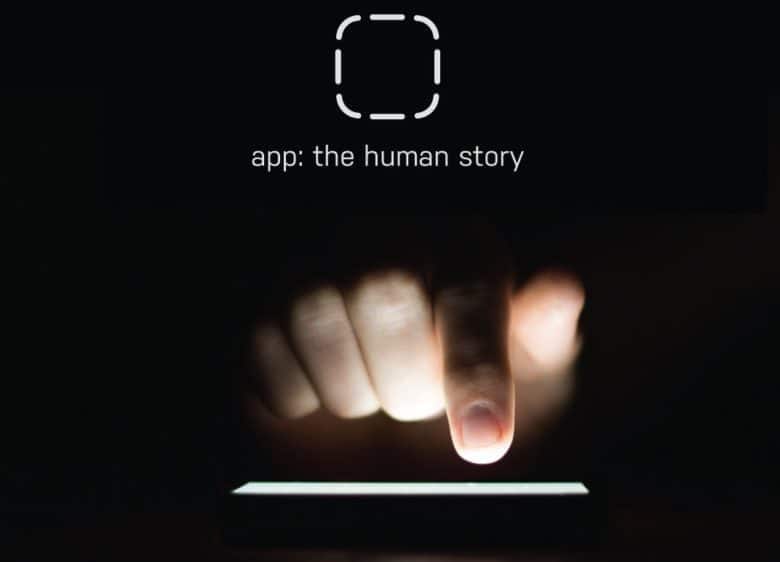
What does it feel like pinning your hopes and livelihood to one of Apple’s most important creations? Fascinating new documentary App: The Human Story takes an unflinching look at the world of app developers in an attempt to answer that question.

It turns out that apps make for an interesting documentary. Building on underdog stories like the brilliant 2012 Indie Game: The MovieApp: The Human Story follows the plight of real-life developers trying to make a living in the App Store. The results are inspirational, exciting, worrisome and — most of all — varied.
We follow newcomers like Melissa Hargis and Nicki Klein, fresh from developer bootcamp, who are quitting their jobs to work in tech and build what they hope is the next great mapping app. There are also seasoned veterans, such as Steven Frank and Cabel Sasser, who have been producing hit apps for the Macintosh with their growing team for the last 15 years and are now trying to bring that success to the iPhone.
Following their trials and tribulations highlights the challenges developers face — like Ish Shabazz, whose apps are constantly reaching more users than ever, but who still struggles to make a sustainable living.

Documenting app developers’ trials and tribulations


There have always been independent developers, of course. In the early days of Apple, developers like Paul Lutus created Apple Writer, the Apple II’s first great word processor. It made him a small fortune.
A few years after that came VisiCalc, a spreadsheet that gave regular people a reason to actually own a computer. Today, developers have it both easier and harder than ever. They get an opportunity to reach more people, but they face a horrendously crowded marketplace and struggle with Apple’s top-down control.
“I think the control that the platforms have over developers is what makes today’s scene so interesting,” Schumacher says. “The older developers who were making Mac apps before the iPhone were distributing their software through the web, and they had very effective tools for selling their applications — most importantly, free trials, so a user could establish value before purchasing.”
The level of control that Apple wields through the App Stores worries Schumacher. He’s particularly concerned about the “devaluation of software” he thinks Apple is complicit in.
“I know there are passionate people inside Apple wanting to bring significant developer changes to the App Store,” he says, but he still sees numerous challenges coming in the future.
“There is an uphill battle to convince people that software is valuable,” he says. “When we lose indies, we lose innovation. We also lose room for newcomers, which inversely affects underrepresented groups in programming.”

An app documentary well worth watching

If you thought Apple’s reality show Planet of the Apps was a tone-deaf attempt to turn app development into American Idol-type entertainment, App: The Human Story is well worth checking out. It’s well filmed, stocked full of good interview subjects, and with a narrative that’s most assuredly worth telling.
Given some of the doc’s bittersweet conclusions, it’s easy to see why Apple is keen to present a more upbeat version of events through its official channels. But if you’re looking for a entertaining, balanced, thoughtful look at the role of apps that more than delivers on the film’s original promises as a 2014 Kickstarter campaign this more than hits the mark!
You can download the 70-minute documentary as a VOD file from Vimeo, priced $15. Physical media releases are planned for the near future.