Tuesday, 17 November 2020

Tokenized securities on blockchain are here. And they’ve been around for a while.

Remember tokenized securities or securitization with tokens on blockchain?


With the entire year in crypto defined by a maelstrom of projects embarking on decentralized finance (DeFi) aspects to their products, it can be easy to forget that previous advancements in blockchain-based technologies have continued to make great headway in terms of adoption and application.


Security tokens and tokenized securities 

In 2019 especially, with greater regulatory scrutiny on blockchain-based crowdfunding in the shape of initial coin offerings (ICOs), many projects sought to reconcile crypto’s much-maligned aspect of democratic fundraising with increasingly unforgiving regulatory compliance. Hence the proliferation of Security Token Offerings (STOs) that meant to replace ICOs as legitimate, law-abiding instruments to raise funds and issue securities through blockchain-based tokens.


It’s important here to distinguish between security tokens and tokenized securities -- often used interchangeably, but hardly the same thing. In the former, blockchain technology is used to create new tokens that is a representation of real-world “securities”, ie. crypto assets that share some qualities as securities in the traditional sense. In the latter, we are talking about existing assets (securities) in the real world, that are expressed digitally… wrapped, if you will, in a token technology.


An overlooked breakthrough

Put in another way, security tokens create a token and create securities, but tokenized securities simply digitalize existing securities. That really is something that solves a major problem with traditional securities, which makes it somewhat surprising that it hasn’t been picked up more.


Tokenizing securities immediately helps with widening the market and improving their liquidity. In addition, it’s not a new product so it isn’t so much something for regulators to look at, it simply is a new, digital channel for distribution, which actually makes tokenized securities simpler to approve.


They’re not just an idea, they’re already here.

Because tokenizing securities are comparatively simple to do, there actually have been quite a number of them entering the market. Last year, we saw traditional funds like 22X Fund put together a tokenized fund (with money raised through an ICO in fact in 2018) to invest in 22 startups. But SPiCE will argue it was even earlier, as the VC fund set up in 2017 and lays claim to being the first tokenized VC fund able to offer immediate liquidity for venture capital -- which otherwise takes years to liquidate!


This year, AllianceBlock, which is building the “world’s first globally compliant decentralized capital market” partnered with another blockchain firm AIKON for secure blockchain-based identity management service -- making decentralized finance services accessible to all, and securing that access with the blockchain.


The data already shows that the coming years will see securities very soon fully digitized and empowered by blockchain. From owning a small share in your favorite soccer club, to fractional ownership of pizza restaurants in a country halfway around the world from you, blockchain and tokenized securities are spelling out a way for $256 trillion worth of real-world assets, mostly illiquid as physical representations, to go digital.


As they say in blockchain, tokenized securities are a matter of when, not if.


This article originally appeared on aikon.com


Friday, 6 November 2020

Blockchain mass adoption isn’t a bandwagon, it’s the sailing ship


And here’s why companies are choosing blockchain technology and its various applications.


After the long “blockchain winter”, 2019 finally saw the rise of companies interested in adopting blockchain. According to recruitment portal Hired, global demand for blockchain engineers grew 517% in 2019, four times more than for any other types of engineers. 


Another interesting fact is that 83% of large companies see strong cases for blockchain, as reported on Deloitte's 2019 Global Blockchain Survey. 


The same study shows that these companies plan to invest US$5 million or more in blockchain initiatives in the next 12 months. This is a clear sign that blockchain adoption in corporate companies is becoming mainstream.


These investments are spread across various types of industries. Technology, media and telecom are the top industries, followed by Energy & Resources and Manufacturing.


This is definitely the first and most important step for blockchain mass adoption. But why has blockchain become an almost unanimous choice across various industries and different sectors? 


There has been a shift in tech belief: many industry leaders, even those wary of technological innovations have now a shared belief that blockchain is a straightforward and secure solution —and that it can serve as a pragmatic solution to business problems and use cases across different industry sectors.


In reality, blockchain is not a “one-size fits all” solution. Industries differ in any number of ways, the difference for a successful transition to blockchain, is how the technology can advance companies’ respective strategic priorities.


Blockchain can work beyond its original purpose - most of us first heard about it through cryptocurrencies - and now, we are discovering more and more different applications of the technology. 


Other well known blockchain applications are data validation, ID protection, payments, supply chain management, land registry and much more. 


A Blockchain use case in action

One of the most important of blockchain applications, and yet often overlooked, is user onboarding and validation. While there are several blockchain solutions for this, many like IBM and Hyperledger are geared for enterprise and multinationals, thereby making it cost prohibitive to startups. Others are coming up too, like Aikon’s flagship product ORE ID, which promotes a simple and efficient user onboarding and blockchain identity management service. ORE ID handles account creation, multisig accounts, password resets, signing transactions and resource management – and it’s offered through a REST API and Javascript libraries that make it easy enough for any developer to use.


The number of partners onboarding like Algorand and the WAX (Worldwide Asset eXchange) blockchain suggests that seamless onboarding that allows a truly friction-free experience that the user may not even need to know or understand that they are on the blockchain -- is the way to go. 


DApps and enterprise adoption of blockchain solutions will find such user-friendly solutions attractive because not everyone is going to be able to, nor even want to, manage their RAM, gas or respective account resources that are necessary to interact with the blockchain.


This is a win-win solution for companies and developers. Companies like Aikon will do all the heavy lifting on businesses that don’t want to create a special role just to manage the backend chain infrastructure for their business just to use the blockchain.


And users won’t even know they’re on the blockchain. Early adopters? That ship’s sailed.


This article originally appeared on aikon.com.


Friday, 16 October 2020

Internet Trends 2020. Stats & Facts in the U.S. and Worldwide

 The following collection of charts represents the most trusted research and the most recent data on major internet trends, by www.vpnmentor.com

While we’re dedicated to VPNs and online privacy issues, vpnMentor is also your resource for Internet trends and data.

As a result, we’ve scoured the most trusted research sites to present you with the following series of charts. Grouped by general topic, the information below represents the most recent data on major internet trends.

Feel free to share these statistics, whether the entire article or just a single graph, with attribution.

Global Internet Trends

Number of Websites in 2019

There are over 1.94 billion websites all over the world.

Web Growth Statistics

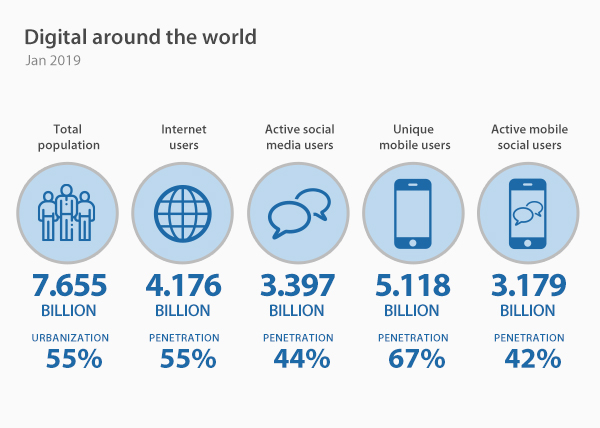
The fastest growing segment of the internet is the number of mobile social media users.

Mobile Internet Penetration

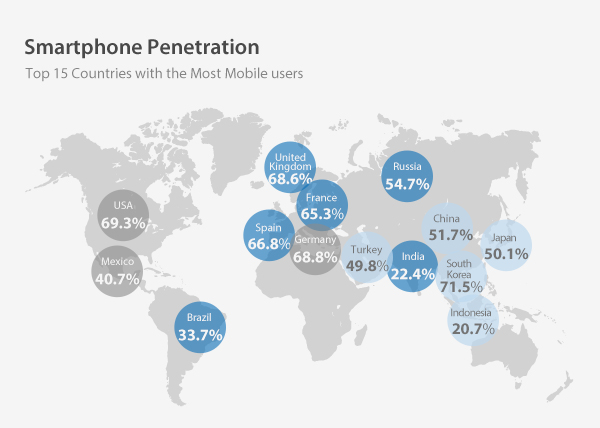
South Korea leads with 71.5% of the population who are mobile users.

Internet Traffic Statistics

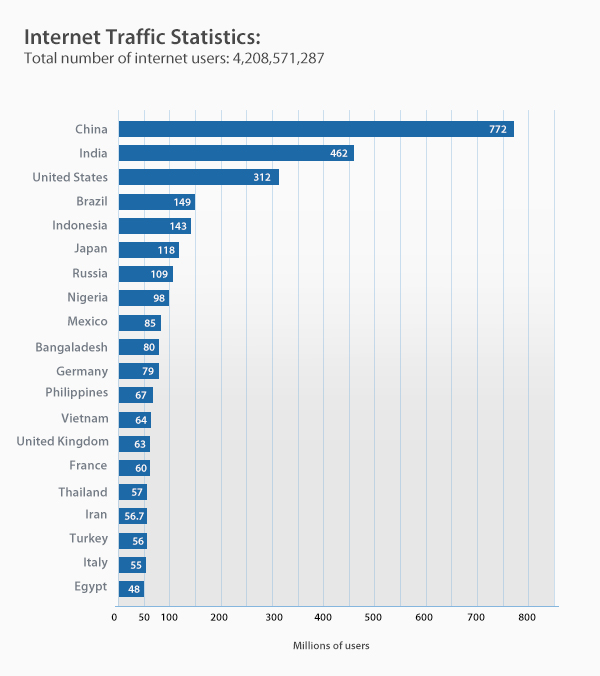
There are 4,208,571,287 internet users as of January 2019.

Asia accounts for almost half of the world’s internet users.

Smart Device Comparisons

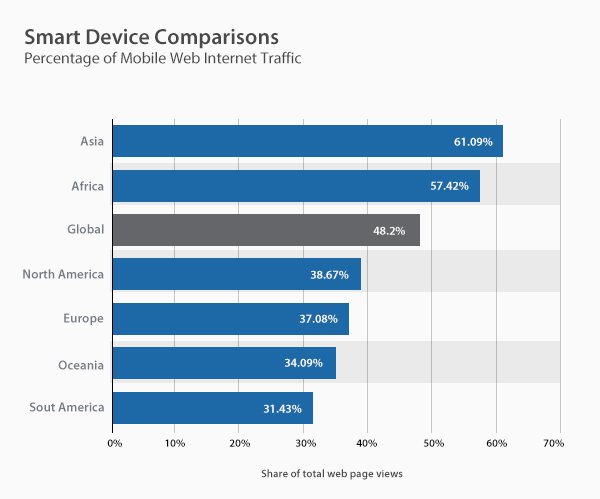
Percentage of Mobile Web Internet Traffic

An astonishing 61.09% of Asia’s total web traffic comes from mobile devices.

Number of Smartphone Users

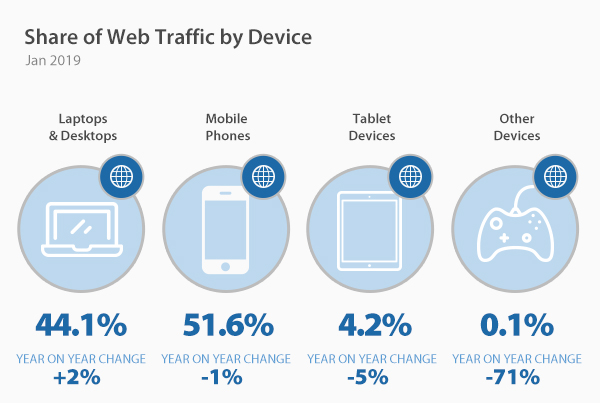
While several forecasts pegged 2014 as the “year of revolution” when mobile-only users would surpass desktop-only users, it turns out the forecast finally became reality in the U.S. in 2015. Since the start of 2017, mobile has surpassed desktop use and steadily remains so all the way through 2019, leading with 51.6%.

U.S. Platform Trends

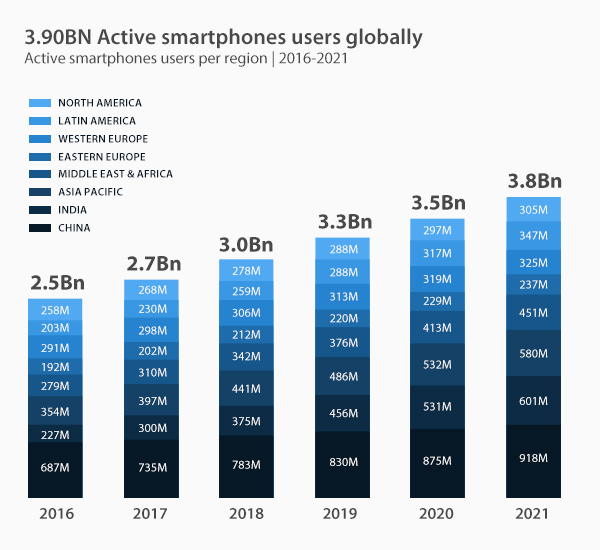
As of 2019 there are 3.3 billion active smartphone users globally, with China and Asia Pacific forming more than one quarter of the total amount.

Tablet Internet Use

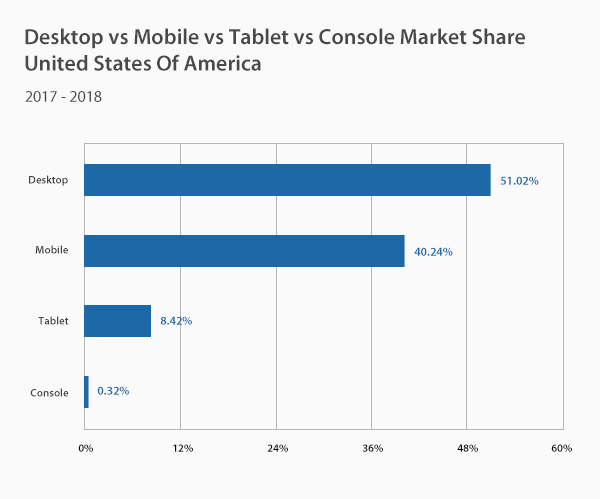
Tablet penetration has risen slowly over the past couple of years. Desktop accounts for 51.02%, mobile for slightly less, 40.24% and tablet for just 8.42% – an amount bound to soon begin decreasing with time.

Desktop vs Mobile vs Tablets in the U.K.

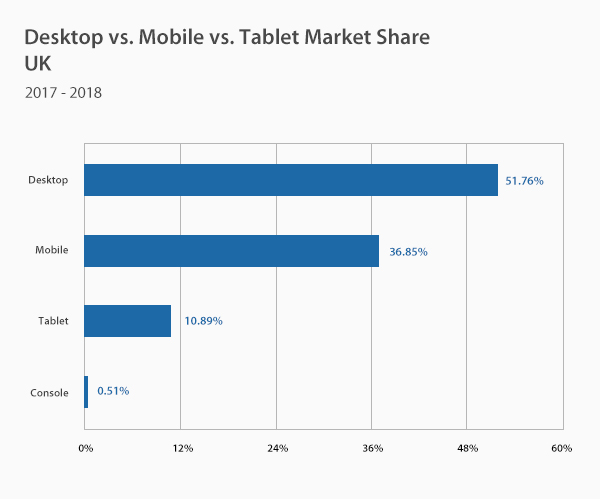
In the U.K., the number of people who use a desktop decreased from 54% to 51% in nearly a year. 

VPN Use 

Of course, VPN use and data privacy have strong correlations. By accessing a separate server for internet use, VPNs make it much more difficult for hackers and third parties to track online activities. The following charts examine the current state of VPN use around the globe.

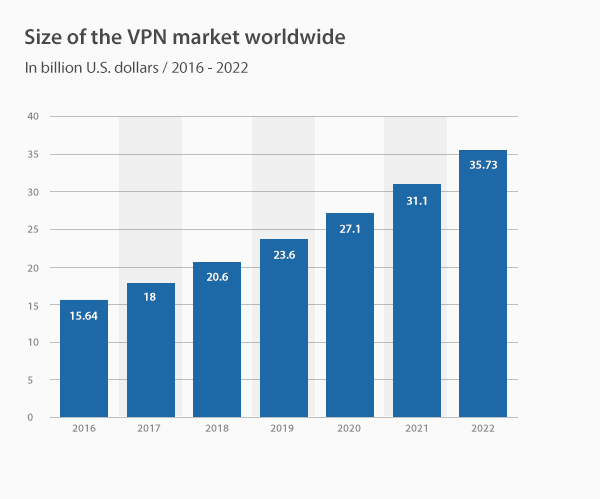
Top Markets for VPN Use

Since 2016 the VPN market has been experiencing continuous growth, reaching the sum of 23.6 billion U.S. dollars in 2019.

Website Performance

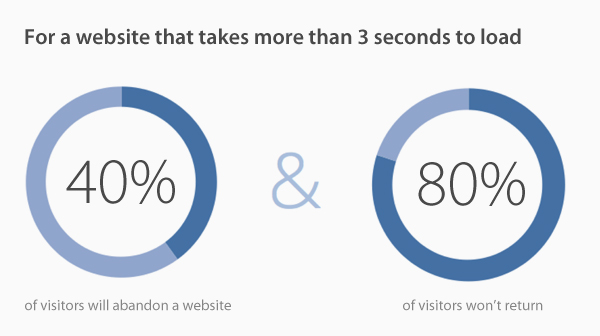
How Load Time Affects Web Page Abandonment

While web page features such as plug-ins, pop-ups, and streaming video may help convey your message, they hinder the page load time. As the following charts show, a page that takes longer than 3 seconds to load runs a high risk of abandonment.

internet trends - vpnMentor

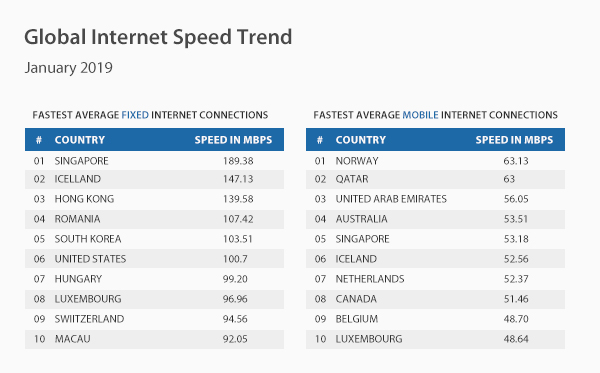
Global Internet Speed Trend

Good news: internet speeds around the globe are at their highest peak ever with Singapore, Iceland, Hong Kong and Romania occupying top positions.

Search and Social Media

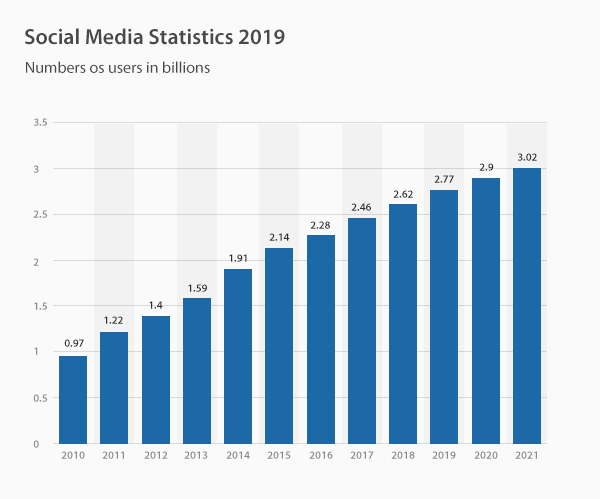
Worldwide Number of Social Media Users

In 2019, the numbers of social media users reached 2.77 billion and is bound to peak to over 3 billion in 2021.

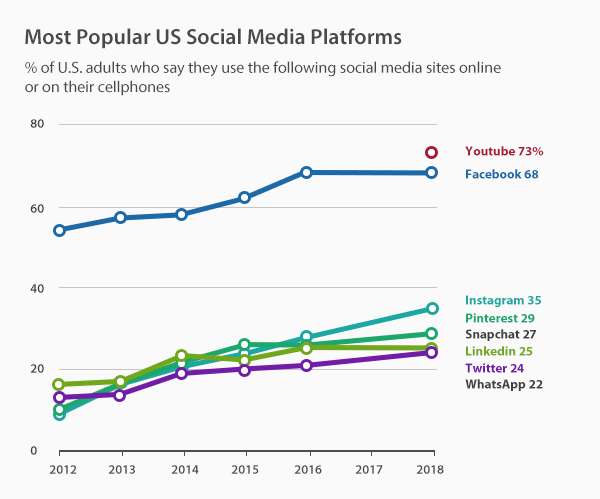
Most Popular US Social Media Platforms

Youtube is the most used social media site on the internet – over 73% of US adults use it.

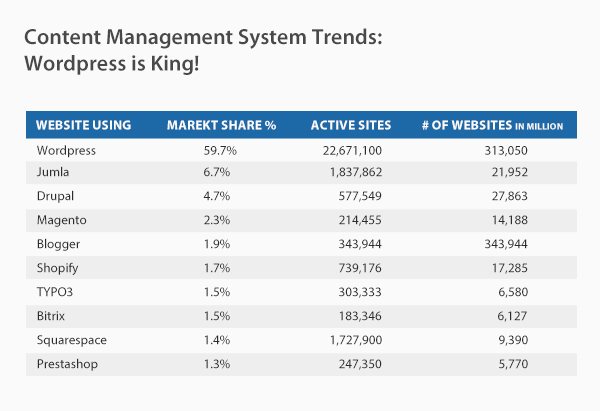
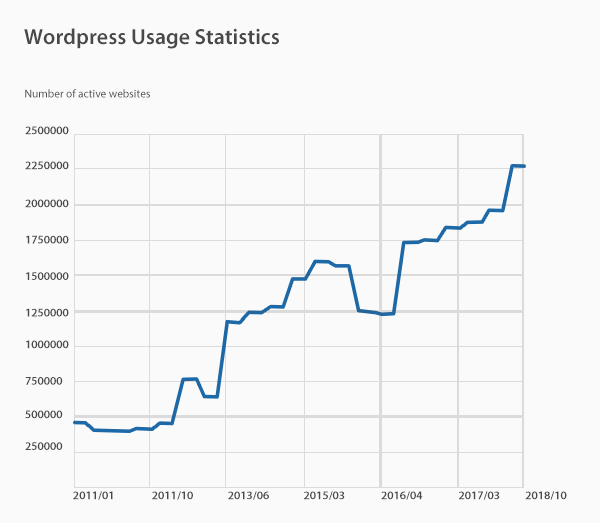
Content Management System Trends

WordPress continues to win the content management market share with over 59.7%. The No. 2 system, Joomla, has a 6.7% market share.

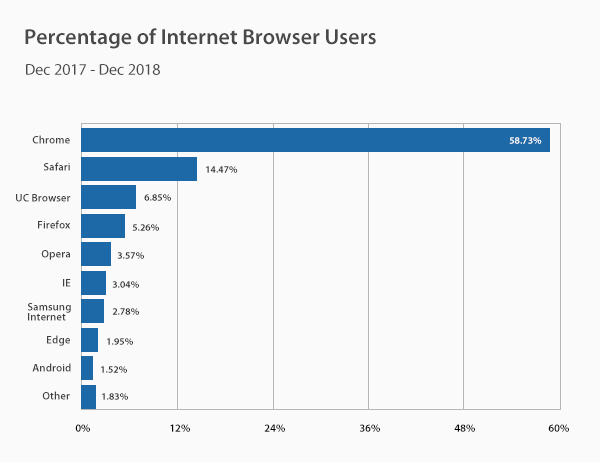
Percentage of Internet Browser Users

In terms of web browsers used, Google Chrome continues to thrive. According to the latest numbers, it is more than 4 times as popular as its next closest competitor (Safari).

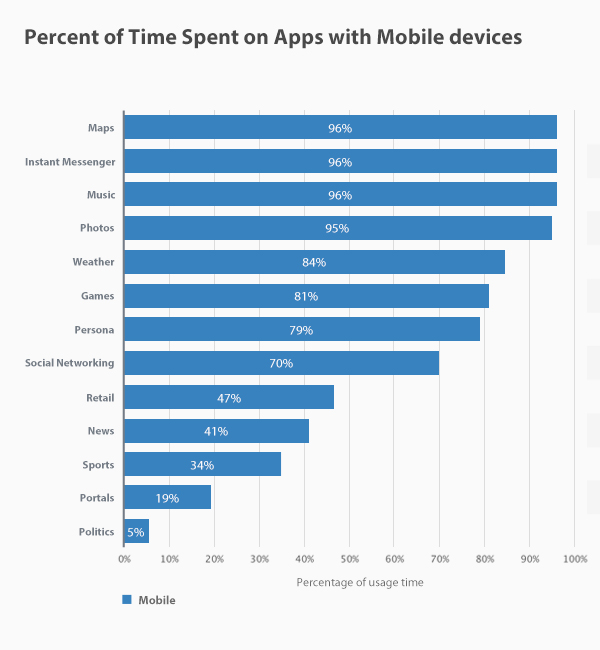
Percentage of Internet Time Spent on Search Engines/Social Media

The top three activities for Mobile device users in 2019: maps, instant messenger, and music.

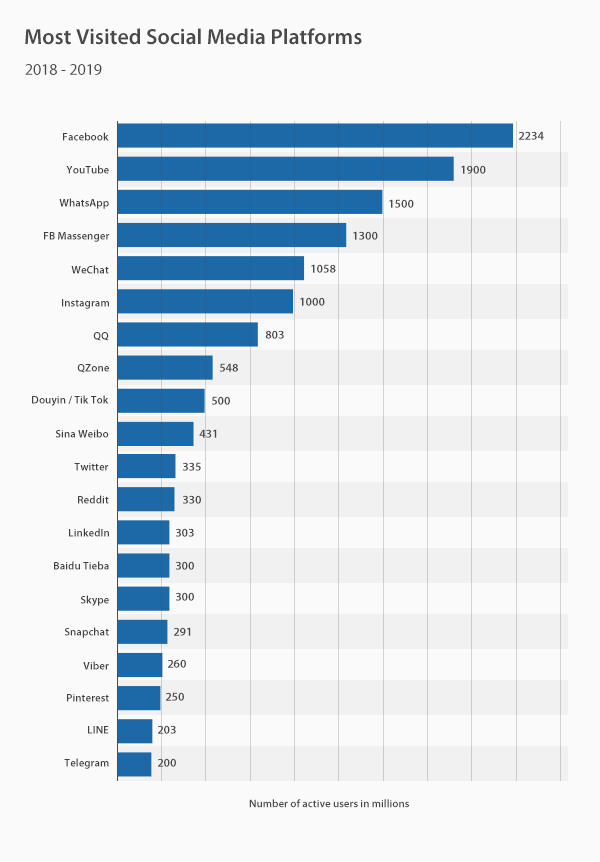
Percentage of Most Visited Social Media Platforms

Facebook takes the lead as the most visited social media platform with over 2.2 billion active users, followed by Youtube and WhatsApp.

Global and U.S. E-Commerce Trends

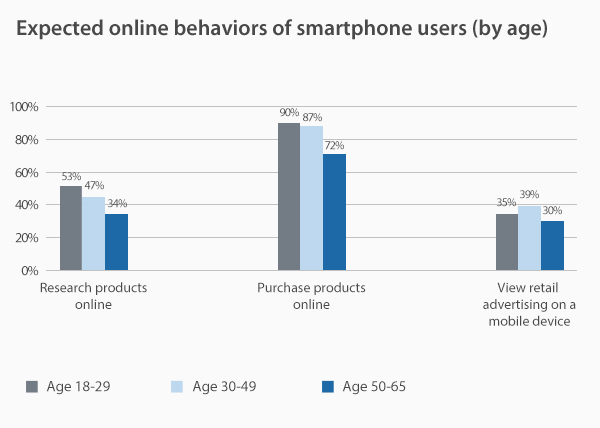
Statistics on Internet Research Before a Purchase by Age Group

People between 18-29 are the most likely to purchase a product online, while only a little more than half will research the product beforehand.

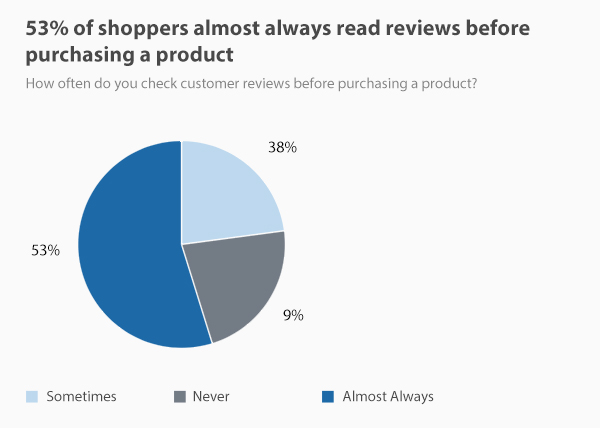
Facts and Statistics about Product Reviews

Think reviews are important? You’re right! 53% of shoppers read customer reviews before purchasing a product.

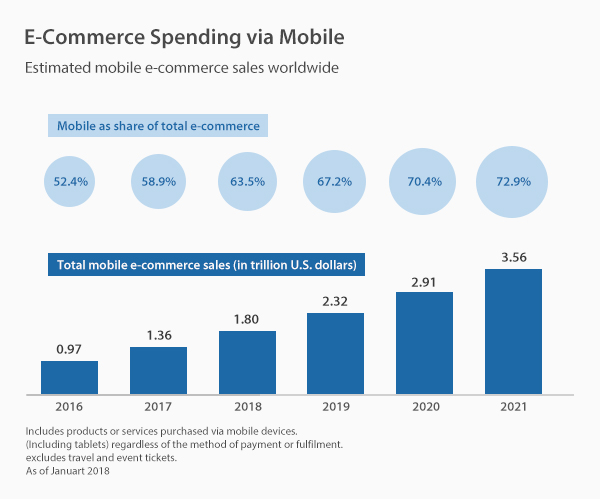
E-commerce Spending Via Mobile

When it comes to online purchasing, people purchase more on mobile in 2019 than they do on tablets or desktops.

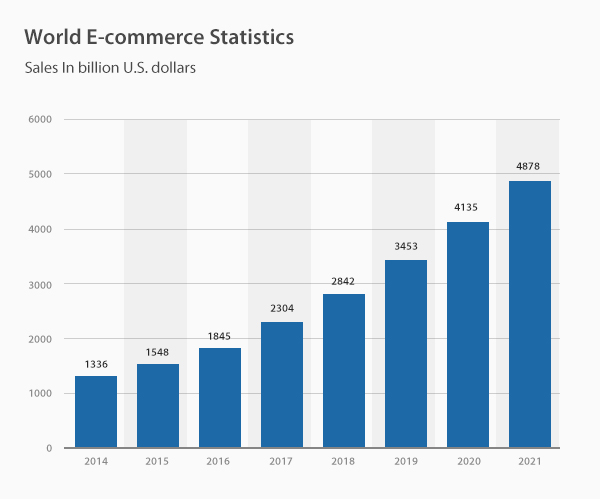
World E-commerce Statistics

E-commerce has experienced a steady increase in terms of sales, growing from 2,842 billion $ in 2018 to 3,453 billion $ in 2019.

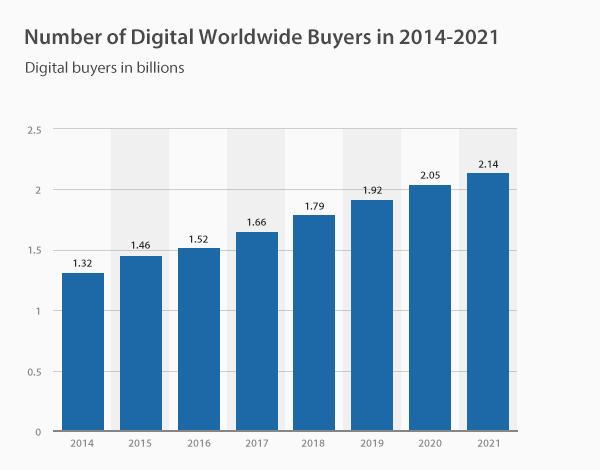
Digital Worldwide Buyers in 2019

The number of online buyers reached 1.92 billion in 2019 and is forecasted to bypass 2 billion in 2020.

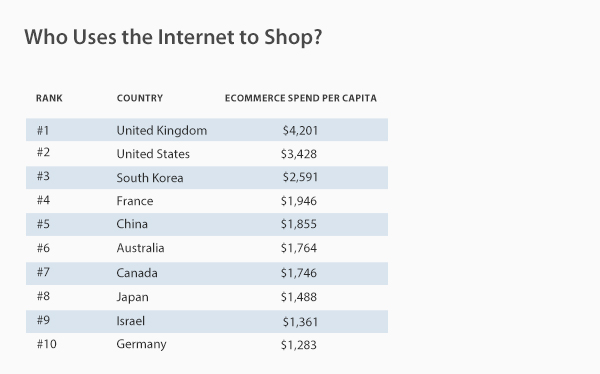
Who Uses the Internet to Shop?

The U.K. takes the lead for E-commerce spending per capita in 2019, followed by the United States and South Korea.

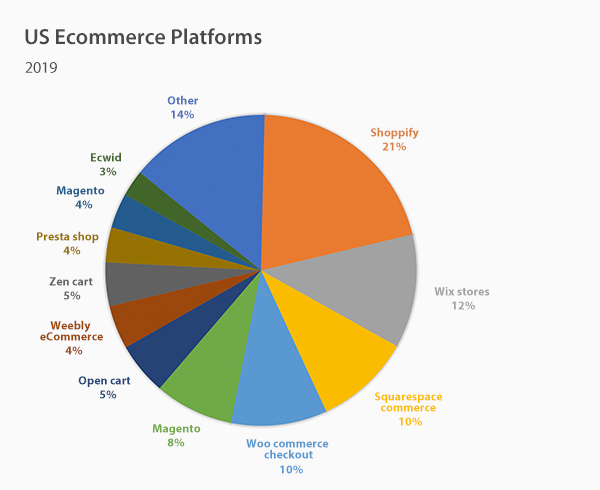
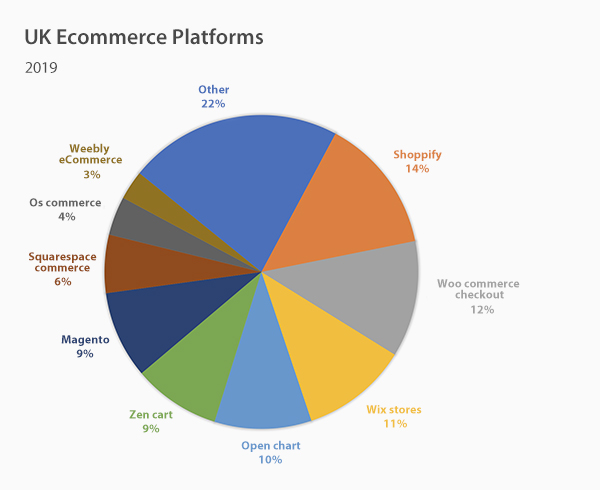
2019 U.S. and UK Online Shopping

In terms of U.S. and UK E-commerce, Shoppify has a leading market share of 21% in the U.S. and 14% in the UK.

Forecast and Trends for 2019 and Beyond

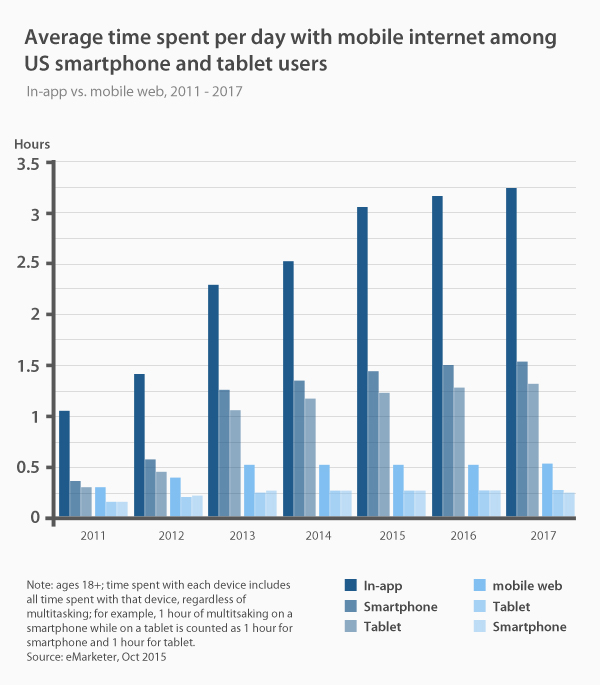
Currently, mobile users spend double the time in apps as they do on mobile web pages. In future years, this gap is expected to grow even wider.

Mobile App vs Mobile Web

internet trends - vpnMentor

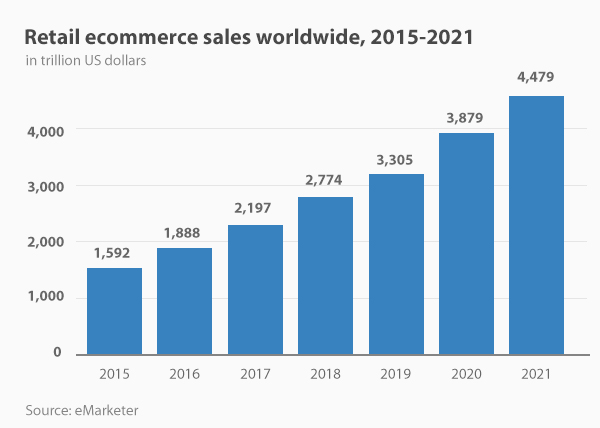
Worldwide E-commerce Forecast

By 2021, global retail E-commerce sales are expected to approach $4.4 trillion.

Original Post: https://www.vpnmentor.com/blog/vital-internet-trends/