Sunday, 29 March 2020

The 7 Top Travel Apps Every Savvy Traveler Needs

usebounce.com
Going On A Trip? Don't Forget To Pack These 8 Must-Have Travel Apps
From cheap hotel rooms to packing lists, as the saying goes — there’s an app for that. 

These top travel apps will help you on any business trip, family vacations, and during next year’s backpacking trek through Asia. 

Here’s how they work:

Hopper

Combining their massive database with historical trends, Hopper is an app that helps you find the best prices on flights. 

Whether your travel dates are set in stone or if you don’t mind traveling anytime in August, Hopper tells you what flights are the cheapest, when to buy them, and when these prices are likely to change.

You can even book your flights through the app and you’ll get notifications about your Saved Searches when things change. It’s one of the most highly-rated flight search apps, so don’t book another trip without checking Hopper first.

Hotel Tonight

When it’s down to the wire, savvy travelers always have a trick up their sleeve. Looking for a hotel room at the last minute? Then, Hotel Tonight is the app you want.

With fantastic deals on rooms for tonight and up to a week before your stay, Hotel Tonight has options for basic, luxe, charming, and high-roller hotel rooms. So, essentially, any personality and budget can make it work in a time crunch with the app.

Hotel Tonight also offers a Daily Drop with a limited-time, 15-minute window to snag an even better deal on last-minute hotels. The app also includes its loyalty program called HT Perks. It’s a nine-level reward program that functions like a video game where you “level up” to unlock cheaper rates and booking credits.

To help you decide, see if your Hotel Tonight accommodation allows you to store your luggage. From there, you’ll be sleeping soundly knowing you got such a great deal on a comfy hotel bed.

TripIt

If you’re a savvy traveler, chances are you love to plan. But we all know things can get tricky if you’re traveling with a group. Let’s make sure everyone’s on the same page with TripIt.

TripIt helps you create seamless travel itineraries from start to finish. By connecting your email account, TripIt uses confirmation receipts, reservation details, flight information, and hotel check-in times to create a custom itinerary. 

Share it with others so everyone in your party knows where to be and when. You can view your TripIt itinerary online or on your mobile device, and you’ll get notifications in real-time if anything changes. 

With TripIt, you’ll no longer have to worry about your uncle missing the double-decker tour that starts at 10:00. After all, he had the itinerary.

TimeShifter

International travelers know all too well the intense effects of jet lag. As a Floridian living in Australia, I’ll take all the help I can get when it comes to jet lag. That’s where TimeShifter comes in.

Long flights deeply affect our circadian rhythm. It’s not great for our bodies to be in a totally new time zone. The result is grogginess, grumpiness, and feeling generally miserable — AKA, jet lag. Developed by researchers at NASA, TimeShifter helps you adjust to different time zones in a fraction of the time it usually takes and minimize jet lag.

You’ll add your trip details and receive a curated schedule telling you exactly what to do in the days leading up to your trip, during your flight, and for a few days after you land.

Timeshifter tells you when to sleep, wake up, avoid or encourage bright light, and grab a nap. It also has tips on how to use melatonin and caffeine in the process. 

The app gathers information about your age, gender, and normal sleep patterns to give you personalized recommendations. By following its instructions, you’ll quickly get over jet lag and get on with your trip.

PackPoint

Raise your hand if you’ve ever forgotten to pack your phone charger! 

We’ve all been there. Forgetting an obvious necessity and reluctantly buying a replacement from the airport gift shop.

To avoid this trap, PackPoint helps you pack with an essential checklist based on the trip you’re taking. Your curated packing list accounts for why you’re traveling (business or pleasure), the weather at your destination, and the length of your stay. 

The app also accounts for laundry access and can be integrated with the TripIt app to help you pack for a specific itinerary. 

PackPoint, unfortunately, can’t pack for you. But at least you won’t forget anything this time.

TransferWise

Most of us learnt the hard way that banks charge exorbitant fees on international exchanges. But, is there an easier way to spend money while traveling without carrying a ton of cash? 

Transferwise is an incredible app that allows you to make quick international transfers at super low rates. Generally, this app is best for nomads who spend weeks or months using various currencies. But even less frequent travelers will find the app useful.

Pro Tip: Sign up for a Transferwise account before your trip and request an international debit card. By adding money to the card in your home currency, you can use it abroad in most international currencies. 

Transferwise will automatically complete the exchange using the appropriate currency with the cheapest exchange rates available. And while you’re away, you can manage all your money on the app. 

Bounce

You checked out of your Airbnb but your flight isn’t for another 10 hours. You want to explore the city without lugging your bags to restaurants and museums. So, you use the Bounce app. Problem solved!


With Bounce, you can search your location to find luggage storage space in all major cities throughout North America. For a flat daily fee, any size bag can be securely stored while you explore.



Thursday, 19 March 2020

What is Route Optimization?

optimoroute.com
Image result for What is Route Optimization?

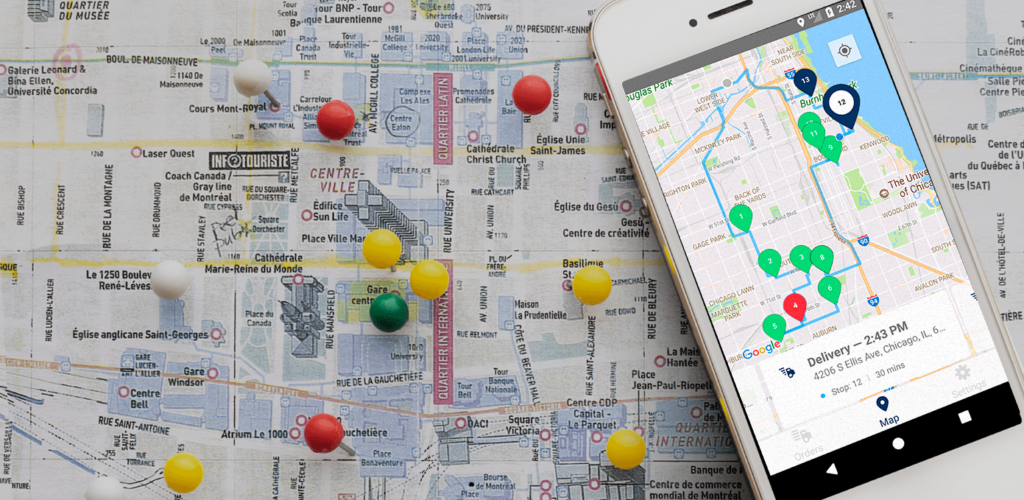
Businesses that are looking to cut routing distances and costs will inevitably consider this question. Companies want to find ways to scale while saving time and fuel, but might not know how to do this. That’s where route optimization comes in.

Route optimization is a process used to plan service and delivery routes. This is performed in a way that ensures efficiency, consistency, and cost-effectiveness.
In layman’s terms, the system is meant to complete deliveries and services in a way that’s quick and inexpensive, all while factoring existing constraints.
Businesses that want to resolve their routing issue might refer to it as a pain (or something more colorful). Salespeople have spent over a century looking for ways to resolve this issue, which led to the coined term Travelling Salesman Problem.
Image result for What is Route Optimization?

The problem with working alone
Most people who seek route optimization as a solution will attempt manual route planning. The ones who try to solve routing problems on their own soon find the process to be time-consuming and mentally draining.
When more variables are added to the orders, the complexity of the process increases exponentially. This makes manual planning nearly impossible to perform and leaves more room for error.
For these reasons, planning routes on one’s own can be like solving a math problem: the more complicated it gets, the more one needs a calculator – or some other technology – to help them out.
Illustration of mathematical formulas

Routing software makes it simple

Route optimization software is designed to quickly geocode anywhere from 1 to over 1,000 orders or tasks, route them, and then assign them to drivers.
The software’s built-in algorithm helps users save time, money and fuel by planning the most efficient routes. The software does this each time, no matter how much information it’s given.
A more sophisticated program will enable users to track the movements of drivers in real-time, as well as to follow the completion of tasks or deliveries.
Ultimately, businesses seek routing solutions when their logistics issues become too difficult to manage manually, or when overseeing a mobile workforce gets too overwhelming.
With the help of a route optimization program, users not only can plan the quickest and most direct routes with the push of a button, but also can have any number of parameters factored into the routing, including:
·         time windows
·         date restrictions
·         vehicle capacities (size, attributes, layout, etc.)
·         drivers’ hours & constraints
·         number of stops and distances between them
·         duration of stops
These are critical logistics issues that businesses with a mobile workforce must confront. The system simplifies route planning so that companies can streamline their work and delivery schedules.
With the right routing software system, users immediately notice a dramatic improvement in their scheduling. The program accommodates thousands of tasks and orders, regardless of the constraints that exist around either the schedule or the drivers’ abilities. Users can balance workloads, if necessary, and they can make plans for both pickup and delivery.

OptimoRoute goes a step further

In addition to the capabilities listed above, OptimoRoute can simplify its users’ schedules with other advanced features. This software supports long-term weekly itineraries, multi-day routes, and allows customers to track a worker’s whereabouts.
This is done with the help of advanced tools, such as Live Tracking ETA and Realtime Order Tracking . To top it all off, communication is carried out more clearly with the help of a mobile app to relay information to all parties and keep everyone informed.
When the benefits of these features are realized, companies discover that they’re able to focus more time and resources on scaling their business, rather than on planning routes and on driving.
What’s more, the software increases the chances of drivers getting to each of their destinations on time, all while decreasing the number of people required for the workload.
The result of this is happier customers and therefore better businesses. The software is able to make numerous configurations based on the data users give it, and then quickly calculate shorter, cheaper routes.
Users are able to see a return on investment shortly after adopting suitable route optimization software, which explains why such programs are rapidly growing in popularity.

This article originally appeared on optimoroute.com

Thursday, 5 March 2020

Why You Shouldn’t Keep Customers Waiting and How Route Planning Software Can Help

optimoroute.com
The biggest problem facing any industry that is required to go to the customers location, is that people are becoming increasingly impatient. A survey sponsored by Interparcel out of the UK, found that 50% of Brits admitted to becoming more impatient in the past 5 years. While it’s no surprise that patience is waning in our society, there are ways to monitor and measure customer satisfaction, and also improve the accuracy of your daily schedules.
When you are a delivery company or a field service provider, you promise both to provide a quality service, but to also arrive in a timely fashion. The only thing worse than being late, is to not show up at all. According to business.com, failure to deliver goods or failure to perform the service are among the top 10 complaints for retails sales and service companies.
Being able to measure customer satisfaction gives you insight into trends, and your current performance amongst those people who are paying for your service. To a certain extent most customers are understanding that not everything can be perfect every single time. But as Warren Buffett once said, “It takes 20 years to build a reputation and five minutes to ruin it. If you think about that, you’ll do things differently.” (Time) One mistake can create a ripple effect that can stifle growth and hinder marketing.
Image result for Why You Shouldn’t Keep Customers Waiting and How Route Planning Software Can Help
The bad news is that 95% of customers will tell at least one other person about a bad experience with a company. Worse news is that 54% of customers will tell more than 5 people. While marketing and customer acquisition is difficult, the cheapest and most beneficial remedy lies in the good news. That is, that 70% of customers will continue to do business with a company if an issue is resolved in their favour. (MarketingCharts)
There are a few different methods, and even some software that can help in measuring customer satisfaction, which in the end can create a better product and overall experience for the customer. The most common method though, is a simple survey. Software such as SurveryMonkey and Client Heartbeat make it easier to facilitate surveys that can help pinpoint the some of the successful aspects of your business as well as those areas requiring some improvement.
Creating routes and schedules that are both efficient and accurate is nearly impossible when done by hand. However OptimoRoute™ helps you easily plan accurate routes and schedules so you can provide a predictable and reliable service to your customers. You can further improve your service by providing customers with a selection of time windows – specific time slots which best suits your customers. These time windows can then be imported into OptimoRoute™ and will be adhered to during planning. OptimoRoute™’s planner not only simplifies the planning process, but results in the best possible routes being created.
Spend that time where it matters most, maintaining a quality product and looking after your customers.
This article originally appeared on optimoroute.com.

Wednesday, 26 February 2020

Online Food Delivery on the Rise

optimoroute.com

Currently the traditional model of delivery, where a customer contacts a local restaurant directly, still accounts for nearly 90% of all delivery orders, with ⅔ of those being ordered by phone. However as technology has shown in many other commercial markets, the ability and desire to purchase or order anything online is growing quickly.

Recently the worldwide market for food delivery has been estimated to be worth over $87 billion, which is around only 1% of the total food market, and 4% of food sales by restaurants or fast-food chains. Americans themselves are expected to spend over $12.5 billion a year by 2019 on delivery food. With the estimated growth the by around 3.5% per year for the next 5 years, many companies and startups are trying to get their piece of the pie.

Companies like Deliveroo, UberEats, and Eat24 have slowly grown to become the middle-man between the customer and restaurants throughout many cities in North America and the UK. The concept is to basically offer as large a choice of restaurants as possible based on your address. Two models of this concept have been developed that both involve dealing with numerous restaurants but handle the delivery of food completely different. One model is operated by aggregators. These aggregators take orders online or via app, and pass the order along to each individual restaurant who then handles delivery themselves.
The other model can be defined as “new delivery,” which is a concept that requires the company taking the orders to also control the logistics and delivery.
Image result for Online Food Delivery on the Rise
Deliveries from restaurants are not the only avenue that has been taken for companies who are trying to exploit the growing market of food delivery services. Startups across the United States have found that offering weekly meal packages have also been a lucrative and attractive way to capture the growing healthy eating trend developing across the country. Companies such as PlateJoy, and Plated have created healthy and relatively inexpensive meals that are prepared and delivered to homes, to be eaten during the week.


One company called Gobble initially pursued this course as their entry into the food delivery market, but after 5 years of prepared meals decided to change her model to quick, one-pan meals. Owner Ooshma Garg said that the company eventually learned that “getting food in a takeout box was not satisfying [to some working parents] because people felt guilty about not actually cooking.” (Fortune, Fenn) This specific trend of delivering ingredients instead of meals themselves has grown to include some billion dollar companies such as: Blue Apron, and HelloFresh.

Being able to offer a meal that people want has not been the only challenge facing many, if not all of these companies vying for food delivery supremacy. Everything from marketing to delivery has required a ton of capital and research to separate from the crowd and offer a superior service. With the ability to personalize the ordering experience, once a customer signs up for one of these websites, 80% will either never, or rarely venture to another.

For the deliveries themselves, the speed of delivery is considered to be one of the largest factor when it comes customer satisfaction. If ordering a meal for dinner or lunch, most maximum most people were willing to wait was up to 1 hour. Also the majority of meals were found to be delivered to the home (at 82%), rather than to work, with a spike over the weekends. One can speculate as to why this is the case, but with the fast pace lifestyle of the average American, at home deliveries may slowly become the new battleground for all styles of restaurants.

This article originally appeared on optimoroute.com.

Thursday, 20 February 2020

Why Use Route Optimization Software?

optimoroute.com

With route optimization software you’ll spend much less time planning – and the routes produced will be far superior to manually created routes.
For a mobile workforce, route optimization is the process of determining the most efficient routes, in terms of cost, resources and time. All other relevant factors such as order and driver restrictions, as well as the various workflows of a particular business are also factored in.
The aim is to maximize efficiency and fulfil more orders: getting to more addresses with fewer resources. This allows businesses to save time, costs and ultimately increase their revenue.

With route optimization software, your business will:
  • Increase earnings increase earnings by 10-30% simply by allowing you to complete more orders,
  • Increase earnings improve employee productivity and customer satisfaction,
  • Increase earnings cut operating costs and overtime by 30%.
Using a map, or any other manual means, to create optimized routes is incredibly difficult and time-consuming. As the number of drivers and orders increases, the complexity of the task of dividing up the work accurately and efficiently grows exponentially.
Route optimization software uses incredibly sophisticated algorithms to plan and optimize routes in a matter of minutes. This frees up to 57% of the time previously spent on planning – allowing staff to spend their time on other important tasks related to running and growing a business. This applies whether your business has 10 drivers, 150 drivers, or more. Even as your business grows, your route optimization software will produce the same fast, consistent, and accurate planning.


Route Optimization Software

Sends Your Business in the Right Direction


Increased Productivity, More Revenue
With route optimization software you’ll spend much less time planning – and the routes produced will be far superior to manually created routes.
What’s more, route optimization software ultimately gives your business the opportunity to increase revenue. When your existing workforce is able to get orders done in less time, you can easily take on more business without needing to increase staff or work hours.
Controlled Expenses and Informed Decision Making
Businesses with route optimization software as an integral part of their operation can cut fuel and other driving expenses by 20%. Their overall distance traveled and time spent on the road is minimized, thanks to more efficient scheduling.
With route optimization software you can do real-time monitoring of your team and review their performance history. Both allow you to identify patterns – putting you in a better position to address them. Detailed insights into your workforce let you make more informed decisions for your business.


Which Problems Does Route Optimization

Software Address?

Workload Restrictions and Distribution
Route optimization software allows you to manage different types of driver restrictions (allowed working hours, different skills needed for the order) and vehicles (load capacity, refrigeration).
And, you can use route optimization software to minimize overtime and account for driver lunch breaks. The routes that are created will be fair, optimal, and will not create additional costs for the business.
Example: The orders for this period will be balanced by route optimization software to ensure that all of the drivers work for the same amount of time.
Dynamic Planning
Changes, especially last-minute ones, are inevitable for any business. Instant and automatic recalculation of routes to reflect real-world changes, such as late orders, cancellations, drivers calling in sick, or customers requesting alternative delivery addresses is an absolute lifesaver. With route optimization software, only a few clicks of the mouse are needed to produce the new routes that you’re after.
Example: It’s simple to edit the order date, re-optimize routes and send new schedules to drivers.
Driver Communication
In order to actually be useful, route optimization software needs to have its own mobile device application. Rather than being printed on paper, having orders on one convenient mobile application lets your drivers receive schedule updates. This exchange of information should be quick to allow for constant and seamless route and schedule changes. With mobile applications drivers can also update the completion status of each order. For dispatchers, there are a number of useful features enabled thanks to this information from the field, such as driver tracking capabilities and planned vs. actual route displays. Also, features like order tracking, real-time ETA and customer notifications help you give your customers excellent service.
Deliver, or Pick up and Drop off – in Any Combination
Whether your business makes multi-stop deliveries from a central depot, or does pickups and dropoffs of goods or passengers, or a mix of these – route optimization software can handle it all.
You’re able to select the task type for each order, letting the software come up with the optimal way for your business to perform all of these tasks. You’ll maximize efficiency, make the most of your vehicle capacity, and cut down on driving time – perfect!
Example: Orders can be pre-identified as a regular delivery (from a central depot), or as a pickup that needs to be dropped off at another address.


Prepare Schedules in Advance
Businesses might sometimes need to plan their schedules a few weeks in advance, to ensure resource availability or just to provide drivers with their long-term schedules. With route optimization software you can plan up to 5 weeks in advance, while still allowing planners to specify details like days of the week, date ranges and time windows for orders.
Example: These orders have been uploaded and the route has been optimized, so the following week the schedule and driver will be ready to go.

Performance Analytics

Good decision making should be data-driven: why rely on assumptions or on your intuition, when route optimisation software also lets you analyze many aspects of your performance. Identify positive trends, or problems to be addressed with a number of tools that give you detailed insights into your team’s performance.
With route optimization software you can compare completed routes to those that were planned, and compare actual stop duration to the duration that was planned. Also, see your order status history, arrival accuracy, time worked, distance traveled, and more – all letting you make more informed decisions about your business.
This article originally appeared on optimoroute.com

Thursday, 13 February 2020

Google Maps and Route Optimization Software Are Not the Same – They’re Worlds Apart

optimoroute.com
Image result for Google Maps and Route Optimization Software Are Not the Same – They’re Worlds Apart
The difference between planning routes on Google Maps and route optimization software is enormous:
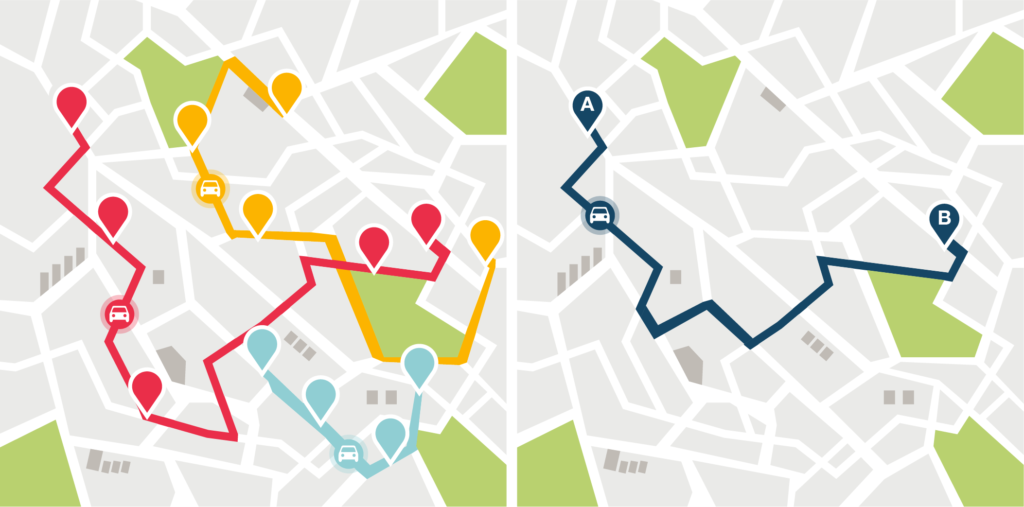
●     Route optimization software is powered by algorithms to efficiently and logically organize the order of stops for multiple drivers, accommodating the various constraints that your business has.
●    Google Maps is simply a quick way of getting the fastest route and accurate directions from point A to point B. It doesn’t take multiple stops or constraints into consideration, and won’t help you optimize your operations.
Image result for Google Maps and Route Optimization Software Are Not the Same – They’re Worlds Apart
Google Maps works if you simply need to go from point A to point B, but it isn’t suited to even the smallest of mobile workforces with a handful of orders to complete. Multiple stops on a route combined with factors that need to be accounted for (specific to the business, operations, needs of customers) cannot be handled by Google Maps – it simply wasn’t built for that.

When to Consider Using Route Optimization Software

Regardless of the actual service that you provide, a business with a mobile workforce needs to do planning according to a whole range of constraints and task types. Route optimization software has the features to build routes according to your constraints – and this is something that Google Maps isn’t capable of. These are just a few of the capabilities of route optimization software:

Planning According to Time Windows and Date Ranges
It’s likely that your customers have specific times, days and dates for when they’d like your service to be performed – whether it’s a delivery, an inspection, or a repair. Route optimization software easily factors these in when optimizing your routes.


Planning According to Driver and Vehicle Constraints
Your mobile workforce is made up of actual people, driving vehicles of all different sizes. Route optimization software gives you schedules that work in the real world: you can schedule in lunch breaks for your staff, and assign orders based on the specific skills needed for each order. Also, you can manage the load of each vehicle according to its capacity and route optimization software will schedule in returns to depot when each vehicle is empty.


Scheduling Based on Order Priority, and Various Task Types and Durations
Route optimization software gives you the ability to plan your orders according to their high, medium or low priority level. The software can also recognize connected pickup and delivery orders – where items or people need to be collected at one location and taken to another location.


Creating Multi-Day and Multi-Week Schedules
You might have the flexibility of completing some orders over the course of a few days or weeks. Or, there might be orders that need to be completed within a certain timeframe. Route optimization software can give you optimized multi-day and multi-week schedules that factor in these timing constraints.

Benefits of Using Route Optimization Software
When you use route optimization software rather than Google Maps to organize your mobile workforce, you’re getting more than just routes and directions. Instead, you’re getting optimized schedules that account for your customers’ needs and make the most of your resources. These are some of the benefits to look forward to when your business starts using route optimization software for its operations:


Reduced Planning Efforts
Automated planning with route optimization software can be up to seven times faster than manual planning. That’s a lot of your time saved – letting you focus on other important tasks related to growing your business.


Logical Routes and Schedules to Cut Mileage
Optimized routes (that still account for all of your constraints) will ensure that mileage is as low as possible, cutting your fuel and vehicle costs by up to 30%.


Serve More Customers with Improved Productivity
Thanks to the supremely efficient routes created by route optimization software, you’ll fit more orders into the day – probably more than you ever thought possible. This allows you to increase capacity with the same number of employees. Or, control overtime hours, and reduce the need for independent contractors.


Provide Better Customer Service
Exceptional customer service gives you an edge over your competitors, and route optimization software helps you here too. Performing services and orders on time, according to customers’ appointment preferences increases their overall satisfaction. They’ll be more likely to remain loyal to your business and recommend you to others.


This article originally appeared on optimoroute.com.

Sunday, 9 February 2020

Quantum Money and Bitcoin

Image result for Quantum Money and Bitcoin
This artice was originally published in Albaron Ventures
Deemed as one of the biggest potential technological revolutions of recent history, quantum computing also poses security risks for the cryptocurrency space. Quantum-computing is able to harness quantum mechanics to reach data processing levels otherwise impossible with traditional computing.
In 2015, Google announced that its quantum prototype was 100 million times faster than any other computer in their laboratory, and this was nearly five years ago. In that short time span, we’ve seen a massive explosion in popularity and quantity of cryptocurrencies. It’s been estimated that in order to hack a single a 64-digit hexadecimal private key, it would take most modern computers anywhere between 10,000 years to a few billion billion years to crack. Google’s quantum supercomputer could potentially shave that time down to 200 seconds. 
Bitcoin’s security relies on the computational difficulty of the public-private key cryptography function (ECDSA), which becomes computationally feasible to solve with quantum computing capabilities. More specifically, it is vulnerable to a modified Schor’s algorithm (which normally makes integer factorization much easier) for solving discrete logarithm problems. 
Unlike a “quantum-resistant cryptocurrency” (which is something bitcoin can evolve towards by updating the signature algorithm), “quantum money” uses quantum mechanics — photons and their state — in order to mint, sign, and verify transactions. More specifically, instead of leveraging the existing cryptocurrency binary digital world (where a bit is either a 1 or a 0), quantum money uses quantum bits, or “qubits,” which can exist in more than one state at the same time. 

Enter “Quantum Money”

Quantum cryptography’s security is based on the No Cloning Theorem, which gives mathematical assurances that it is impossible to exactly copy an arbitrary quantum state. More intuitively, the quantum state is always different than what can be measured/observed from the outside, and every measurement alters the quantum state.
Quantum money is one of the main concepts in the Quantum Cryptography field, which focuses on the creation of quantum-resistant primitives, such as randomness and signatures. The goal of quantum money is to create money that is physically impossible to counterfeit. 
This is in sharp contrast to the existing cash banknotes system, which is still capable of being counterfeited. According to the United States Department of Treasury, there are roughly $70 million counterfeit bills in circulation in the US, not counting the hundreds of millions that have been seized. 
Full quantum money would use quantum mechanics in each of the steps involving the minting, signing of transactions, and verifying transactions. 
For example, minting would entail having a quantum algorithm run by the bank, which would send the quantum state (photons and their state) to the user, through a quantum channel. Similarly, quantum verification would require sending of the quantum state to the bank to be verified. 

Semi-Quantum Money as a Hybrid Approach

An intermediary step to full quantum money could be Semi-Quantum Money, which uses classical minting and classical verification for the bank side. This means that while the user would still need a quantum computer, the bank would only use a classical computer and a classical communication channel. This lowers the barrier significantly, creating a more feasible goal for the evolution of money. 
Interestingly, in semi-quantum money, the user creates the banknotes, but the creation process is originated in the minting that involves the bank, which can identify if a state would be copied subsequently, attempting double spends. One area that still needs more research would be that of a public semi-quantum money, which wouldn’t require a bank to verify it. This would generally require a memory-dependent system (unlike private semi-quantum money), which makes it a lot more challenging due to how challenging it is to store information in quantum memory. 

What Would Happen to Bitcoin in a Quantum Computing World?

Bitcoin uses SHA 256 for the hashing algorithm and ECDSA for signatures. While SHA-256’s security wouldn’t be impacted by quantum computing (since it uses symmetric encryption), breaking ECDSA would become much easier, since it is based on the classical computational infeasibility of breaking the private key. 
However, breaking the private key assumes knowing the corresponding public key, which is only being revealed when trying to spend bitcoins (through UTXO). This means that if only one Bitcoin address is being utilized at a time, the risk only exists for the amount of time between transaction broadcasting and addition to a block. 
Therefore, the amount of time available for computing the private key (generally less than 1 hour) would still pose significant computational challenges, even in a quantum computing world, which is estimated at the earliest to in the 2030s-2040s (ECRYPT II). 

Final Thoughts

Quantum computing likely won’t cause the level of problems we are envisioning today. As the threat of quantum computing materializes, Bitcoin would be able to adjust gradually by evolving to adopt more quantum-resistant cryptography such as  Merkle Schemes, Lamport’s Signature, and Secret Sharing. 
In the meantime, new versions of Quantum Money are being created, such as public and private quantum money, or semi-quantum money. Long term, the mathematical assurances provided by the No Cloning Theorem would be able to increase the security of the money, but the path will be created with intermediary building blocks that bridge the current fiat and crypto worlds with the more distant quantum money world.