Thursday, 16 August 2018

Everything You Need to Know About Cryptocurrency Regulation (Right Now)

upcounsel.com
By UpCounsel Corporate & Securities Attorney Gary Ross
Image result for Everything You Need to Know About Cryptocurrency Regulation (Right Now)
The meteoric rise of cryptocurrencies has taken the world by storm. Innovators, investors, users, and governments are scrambling to wrap their heads around cryptocurrencies and the blockchain technology that they rely upon. The emergence of a new market and business model has created great opportunities for participants, but it also carries significant risk.
Cryptocurrencies present an inherently unique challenge to governments because of their new technology, cross-jurisdictional nature, and frequent lack of transparency. Governments are struggling to develop new ways to regulate cryptocurrencies, adapt existing regulations, and identify fraudulent schemes. Cryptocurrencies and their regulations are evolving before our eyes, and this article will provide a brief background on cryptocurrencies and an overview of where cryptocurrency regulations currently stand.

What are cryptocurrencies?

Cryptocurrency is, by any other name, a currency—a medium of exchange used to purchase goods and services. Or, as some have suggested, cryptocurrency is a “peer-to-peer version of electronic cash.” However, this currency has two qualities that distinguish it from traditional bills and coins.
First, cryptocurrency is a virtual currency that is created through cryptography (i.e. coding) and developed by mathematical formulas through a process called hashing. Second, unlike traditional bills and coins that are printed and minted by governments around the world, cryptocurrency is not tied to any one government, and thus is not secured by any government entity. The fact that cryptocurrencies are not secured by a government authority has led to concerns from critics that this is the second coming of Tulipmania, because we are ascribing value to an otherwise valueless item. However, the potential for cryptocurrencies as a medium of exchange remains enormous.

What is blockchain?

Blockchain is the technology at the heart of most cryptocurrencies, and explaining the technology in detail would require a blog post of its own. What is important to know is that blockchain is a record of peer-to-peer transactions categorized into blocks on a distributed ledger. Despite the obtuse terminology, blockchain functions similarly to a local bank authorizing and recording a transaction, but instead of only one party holding the entire ledger book, the transactions are recorded communally by member nodes, with each node being a computer in a peer-to-peer distributed network.
The blockchain can confirm a transaction within minutes, removing errors that exist when trying to reconcile and audit separate ledgers and transactions. Whenever a transaction takes place, the miners on the blockchain develop a new hash and digital signature to update the ledger and create a new “block.” This block, or recorded transaction, is time-stamped and encrypted and will remain on the blockchain for life.

Regulation in the US – Utility Tokens v. Investment Tokens

In the United States, there has been no federal regulation of cryptocurrencies. Instead, cryptocurrencies are often grouped into two non-binding categories: (1) investment tokens that fall under the purview of already existing U.S. securities laws like the Securities Act of 1933 and the Securities Exchange Act of 1934, and (2) utility tokens, which remain largely unregulated (for now).

Security Tokens

Whether the tokens being offered in connection with a particular cryptocurrency are security tokens is decided on a case-by-case basis that even experienced securities lawyers can disagree upon. Tokens are usually analyzed under the four-part Howey Test below to see if the token is in fact a security. Securities must meet the following criteria:
  1. An ​investment of money
  2. in a ​common enterprise
  3. with an ​expectation of profits
  4. predominantly from the efforts of others
Each characteristic of the token is analyzed against this framework to see if the cryptocurrency is in reality functioning as a new-age security. If it is, then regulators treat it as such, and cryptocurrencies must then be registered and handled with all of the same disclosures and precautions as any other security sold in the United States or to U.S. investors.

Utility Tokens

Cryptocurrencies can also be categorized as non-security utility tokens. These tokens purport to offer intrinsic utility and value, and are typically instrumental in powering the blockchain technology. These tokens function more like commodities than securities, and while they may act like currency in a fully functional network, they also have other values.
However, having a utility token with a properly formed and functioning network does not preclude said token from being labeled a security by the SEC. In In the Matter of Munchee, Inc., a purported utility token with a non-functioning network was labeled a security by the SEC. While labeling a token without a functioning network as a security – as it has no present utility – is not unexpected, the SEC also concluded that: “even if [Munchee] tokens had a practical use at the time of the offering, it would not preclude the token from being a security.”
After analyzing the Munchee Tokens under the Howey test, the SEC concluded that they were investment contracts because purchasers of the tokens had an expectation of profits predominantly from the efforts of Munchee and its staff. The SEC further concluded that Munchee had primed such expectations through its marketing efforts.
While this new case does not eliminate the distinction between utility and security tokens, it does caution that, when deciding whether a given token is a security, the SEC will look beyond utility at the character of the instrument, and base their conclusion based on the terms of the offer, the plan of distribution, and the economic inducements held out by the token issuer.

State Regulation

So far only the state of New York has issued any kind of regulation specifically regarding cryptocurrencies: the BitLicense. The BitLicense is New York’s attempt to control cryptocurrencies within its borders by requiring cryptocurrency businesses to register and comply with several different disclosure and financial obligations. The regulation has been divisive, and many businesses have rallied against its high costs. While a few companies have applied for and received the license, most other companies have simply left the state or stopped offering services to its residents.

Regulation Abroad – The Ever-Shifting Jurisdictional Question

The United States is not the only country grappling with how best to regulate cryptocurrencies. Many cryptocurrency businesses face daunting questions regarding in which jurisdictions to form and to do business in. In the end, the question is quite difficult and fact-specific, requiring communication between legal counsel in different jurisdictions and taking into account nebulous and piecemeal country-by-country regulations. It is impossible to do a detailed analysis without knowing how a country’s existing securities laws, financial regulations, and banking regulations will operate (or will be adapted to operate) with cryptocurrencies. The fact that cryptocurrency-specific regulations are still developing does little to add clarity, and makes the analysis even more challenging. Yet a few global trends are noticeable:

Suspending Cryptocurrencies

Some notable countries, like China, and South Korea, have suspended cryptocurrencies. These countries have cited the risk of fraud and the lack of adequate oversight in suspending cryptocurrencies and their exchanges, forcing cryptocurrency companies and exchanges to relocate.

Regulating Cryptocurrencies

Other countries, like Japan and Australia, have adopted disclosure and regulatory measures, or have companies register with the applicable government authority. Several countries have also tried to implement disclosure or registration regulatory regimes when it comes to cryptocurrencies, but such regimes are cumbersome and expensive to fledging companies.

Cryptocurrencies as Commodities

On the other hand, Switzerland and Singapore, two of the countries at the forefront of the cryptocurrency market, have simply stated that cryptocurrencies are assets not currency, and that they will treat them as such under existing regulations.

Conclusion

Ultimately, cryptocurrency regulation remains in its infancy. Piecemeal regulation has already begun around the world as governments enact new regulations to control and legitimize cryptocurrencies, fold cryptocurrencies into existing regulations, or ban them outright. These splintered attempts at controlling a global phenomenon will keep the cryptocurrency market volatile, and pose a challenge to innovators, investors, and users. They will continue to work in the cryptocurrency space while pushing for legislation and regulation that will remove ambiguity and legitimize cryptocurrencies. At the same time, they must grapple with the possibility that new regulations may be confusing, detrimental, or have negative inadvertent effects.

Wednesday, 15 August 2018

GAMING COMMUNITY CAN WIN CRYPTO WITH WAR FIELD

mintdice.com
Image result for GAMING COMMUNITY CAN WIN CRYPTO WITH WAR FIELD
Good news for the online gaming community! For the first time ever, gamers can make real money just for playing a video game — real cryptocurrency, that is, with the GOLDER (GLDR) token. With War Field, the stakes are real and so are the rewards.

WHAT IS WAR FIELD?

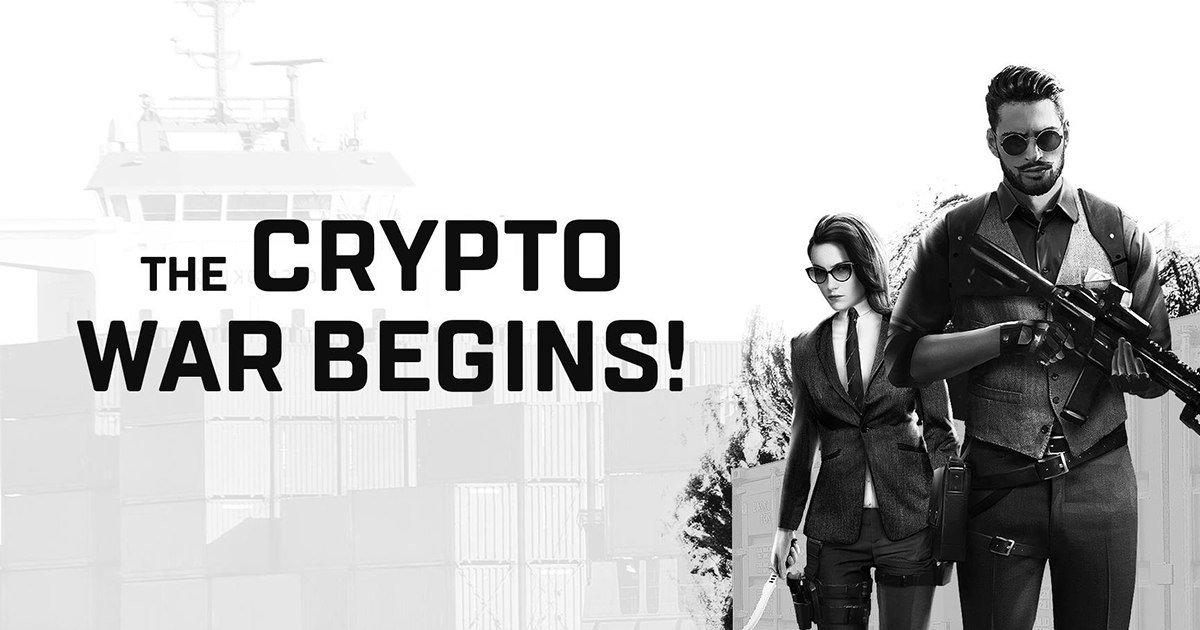
WAR FIELD is the first online multiplayer, first-person shooter video games you play to win real cryptocurrency (GLDR). “First-person shooter” means that you see everything from a first-person view as though you are the character who is playing in the gaming experience. Powered by the Ethereum blockchain, WAR FIELD enables players to win actual cryptocurrency in a zero-sum, winner takes all dynamic. They need to have the skill to outperform other gamers actively playing against them online.
Having something real to win or lose raises the stakes, the intensity, and the adrenaline. This can make gaming even more addictive than it already is, but it also turns this time-consuming and often costly hobby into a potentially productive pastime since winners can earn additional income.
It is possible that the WAR FIELD team will expand to other genres of the gaming industry. For now, however, Founder and CEO of WAR FIELD Andrius Mironovskis says that they are beginning with a shooter “because these games command the largest market share in the industry.” This seems to have been a smart move given that WAR FIELD’s global video-gaming market cap already surpassed $116 billion in 2017, seeing annual growth of 10-12 percent.
The game’s ALPHA version is available right now. During the trial period, every new player can try WAR FIELD for free.

HOW IT WORKS

WAR FIELD gives people the chance to win GLDR, an ERC20 tradable cryptocurrency. To get started, players must get GLDR, which is easy to do at the beginning, especially right now during the Token Sale Event (TSE), with significant discounts being offered up to 60%. As the sale progresses, the discount rate will decrease. The goal is to make 100 GOLDER worth no less than $1 by the end of the sale. After the TSE, GLDR will be available for trading on cryptocurrency exchanges.
Every new player automatically gets 100 free GLDR to get them started during the trial period, and there are many other ways to get free GLDR — outlined on WAR FIELD’s FAQ page. Once players have their GLDR tokens, they must then stake a part of their tokens on their character’s “life.” If they lose, the player who “kills” or “injures” them will receive the player’s tokens.
All new players begin WAR FIELD with a knife and a pistol; they have the option to purchase more equipment on their own. Every game is played on Battlegrounds (an in-game space within which WAR FIELD combat takes place). There is only one battleground map available–a bulk carrier–for the time being. The first WAR FIELD Battleground is the Freighter MS Vanguard. Additional battlegrounds will be added as the TSE progresses, including an Amusement Park, Area 51, Pleasure Island, and others – each a unique environment with its unique challenges.
WAR FIELD is a browser gaming experience and has its own platform. This means that the game can be played on the most recent version of a Google Chrome or Firefox browser. WAR FIELD is currently in alpha and is fully functional, offering all its features to its players. It is already available on PCs and Macs, and it’s planned to be made available on the Xbox, PlayStation, and on mobile at some point in 2019.
According to WAR FIELD’s website, no installation is necessary for the online version for desktop PCs (available June 21). The minimum requirements are:
  • Intel i3 or higher processor running at least 2.3 GHz
  • 4GB of RAM
  • 100 MB of free disk space
  • At least Intel(R) HD Graphics 530 video card
  • Chrome or Firefox (runs slightly faster) browser updated to the newest version
To become multi-platform, WAR FIELD makes use of the Unity game engine. Versions for mobile devices and gaming consoles are coming soon.

GOLDER (GLDR): THE DETAILS 

GOLDER (GLDR) is the cryptocurrency of WAR FIELD. It is an Ethereum-based ERC20 utility token that is also an in-game digital currency. This means it can be used to stake and purchase digital goods for use within the game. GLDR is available for purchase on WARFIELD.com at hugely discounted rates during the WAR FIELD TSE, which began on June 28th and is expected to run until November 15th of this year. During the time of this TSE, GLDR are available on WARFIELD.com only. The WAR FIELD team warn not to accept any offers from any other sources until the TSE has ended. After the TSE, GLDR become fully tradable and can be bought, sold, and transferred because it is also an ERC20 cryptographic token. You can buy GLDR for BTC, LTC, ETH, or fiat.
The WAR FIELD team expects that GLDR will have a market value exceeding the prices for which it is being offered during the TSE. The quantity of GLDR will be limited and fixed forever at the end of the TSE. As the WAR FIELD website explains, the GLDR token’s scarcity and utility should ensure an increase in its value — along with the growing popularity of WAR FIELD and other games that use GLDR. The team hopes that 100 GLDR will be worth the value of at least one US dollar by the end of the TSE and that its value will continue to grow thereafter.

HOW WAR FIELD USES BLOCKCHAIN TECHNOLOGY 

The main concept of WAR FIELD is to leverage the blockchain to drive the in-game economy using their GOLDER(GLDR) tokens that are based on the Ethereum blockchain.
The WAR FIELD economy is based in the GLDR token, which is powered by the Ethereum blockchain. As the utility token of the platform, it can be used for purchases useful items in the game, including weapons, medical kits, apparel, armor, and so on, from the WAR FIELD Marketplace. Tokens can also be used to purchase entry for in-game events such as tournaments. Tokens can be exchanged with other token holders as long as they own an ERC20-compliant wallet.
All the players begin with a set amount of GLDR tokens and can win more based on their performance. For example, if they kill or injure opponents they gain tokens; if they get hit, then they lose tokens, which are transferred to the player who injured them.
All of the in-game transactions are recorded in the game’s internal gaming community blockchain, which does not require mining and makes transactions cost almost zero. Because every game is recorded and monitored, cheating will not be tolerated. Any player who attempts to cheat will lose their GLDR and be banned.

IMPLICATIONS FOR BLOCKCHAIN

One of the most significant benefits of blockchain is its potential to return control and ownership to people. Mironovskis sees this same opportunity for members of the massive gamer community:
“Our goal is no less than to create a global blockchain-driven gaming economy that lets video gamers fully monetize their skills,” he stated.
Incorporating cryptocurrency into massively popular industries and businesses such as video games is another step toward mass adoption of cryptocurrencies in the global marketplace. The WAR FIELD team expect their shooting game to help shape the economy of a blockchain-driven industry.

Luno Review: An Exchange Launched from Emerging Markets

coincentral.com
LUNO
Luno, a rather fitting name for an exchange which tends to capture one of cryptocurrency’s most talked about phrases, “To the moon!”. The exchange is relatively unknown for cryptocurrency enthusiasts based in the Americas and Europe. However, in this Luno review, we’ll explore some of the regions they operate in and the benefits and drawbacks of trading with this up-and-coming cryptocurrency exchange. 
Luno was founded in 2013 in South Africa and now operates in more than 40 countries around the globe. The company’s user base has grown dramatically over the last couple of years alongside the tremendous growth and adoption of Bitcoin. Luno has approximately 2 million customers and has processed over $2 billion in payments to date. 

Luno Key Information


How It Works

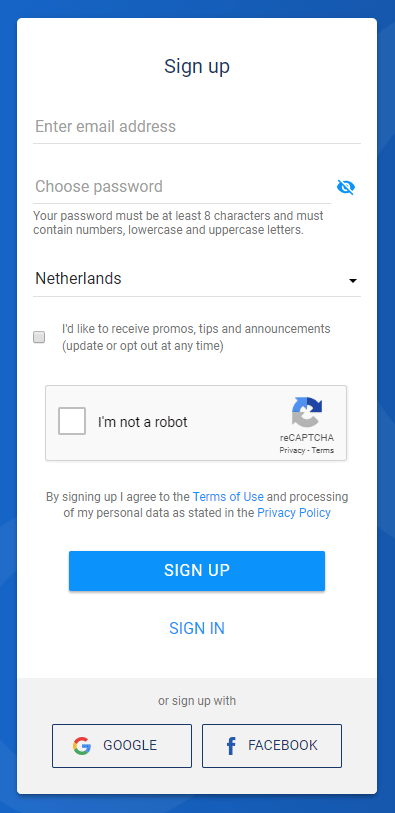
Luno review. The Luno sign-up process
The Luno sign-up process

Create Account

During the Luno review, we set up an account and went through the usual registration and security measures. The process was fairly simple. Luno, like most exchanges these days, will notify you of every login you make in case of any suspicious activity

Dashboard

The dashboard is fairly well organized, though not the most impressive we’ve seen compared to some other well-established players. So, if you are planning to trade immediately then enabling 2-factor authentication (2FA) in settings should be your first port of call.
In wallets, you can find access to both your fiat and cryptocurrency funds. Depositing and withdrawing funds to and from bank accounts was a piece of cake and sending and receiving funds between digital wallets was even easier, thanks of course to blockchain technology.

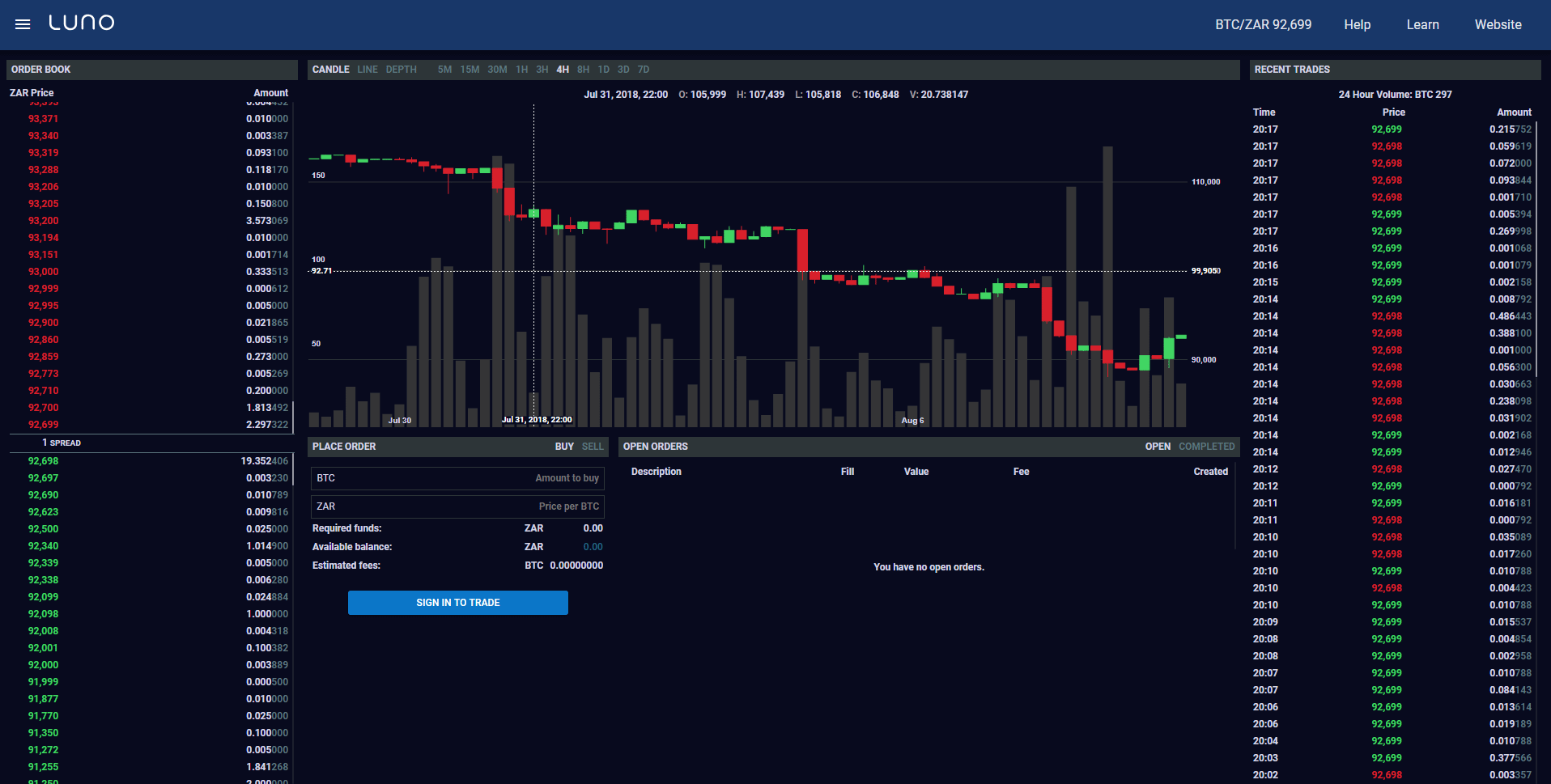
Luno Exchange

The Luno trading platform is quite basic compared to other platforms we’ve reviewed. You still have the usual tools available to you, however. They include the order booksimple chartingplace order function and recent trades list.
Placing an order at a specific price through the order box is straightforward. However, placing a market order is not as intuitive. The best way to do this is actually clicking on the latest price in the order book or recent trades list so that you get an accurate price. This could be a potential problem for active traders looking to get in and out of positions on a regular basis.
One feature we would like to see added is the ability to buy Ethereum directly with your national currency. Currently, you have to buy Bitcoin first before exchanging it for Ethereum.
Luno review. Getting your trade on in the Luno crypto markets
Unfortunately, the charting package does not provide long-term data for most cryptocurrency pairs. This is most likely due to Luno’s limited data feed. Keep in mind that most cryptocurrency pairs are measured in US Dollars ($) because of the Dollar’s reserve status. Consequently, the data for local currency pairs should improve over time as more users are added to the platform.
The more experienced trader may want to use an advanced trading platform such as TradingView to keep track of international prices. We have a great beginner guide on charting in TradingView when you are ready to take your trading to the next level.

Arbitrage

Arbitrage is a term used to describe different prices of the same asset in different locations. For example, if you keep track of the Bitcoin price in USD ($) on different exchanges globally you will probably find that they differ, sometimes considerably.
We noticed that the price difference for Bitcoin was quite large on Luno over some days compared to others. Therefore, traders should keep this in mind when using the Luno service. Also, remember that there is no central authority setting the international cryptocurrency prices because they are determined by supply and demand.

Supported Currencies

At this time Luno only supports accounts denominated in the following currencies:
  • Euro ()
  • Indonesian Rupiah (IDR)
  • Malaysian Ringgit (MYR)
  • Nigerian Naira (NGN)
  • South African Rand (ZAR)

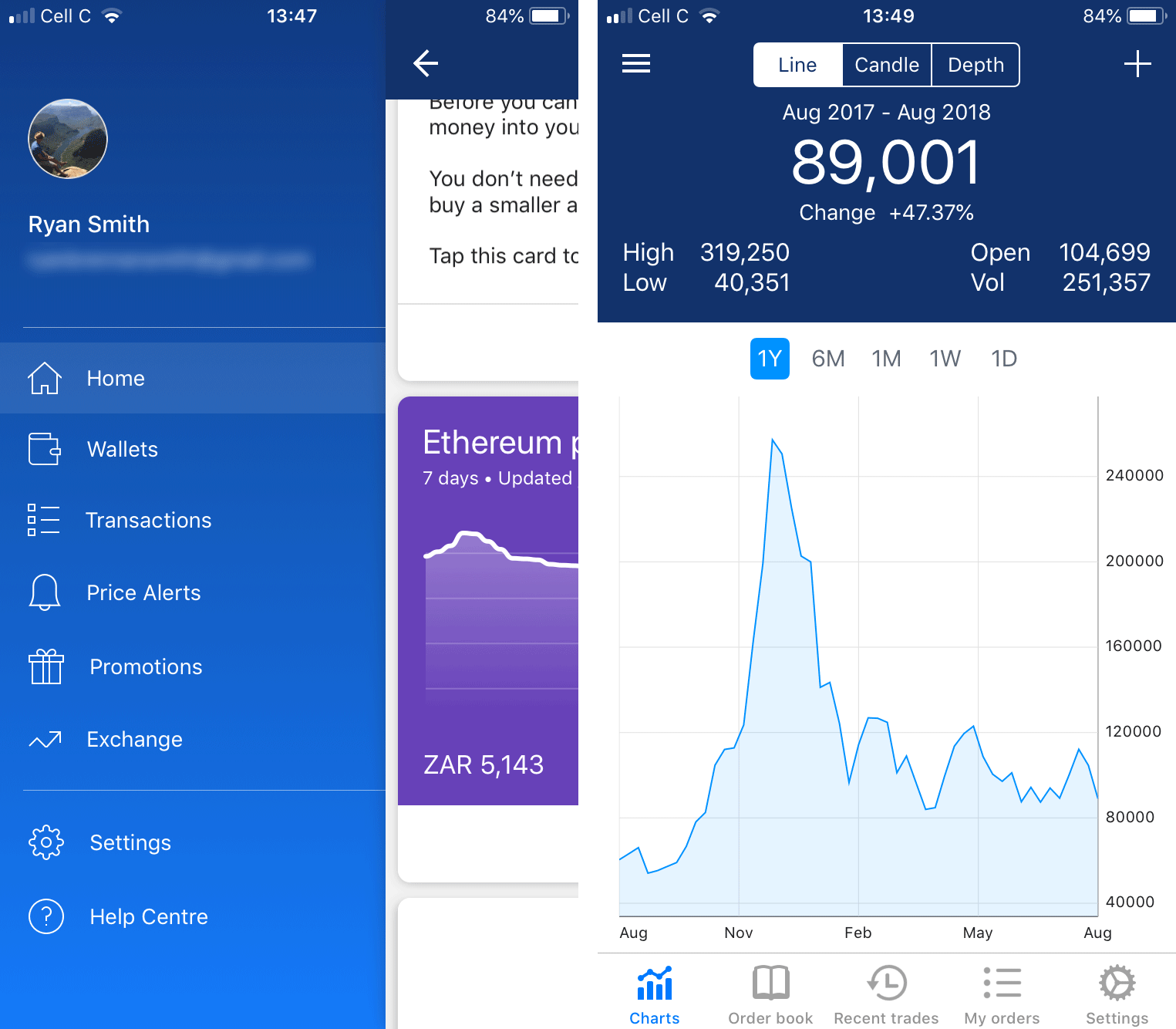
Mobile Trading & Wallet App

The mobile wallet is a nice addition to the Luno toolset. The app was pretty easy to navigate and transfer funds with. The charting application, however, is similar to the desktop version in that it’s a bit too basic. The interface could do with an overhaul in future updates.
Luno review. The Luno app seems quite easy to use
Keep in mind that in emerging markets, mobile phones far outnumber any other form of internet access. The business of the future will be conducted on-the-go with a smartphone. Exchanges which provide excellent mobile applications to their customers will have a major advantage.

Trading Fees

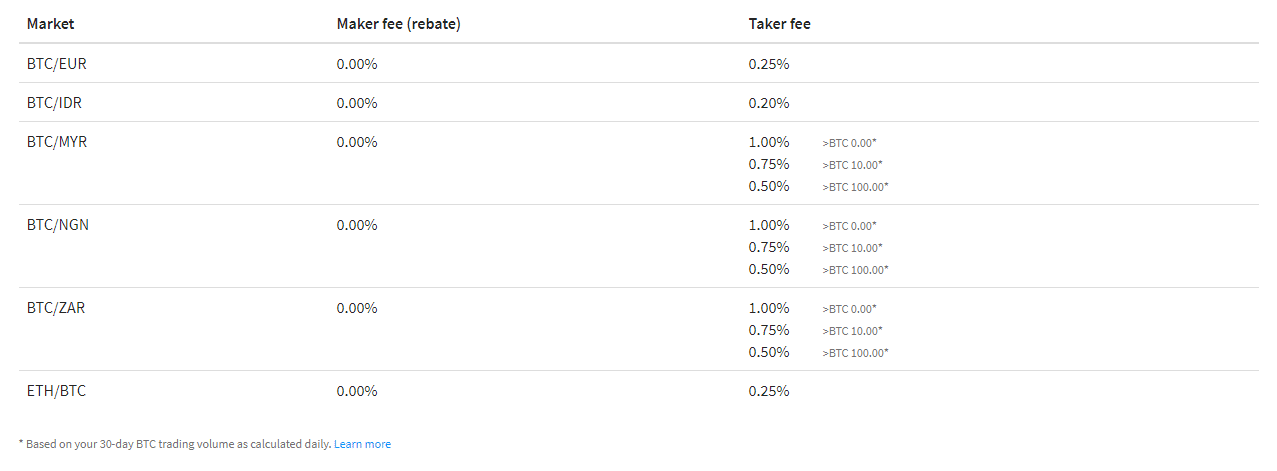
Luno’s trading fees are dependent on your country and supported national currency. Fees for European and Indonesian clients are quite competitive, coming in at 0.20% and 0.25% respectively. While fees for other locations are more expensive.
This is a pity because it doesn’t compare that favorably to other exchanges. These fees will almost certainly come down as the cryptocurrency industry matures and competitors arrive on the scene.
Luno review. A breakdown of Luno's trading fees

Deposit & Withdrawal Fees

Deposit and withdrawal fees are generally quite competitive. But remember that if you are transferring from crypto to your Luno crypto wallet that fees from the relevant blockchain apply. Here is an example on the Ethereum blockchain. You can also find a detailed description of the Luno fee structure on their website.

Available Cryptocurrencies

Perhaps the biggest drawback to using Luno is the limited number of cryptocurrencies available. To date, they only provide trading in Bitcoin and Ethereum. This does, however, fit the model of other well-established companies like Coinbase and Gemini. These companies prefer to trade in reputable coins and build favorable relationships with regulators.
Despite these benefits, it would probably be in Luno’s best interest to add some additional well-known coins to their offering and consequently attract new customers.

Transfer Limits

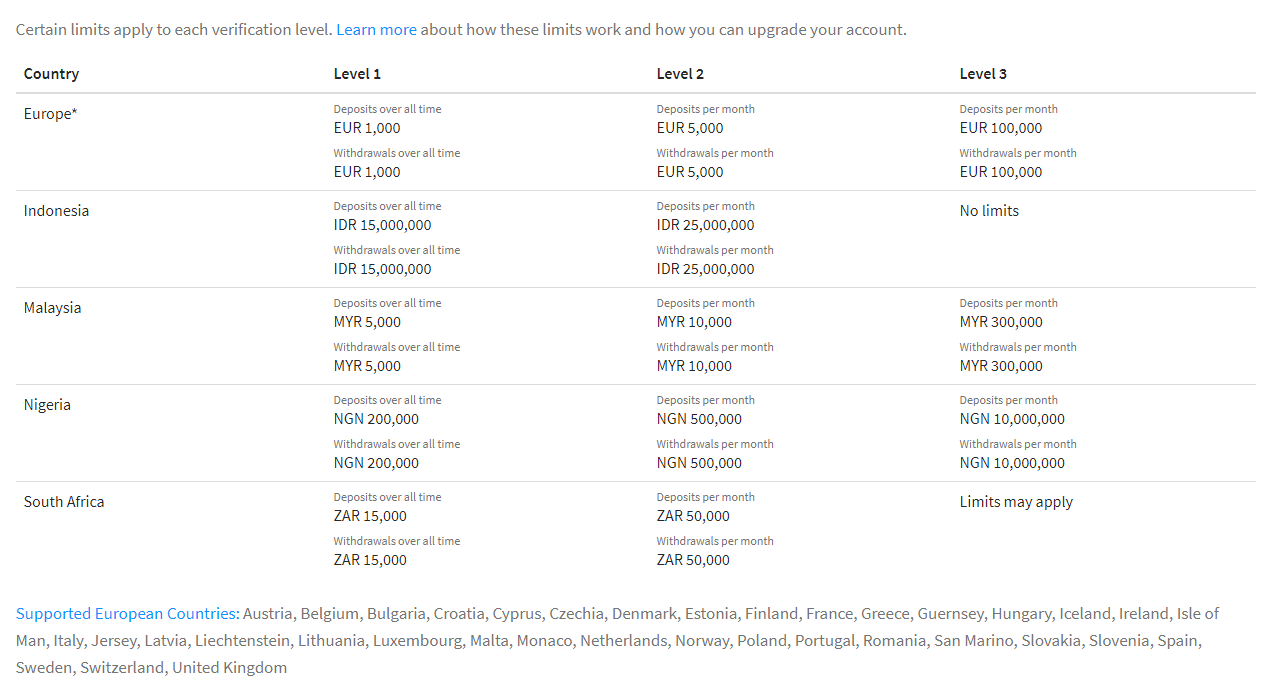
As usual, your daily transfer limits depend on your level of account verification. Level 1 has a low max cap on all withdrawals and deposits. Presumably, this will be for first-time investors looking to get their feet wet in the cryptocurrency markets.
Level 2 provides a generous deposit and withdrawal amount on a monthly basis and level 3 is for investors who trade/move large amounts of cryptocurrency on a regular basis:
Luno review. Luno's trading limits
Level 1 requires basic personal details while levels 2 and 3 require stricter documentation in line with KYC (Know Your Customer) regulations. Most noteworthy, Luno will need government-issued identificationand proof of address for the upper levels.
There appear to be no limits on cryptocurrency only withdrawals and deposits.

Company Trust

Through a little digging, we found that the company received mixed reviews from the crypto community due in many cases to accounts being blocked. Security has been a problem for centralized exchanges in recent years so this could be a reason that Luno is playing it very safe. In general, though, the support team has responded quickly to concerned users on several Luno review sites.

Fund Security

Luno’s security is quite solid and steps are taken on various levels:
  1. Storage
    1. The majority of customer funds are kept in cold storage or cold wallet accounts. These accounts are not constantly connected to the internet and are multi-signature so that one person never has full access to accounts
    2. Hot wallet (always connected to the internet) accounts also use multi-signature so that customers have instant access to Bitcoin funds if and when they need them. Furthermore, one of the keys is held by BitGo, an independent custodian for cryptocurrency accounts.
  2. Authentication
    1. Passwords are stored in hash form
    2. Two-factor authentication (2FA) is available for an extra layer of protection. We highly recommend enabling this option for all your cryptocurrency accounts.
  3. Company Principles
    1. All web services and communication use secure layer protocols and encryption. Also, employees do not have access to customer funds. Finally, auditing takes place regularly to account for customer funds.
    2. Privacy – access to personal information is on a need-to-know basis and is strictly controlled.
Also, remember that Luno is a centralized exchange and is, therefore, a target for hacking and fraud. Centralized exchanges store large amounts of crypto in a few places. If you are a large buyer and/or long-term holder of cryptocurrencies we recommend you store your virtual currencies in a hardware walletwhere you have full control of your keys and funds!

Customer Support

From what we could gather the customer support team responds quite quickly on review sites and in social media. However, the number of blocked accounts is a notable concern. The massive interest in cryptocurrency over the last couple of years has most probably put some pressure on Luno’s support systems. As a result, with additional resources and experience, these issue should be ironed out.

Conclusion: Luno Review

Luno adds a nice touch to their service through regular activity across social media channels and their blog. Because their marketing also gives the impression of professionalism, this should allow them to continue growing their user numbers over the next couple of years.
Transferring funds between fiat and crypto on Luno was easy. Clients who have trouble transferring funds internationally will find having a local exchange a real benefit. Overall the platform is a good choice for those with few other options in their home country.
However, the high trading fees in some locations and frustration from users with blocked accounts remains a concern for Luno going forward. If they can deal with these problems quickly they will remain a solid exchange for users in emerging markets.
This article by RYAN SMITH was originally published at "CoinCentral.com: https://coincentral.com/luno-review-an-exchange-launched-from-emerging-markets/

Wednesday, 8 August 2018

FACEBOOK LIFTS BAN ON CRYPTOCURRENCY, BUT STILL BLOCKS ICOS

mintdice.com
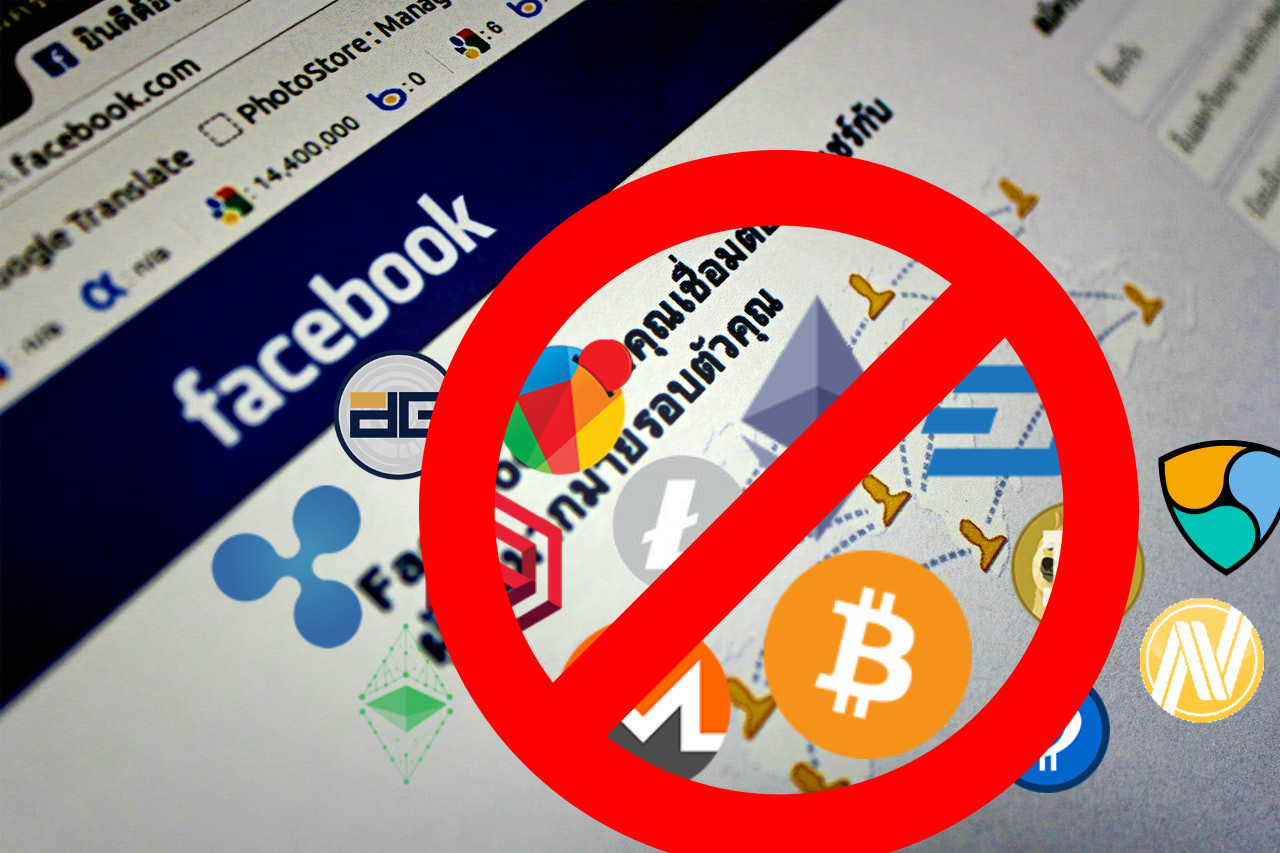
Resultado de imagen para FACEBOOK LIFTS BAN ON CRYPTOCURRENCY, BUT STILL BLOCKS ICOS
Anyone who has tried to use Facebook advertising is familiar with the many terms and regulations, from the copy to the visuals to the URL. So it was hardly surprising when Facebook drew another line this past January and this time with cryptocurrency. Now, in June, it has reversed much of the ban, but it continues to exclude initial coin offering (ICO) ads.

THE BACKSTORY

On January 30, 2018, Facebook launched a new policy against deceptive marketers banning all advertisements for cryptocurrency and related content. The goal was to counter misleading and deceptive ICO and cryptocurrency ads. Scams and volatile price fluctuations have come at a high cost to many people, bringing Facebook to take more severe measures to “improve the integrity and security” of their ads, and to make it harder for scammers to profit from a presence on Facebook.” The FTC reports a $532 million loss for consumers to cryptocurrency-related scams in the first two months of 2018, and these losses are projected to grow beyond $3 billion by the end of the year.
Product management director Rob Leathern had commented: “We want people to continue to discover and learn about new products and services through social Facebook ads without fear of scams or deception. That said, many companies are advertising binary options, ICOs, and cryptocurrencies that are not currently operating in good faith.” That is why Facebook will not accept any more ads that “promote financial products and services that are frequently associated with misleading or deceptive promotional practices.”
Thanks to a few rotten apples in the tree, this means that no advertiser will be able to promote any cryptocurrency, not even the legitimate businesses. Ads that violate this policy will be banned on Facebook’s core app, as well as Instagram, its ad network Audience Network, which places ads on third-party apps, and other places where Facebook sells ads. Of course, anytime new rules are formed, human ingenuity will always find loopholes.

OTHER PLATFORMS FOLLOW SUIT

By March, Google and Twitter hopped on board with the ban, although Twitter does show ads for exchanges and wallets provided by publicly traded companies. Major Chinese web companies such as Baidu, Tencent, and Alibaba have already been banning these kinds of ads for a short while before any of these American tech giants started doing so. The impact of these policies is notable; companies serving as marketplaces and exchanges for virtual currencies are shut out from 70 percent of the world’s digital ad market. Microsoft’s search engine Bing is the biggest ad platform option allowing cryptocurrency ads. Snap allows cryptocurrency ads but not ads for cryptocurrency ICOs.

BAN REVERSED, SORT OF

For the Facebook company, the decision was not intended to be permanent, and when launching the new policy, the social media giant explained its plans to revisit this decision in the future as their ability to catch inappropriate ads improves. Now, that is precisely what’s happening. As of June 26, Facebook announced that it will accept ads for cryptocurrencies as well as their related content. This is a big deal as it gives back a huge advertising platform to the cryptocurrency industry that can help it reach a mass audience.
But it’s not going to be easy for advertisers; they will need to be vetted before they can post anything. Ads that promote binary options and ICOs, however, are still banned. To receive permission to run crypto ads, Facebook may require seeing “licenses they have obtained, whether they are traded on a public stock exchange, and other relevant public background on their business.” Facebook has also published a legal addendum that describes its policy toward cryptocurrency ads.
Leathern explained in his post on Facebook’s blog, “Advertisers wanting to run ads for cryptocurrency products and services must submit an application to help us assess their eligibility—including any licenses they have obtained, whether they are traded on a public stock exchange, and other relevant public background on their business. Given these restrictions, not everyone who wants to advertise will be able to do so.”
He further explains, “It’s important that we continue to help prevent or remove misleading advertising for these products and services,” and calls on users to report any content that violates their Advertising Policies.
Facebook’s growing interest in the legitimacy and future of cryptocurrency may have something to do with the recent lift on the ban. Earlier this year they launched their blockchain team to explore the technology for themselves, starting with a messenger-style app. There are also rumors that Facebook is planning on launching its own cryptocurrency. If Facebook does plan to enter the blockchain and cryptocurrency space in the future, it makes sense to lift the ban. The revenue potential with cryptocurrency ads is also difficult to miss out on.

FINAL THOUGHTS

The ban of cryptocurrency ads and its related content by major companies shows that ongoing skepticism and mistrust toward this still nascent industry. It also demonstrates how much the industry needs public trust to thrive, as the price of Bitcoin dropped shortly after the ban. Facebook’s reversal, or lightning, of the ban, suggests that this trust can be gained as more stakeholders work and become more familiar with this innovative technology. And its policy is likely to continue to evolve, along with its understanding of the industry. Leathern commented, “But we'll listen to feedback, look at how well this policy works and continue to study this technology so that, if necessary, we can revise it over time."
Embracing crypto and blockchain can propel forward not only the industry but the companies that work with it. Founder of crypto public relations firm Ditto PR, Trey Ditto, described Facebook's shift as "the first step in allowing credible blockchain projects, crypto companies, and ICOs to get in front of new potential customers and investors...This will be a big boost for Facebook advertising revenue as the majority of projects out there are interested – and have the money – to run paid ads."
Still, ICOs, in particular, have a lot of work to do with gaining the trust of the regular and institutionalized investor. It will be interesting to watch how different companies continue to move forward.

Blockchain and the Insurance Industry: The Coming Revolution

coincentral.com
blockchain insurance industry
Blockchain and the insurance industry show compatibilities in such a way that you can expect blockchainto significantly alter the way insurance companies do business. Ethereum creator Vitalik Buterin says as much. In an interview with Simon Phipps of KPMG China on November 27, 2016, Buterin states:
“I think insurance actually is one of those areas in finance that could be relatively easy to apply to blockchains. I think the reason is that it’s an area where it’s basically just about finance and data. So fairly simple building blocks and I think data has been fairly freely available ever since the internet. And the finance side, you know, is becoming more and more accessible, especially with blockchain technology coming in. So there’s a fairly natural combination, and I think we’re seeing like both individual companies starting to develop some applications like those like flight insurance pilots, no pun intended, and like some fairly large insurance companies just getting interested in the technologies, just dipping their feet.”
Vitalik also declared his support on Twitter for blockchain development in insurance processing.
Yes, I'm an advisor of wetrust. No, I do not have tokens. No, my interest in decentralized insurance should NOT be construed....

The History of Insurance

In ancient China, merchants indemnified themselves against loss by distributing cargo over multiple vessels. So if one vessel sank, the rest of the shipment remained safe. Here, we already see the value of decentralization in insurance.

Danger at Sea

Historians often pinpoint the origin of modern insurance in western culture to a London coffee house in the late 1680’s. Edward Lloyd opened Lloyd’s Coffee House at this time on Tower Street in London, and this provided a gathering place for ship owners, merchants, and seafaring men.
The insurance industry grew out of the deals made to spread risk among multiple parties and bet on a favorable outcome of a trading voyage. Edward Lloyd established Lloyd’s of London as a result of his success in this business.
These beginnings show insurance to be a catalyst for business development. Without insurance, some successful voyages would never have started. Consider the development of emerging technology as a modern equivalent.

Gambler’s Odds

Then in 1654, mathematician Blaise Pascal contacted fellow French mathematician Pierre de Fermat. Together, they developed a theory of probability. Probability theory gives insurers a rigorous tool for calculating the amount of risk involved in a given venture. Pascal’s work provided the basis for the first actuarial tables, and this approach continues to be used by the insurance industry today.
So, in the history of insurance, we clearly see significant areas where blockchain and the insurance industry coincide. Decentralization spreads risk. And mathematics provides smart contracts for the basis of transactions.

Blockchain Benefits to the Insurance Industry

Trust

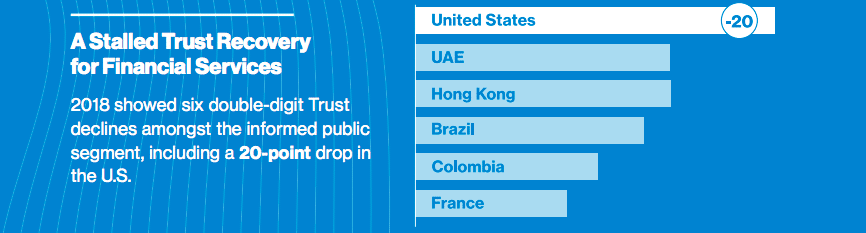
Throughout the world, trust declines in established powers, whether they are governments or business. The 2017 Edelman Trust Barometer documents this decline. Blockchain technology, at its core, creates a system of trust regardless of whether parties involved in a transaction trust each other or not.
Edelman Financial Services Trust Barometer Highlights

Transparency

In the United States alone, around $7.4 billion remains unclaimed through life insurance where people died, but their funds fall through the cracks. Blockchain technology and smart contracts enforce payment, and transaction data appear openly on the blockchain.

Efficiency

As an established industry, insurance companies use mainframes, outdated database technology, and incompatible systems that experience great difficulty in communicating with each other. Data on a blockchain alleviates these problems. Emerging economies such as those in Asia present opportunities to explore new systems based on blockchain because these economies exist free of established and outdated systems.

Immutable Record of Truth

Insurance depends on knowing the facts properly. When you insure valuables, the insurance company needs to know the condition of those valuables, their location, and even simple proof of their existence. Blockchain provides an immutable record of truth capable of storing all this data and tracking any change of ownership.

Transactions

The insurance industry essentially makes contractual obligations between parties. One party pays the other, and circumstances obligate the other party to pay when conditions meet the proper criteria. Blockchain technology provides a system for contracts to be honored and payments to be made efficiently.

Fraud Prevention

As an immutable record of truth, blockchain’s capabilities include the ability to reduce fraud. Transactions on a blockchain provide information relevant to uncovering suspicious claims and suspicious persons.

Auditing

The transparency of blockchain technology enables improved auditing. Blockchain provides ready access to the criteria used for establishing the price of premiums and how these criteria changed over various timeframes. Consequently, proof of compliance with governmental regulations grows simpler.

The Blockchain Insurance Industry Initiative (B3i)

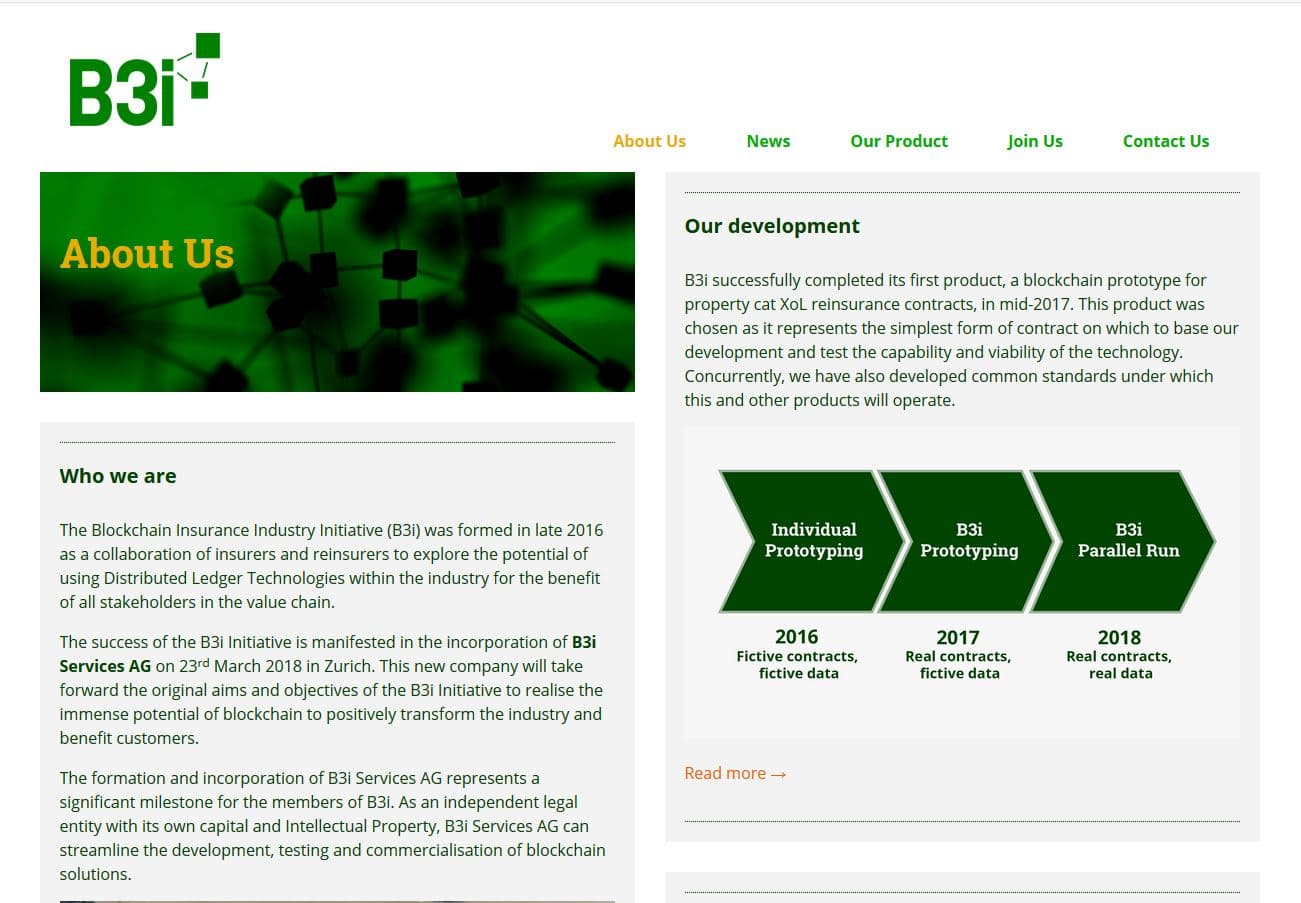
The Blockchain Insurance Industry Initiative (B3i) formed in Europe in late 2016. B3i represents a collective of insurance companies collaborating to research the opportunities of blockchain and the insurance industry. After a successful first couple of years, B3i Services AG incorporated in Zurich in March of 2018. As its own organization, B3i Services AG looks to develop and test commercial blockchain solutions for insurance.
The organization released a blockchain prototype for property catastrophe excess of loss reinsurance contracts as its first product. Providing the simplest form of an insurance contract, this also paved the way for common standards to operate going forward.
blockchain and the insurance industry image

Final Thoughts

Blockchain and the insurance industry present a myriad of opportunities. Blockchain transparency and transaction processing give both customers and vendors better data and trust. Improved efficiency of the existing industry provides only one path forward. Aspects of blockchain technology expose new ways to think about the business itself. The insurance industry grew out of a need to reduce risk, and it accomplished this by spreading risk over multiple parties. Consequently, the dangers of maritime trade initiated the modern Western insurance industry we know today.
You can see in the decentralization of blockchain the possibility of spreading risk over multiple parties in new ways. Blockchain enables people to insure ventures in a way similar to crowdfunding. And while the cost of overhead of outdated systems limits established insurance companies, blockchain enables microfinance. Therefore, profit from smaller ventures that would normally fly under the radar of the existing industry waits to be found.
A brave new world of possibility exists for those willing to set sail on the adventure of a new insurance industry.
This article by WILTON THORNBURG was originally published at "CoinCentral.com: https://coincentral.com/blockchain-and-the-insurance-industry/