Tuesday, 17 April 2018

Monero: A Tale of Five Forks

coincentral.com
Image result for Monero: A Tale of Five Forks

Monero Gets Five New Mints

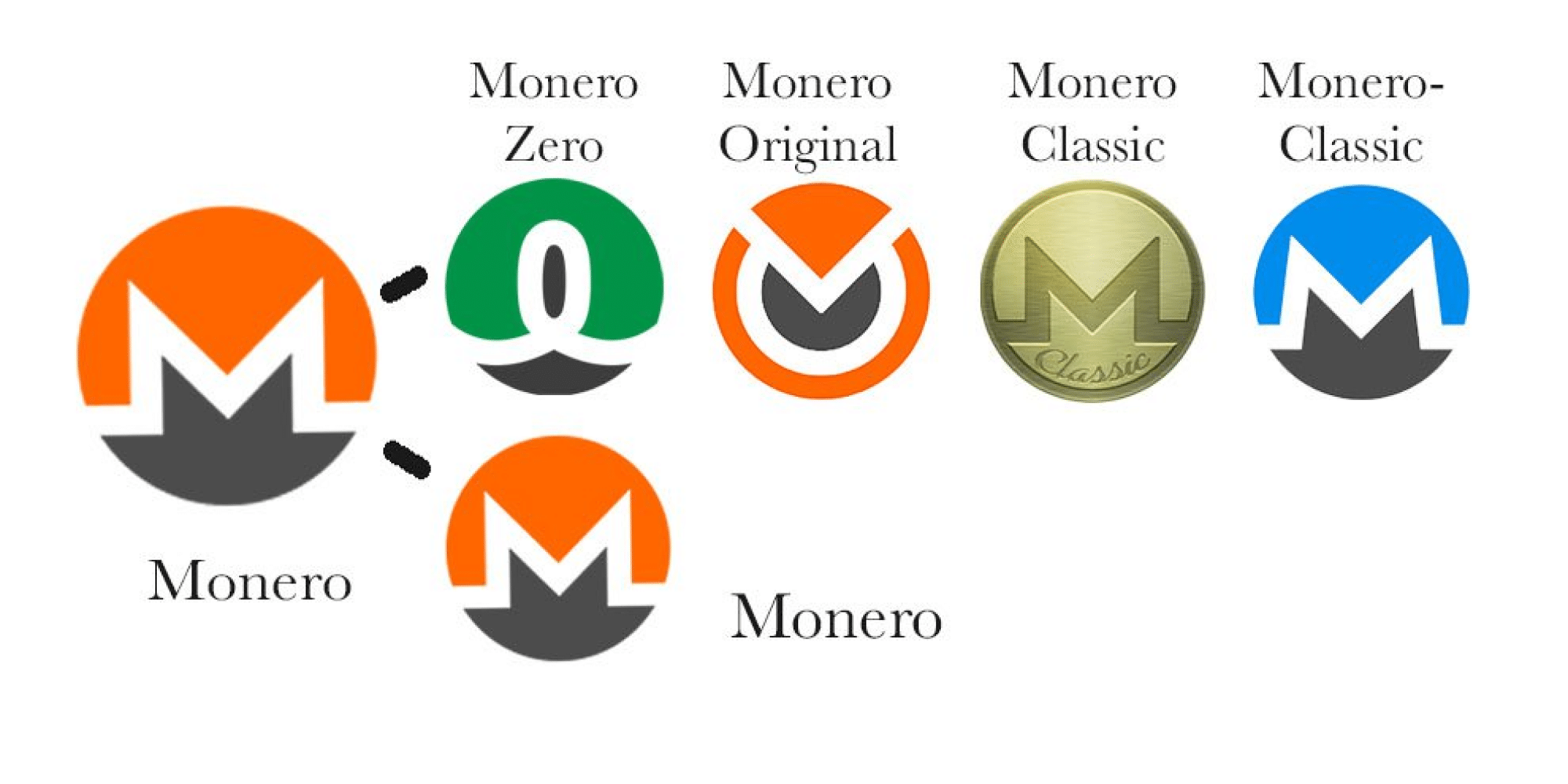
It was the best times, it was the worst of times. It was the season of Monero ASIC mining, it was the season of frequent hard forks to prevent such mining. On April 6, popular privacy coin Monero hard forked…five times. MoneroC, Monero 0, Monero Original, Monero Classic, and Monero-Classic (again) will all continue running version 11 of the Monero protocol, while Monero itself has moved on to version 12.

What the fork just happened?

The Monero project has consistently hard forked every 6 months to upgrade its protocol with the latest features, and each fork has historically been supported by the community. However, this fork came with a controversial change in code that has splintered the Monero community, even though most of the developers and user community were on board. Namely, the fork looked to change the CryptoNight Proof of Work mining algorithm Monero uses.
This change aims to prevent anyone from mining Monero using ASICs, or Application-Specific Integrated Circuits, computers that can only do one specific thing (like mine Monero). The CryptoNight algorithm is vulnerable to attacks by ASIC mining, and this fear led the developers and many community members to get behind making a change.
The decision comes after Bitmain, Halong Mining, and other mining hardware companies announced that they have developed CryptoNight ASIC miners and would begin sales soon. The mining script change renders all of the new hardware useless for mining Monero, unless one of these forks can gain a foothold in the market.

What’s the story with these new coins?

While all of the new Monero-based coins are, in reality, the same coins on the same network, they are being identified with different names and logos by their respective projects.

Monero 0 (XMZ)

According to Bitcoin Magazine, this Monero team is a group of “proof-of-work maximalists” that run hobby mining operations.
On the Monero 0 website, the team writes that they have “decided that the Monero Project’s strategy to continuously hard fork is no longer a stable or a sane strategy. We believe that Satoshi’s Proof of Work is the only mechanism for decentralized consensus.”

Monero Original (XMO)

There is little information available about the Monero Original project other than a github repositoryand a press release sent to several media outlets.
In the press release the “lead developer” states that “Monero has always been about freedom of choice, about diversity and about the strong community behind it. We are providing the Monero fans [with] a possibility to support the iconic coin and stay on the original chain. “
At time of press, HitBTC supports trading XMO/BTC, XMO/USDT and XMO/ETH, and is trading around $6.
Monero Original Price

Monero Classic (XMC)

A representative of the Monero Classic project, Bento Tan, spoke to Bitcoin Magazine and described the team as a group of Monero enthusiasts from Singapore who believe that ASIC development is healthy for the growth of a cryptocurrency.
On their website, they highlight the issues they have with the apparent power of Monero’s core developers, stating that “the main message of Monero classic is that we believe that the developers changing the proof of work creates more centralisation and harms decentralisation.”
This objection seems to be with the centralization of decision-making power within the development team, as Monero Classic’s team observed that Monero’s “developers are saying that they can and will change the consensus rules whenever it suits them and the community seems to be conditioned into following the wishes of the developers.”
Tan told Bitcoin Magazine that the Monero Classic project has no connection with any of the other fork projects and does not plan on cooperating.

Monero-Classic (XMC)

The Monero-Classic website reveals that an individual who goes by PZ (an “early Bitcoin evangelist” and the Secretary-General of the Litecoin Roundtable) is behind this project. He claims that he has watched the Monero community’s growing fear over ASIC mining and, like the other Monero Classic team, thinks that it is unfounded.
“Actually, the emergence of specialized mining machine for a cryptocurrency is [a] normal market economy phenomenon,” PZ writes, adding “we believe that for any kind of valuable algorithm, the emergence of mining machine [sic] is only a matter of time.”
PZ acknowledges the community support of the ASIC-resistant fork but holds that there are also many in the community that accept ASIC involvement in Monero mining and will stay with the old protocol. He finishes with a unifying message and the belief that “these two thoughts should be given equal opportunities for development.”
Antpool, Bitmain’s mining pool, has tweeted support for this project, signaling that Bitmain (who clearly stands to benefit from an ASIC-minable Monero) may be involved with its development.


Monero (XMR) has forked. If you had XMR before 6 April, you can get an equivalent amount of Monero Classic (XMC) after 6 April. Find out more by joining its official group chat at http://t.me/xmccurrency  (doesn't work inside the GFW)
This Monero Classic project is supported by the exchanges gate.io, LoMoStar, and CoinEx and trades at around $25 at the time of press.
Monero Classic Price

MoneroC (CXMR)

Next to nothing is known about MoneroC. The project’s website is simply a notice that “more info [is] coming soon.”
They do have a twitter account that states that the project does plan on making some of the changes to the protocol that the main Monero project has, but in a way that will avoid centralization.
The team also mentions that their mission is the same as MoneroV (another Monero fork planned for later this month), but they are forking from the original code while MoneroV will be forking from the newly updated version 12 code.

I have Monero… does this affect me?

There are a couple issues that the newly forked coins may cause when it comes to your existing Monero stash. First, the new Monero forks do not implement replay protection, which means that sending coins on one of the forked chains may cause the corresponding coins on the other chain to be spent as well.
To avoid this, any of the new forked coins that you want to keep will need to be moved out of the addresses they reside in before you move your true Monero. Over time, the threat of a replay issue decreases as the new and old coins are mixed and become invalid on the opposing blockchains.
A somewhat more concerning threat is that the process of claiming and moving the newly forked coins may reveal your ownership of Monero coins. This possibility flies in the face of the privacy-focused mission of the Monero project. If the privacy of your Monero is important to you, it’s suggested that you choose one chain to follow and simply ignore the rest of the alternative coins. Whether you choose the chain that maintains the most value or make your decision based on which fork of the code you prefer, this is the best way to maintain privacy.

So… did it work?

The fork is definitely taking effect! Since forking, Monero’s hashrate has decreased dramatically and the Monero community seems to be celebrating. For ASIC manufacturers, though, the story is a bit different.
Monero Hashrate Chart
While Bitmain has shown support for the Monero-Classic project and seems to be continuing with it’s plans to sell the new X3 CryptoNight miner, a smaller hardware firm, Baikal, has begun to sell off its own CryptoNight miners at a staggering 5-for-1 deal, clearly believing that the “true” Monero will survive and hoping to make back some of its investment in the technology.

What now?

As with the many forks we’ve seen of other projects like Bitcoin and Litecoin, only time will tell which efforts will survive and which will go up in flames. Keep an eye on CoinCentral for updates on the various Monero forks!

Bon Appetite!

This article was originally published at CoinCentral.com”: https://coincentral.com/monero-a-tale-of-five-forks/

These Are The Easy Online Business Opportunities You've Been Looking For

franchisesunder10k.net
Brick and mortar is no longer a necessity for entrepreneurs. If you want to start a business, you just need a good idea, a computer, and internet access. You want to run a business from the comfort of your home or a beach or a chalet in the Alps? You can do it.
Of course, before you start an online business, you need to have an idea or two. People aren’t going to pay you to surf the internet.
Consider this article your guide to finding the online business that’s right for you.
We’ll cover the different business models, help brainstorm business ideas, and give you the step-by-step guide to getting off the ground.

The Different Types Of Business Models

Before we jump into how to start your business, it’s a good idea to know the common business models out there. Once you know the various models, you can pick the one that’s the right fit for your personality and goals.

Merchant & Brokerage Models

When selling a product to consumers or to other businesses, you have two different types of models: merchant and brokerage.
Merchant -- A business that opens up an online store where consumers can buy products directly from the company. Target’s online store is a prime example of this. If you want to buy Target products online, you go to their eCommerce website. If you have a product you want to sell, the merchant model could be perfect for you.
Brokerage -- A business that brings sellers and buyers together into one marketplace (example: Amazon and eBay). The buyers purchase from the sellers and the brokerage takes a small fee. Thousands of people have created full-time jobs and businesses from selling products on eBay, Amazon, and other brokerage sites.

Community Model

The community business model is when consumer reviews of products and services drive the success of the model.
This could be businesses like Angie’s List or Yelp. Basically, the model relies on consumers sharing info and experiences about the business. The consumers benefit from the honest reviews and the business can monetize their customer base. For example, Angie’s List charges to let customers see the reviews and Yelp lets businesses advertise on their platform.
If you can create a platform where consumers can share reviews with each other, you could have a big money-maker on your hands.

Infomediary Model

An infomediary gathers information about products and presents it in an unbiased way to their customers. For example, Consumer Reports objectively reviews products and then presents that information to their customers. Some sites like Wirecutter review products, present an unbiased opinion, and then receive a commission if someone purchases through them. If you love reviewing various products and giving unbiased reviews, this could be a great option.

Affiliate Model

Websites that are a part of an affiliate program make a commission from the products that consumers buy through said website (example: Amazon’s Affiliate Marketing program). Websites that get a significant amount of traffic or have dedicated followings can get significant revenue through affiliates.

Advertising Model

You see online ads everywhere you go, from Facebook to Google to Forbes. If a company has a significant amount of exposure (think web traffic), they can charge other companies a premium to advertise on their site. In terms of a business, if you can create a website or app or platform that attracts a large following, you then become very appealing for businesses who want to promote their services or products.

Manufacturer's Direct Model

The Manufacturer’s Direct model is simply buying directly from the manufacturer. If your business manufactured a product, consumers would go right to your website to purchase and customize, rather than outsourcing to a seller (example: Dell, which allows customers to customize the computer to their needs).

Subscription Model

More and more online publications, like The New York Times and Wall Street Journal, are moving to subscription based business models. Basically, readers pay a monthly amount to get full access to the business’s content.
Subscription services, such as Dollar Shave Club, are also becoming hugely popular. These services allow customers to get a product delivered to them on a regular basis so they don’t have to remember to buy it.

Sweepstakes Model

A sweepstakes business helps other businesses grow through by creating sweepstakes for them. For example, if you run a sweepstakes business, you could help a local catering company run a sweepstakes in which customers exchange their email address for a chance to win a catered dinner.
Most companies don’t have the knowledge, manpower, or technology to create a sweepstakes, which is where your business comes in. Franchises like Sweep Surge make it incredibly easy to build a sweepstakes business.

Web 3.0 Model

Most people are less familiar with the Web 3.0 model. A step up from Web 2.0 (or the Social Web), this model relies on collecting as much info about consumers as possible (like online activity and purchasing history) and aggregating it to create a personalized buying experience.
Although it’s new, places like Amazon and their suggested products feature and Facebook’s ads setup are taking a stab at it. The challenge of creating this type of business is that you need to have a huge number of users in order to gather any meaningful amount of data.

Internet Business Ideas

Now that you know the different types of online business models, let’s dive into some potential internet business ideas. This is by no means all of the possibilities, but these are some ideas to get you started.

Web Design

If a business has no website (or a terribly designed website), it can really hurt business. Essentially, every business needs a website.
So why not start a business to provide websites?
If you want to build deep, technical websites, you’ll probably want to learn coding an the variety of website building platforms available, such as Wordpress or Joomla.
However, it’s increasingly possible to design outstanding websites for businesses using services like Squarespace or Weebly, which make it possible to create sites with no knowledge of coding.
And if you’re good at web design, your own website is the best place to showcase your talents.

Affiliate Marketing

Forget what you think you know about affiliate marketing. You might have heard people say you will work 10 hours a week while making $30,000 a month.
Maybe some experts do that, but they’re outliers.
However, you can make a living from affiliate marketing, but it will take work. As mentioned above, affiliate marketing is basically a referral program. So, knowing that only a fraction of your referrals will lead to sales, you’ll need lots of referrals.
Lots of people do this through blogging. They drive traffic to their website by writing content people want to read, then link to products within their affiliate program.

Social Media Management

Many businesses aren’t sure how to market themselves on social media, which means there’s a huge need for social media managers.
Marketing is moving away from simple ads to social interaction and engagement. So if you can learn the tricks of social media management that lead to more sales, then you’ll be in a great place to create business for yourself.
And it’s not all about pulling traffic to your clients’ websites. It’s about helping a business converse with their customers to create a long-lasting bond that will, in time, lead to more sales.
If you have a smartphone and some time, you can easily get into the social media management business.

Virtual Assistant

Being a virtual assistant (i.e. work-from-home assistants) is another business opportunity that’s in high demand. As more and more businesses move toward remote workforces, the need for virtual assistants is skyrocketing.
If you start your own VA business, you can offer services like bookkeeping, marketing, scheduling, website management, and anything else your traditional assistant would do.
Or you could simply focus in on one of those skills and become an expert at it, meaning you could charge more for your services.

Freelance Writing

If you can write, you might have a future in freelance writing.
It involves everything from writing advertising pieces to writing technical articles to simply creating high-quality blog posts. Businesses are increasingly relying on content to demonstrate their authority, and if you’re a great copywriter, you may be able to take advantage of this growing demand.
If you can learn about a topic quickly and write about it clearly in a easy-to-read way, this might be a good business idea for you.

How To Start An Internet Business

Alright, now to the fun stuff. Here are the general first steps to starting an internet business.

No Demand, No Business

One big mistake many entrepreneurs make is starting a business without seeing if anyone even wants what their selling.
If there’s no demand for a product or service, why start a business centered around it?
Start with finding a potential market. Find the need first. Here are a couple ways you can do that:
  • Browse specific forums and ask people about their problems (which you can then solve by creating the right business). For example, if you were in a small business forum, you could ask business owners if they have trouble getting new leads. This would indicate that a franchise like Sweep Surge could be a big service to these people.
  • Figure out what people are searching for on the internet and see if a lot of other businesses exist in that problem-solving area. A simple way to do this is to go to Google Trends, which will show you the various things people are searching for on the web.

Create A Website

Now that you’ve picked your business model, your market, and your problem-solving product, it’s time to bring that all together on your website. If you’re going to get new customers, you need to be able to point them to your website.
The best thing to do is to keep it simple. Navigating your website should be easy. If it’s overwhelming or confusing, people will close out of your website and never return.
Make sure that it’s really clear what your business does. Create a services page which spells out everything you can do to help customers. Also, make it very easy to have people contact you. Make your phone number, email address, and social media presence easily findable.

Wrapping It Up

Like we said at the beginning of this article, to be a successful entrepreneur, you don’t need to go anywhere but to your computer.
Heck, stay in your pajamas all day. Your customers don’t know, and honestly, they don’t care. As long as you keep selling them what they need.
The opportunities are everywhere. You don’t even need a lot of capital to get started with many online businesses.
But you do need to get started.
So what are you waiting for?

Tuesday, 10 April 2018

Blockchain Meets Digital Advertising: 3 Projects Looking to Dethrone the Kings

coincentral.com
Image result for Blockchain Meets Digital Advertising: 3 Projects Looking to Dethrone the Kings

The Digital Advertising Revolution

In 2017, Google and Facebook captured nearly 73% of digital advertising revenue in the United States, with the remainder up for grabs for competitors such as Amazon and Snapchat. Digital advertising spending is estimated to be near $270 billion in 2018, and only keeps growing every following year.
With nearly $2 trillion in market cap between just the above four companies, the current digital advertising oligarchy trumps even the (currently) $250 billion market cap of the entire cryptocurrency industry.
The following cryptocurrency projects resemble little more than cockroaches scurrying around trying to build homes and avoid being intentionally or inadvertently stepped on by the Titans wrestling at the top.
So, what happens when Alphabet Inc. (Google), a near trillion dollar company that earns around 84% of its total revenue, sees a threat? What happens when Facebook and Twitter wake up with night-sweats from the distant possibility that some scrappy young company could destroy their business model with a new and unpredictable technology?
They take action where it needs to be taken. It wouldn’t be a stretch to assume the blanket ban on cryptocurrency advertising on Google, Facebook, Twitter, and even Mailchimp wasn’t at least a convenient maneuver to stifle competition.
With 8x the market cap of the entire cryptocurrency market, thousands of employees, some of the brightest talent from all over the world, and access to additional capital essentially at will, the old guard has thousand-foot high walls protecting it’s kingdom.
It’s highly unlikely Google, Facebook, Amazon, and Twitter are even slightly unaware of any of the following projects. Buying and/or destroying at will isn’t so far out of their repertoire, either. They’re even building in-house blockchain-based solutions to improve various parts of their businesses and potentially further shield themselves from any external threats.

Search for the Holy Grail: Data

When Yahoo (1995), Ask Jeeves (1996), and Google (1998) popularized the world of Internet search for the average person, the digital ecosystem was still in its nascent stages. Not only were there very few companies attempting to use the Internet as a platform to sell products and services, few people even own computers.
AskJeeves
Early search engine AskJeeves
These were the days that digital audience targeting to the extent of AdWords and Facebook Ad Manager was the stuff of marketing nerd science fiction.
As the Internet evolved, amazing features such as the ability to look anything up at any time and connecting with friends all over the world appeared to be gifts from the tech gods. The vast majority of people didn’t (and still don’t) understand how platforms such as Google and Facebook were free.
Mark zuckerbergThe Facebook-Cambridge Analytica scandal of March 2018 was one of the first instances where the general public was exposed to the concept of personal data on the Internet and the impact it can have. In short, Cambridge Analytica is a political data firm that was hired by Trump’s 2016 election campaign that gained access to the private data of over 50 million Facebook users. This firm utilized a variety of strategies, one of which was those stupid Facebook quizzes that probably went something like “Find out which Harry Potter house you should be in!” or “Find out what you’d look like as the opposite gender!” These quizzes were used to identify personalities of American voters and potentially influence their behavior.
Now, this wasn’t by any means a hack or security problem, it’s just that users were haplessly ignoring Facebook’s terms and conditions they agreed to, as well as the alert notifications when they took the quizzes.
Ok, circling back to the role of data. Your data serves as a primary identifier for you and people just like you for thousands of advertisers and companies.
How? Let’s say you have $1,000,000 in advertising budget you want to spend in an attempt to sell as many widgets as possible. Would you rather target everyone in the world, everyone who has the money to buy, or everyone who has the money to buy and is willing to buy? With the right sort of data, you’ll be able to target everyone who can and is highly likely to purchase your product. This means less ad spend going to waste, and ultimately more revenue.
As you can imagine, the right sort of data is worth a lot of money to the right advertiser.
For users, Facebook, Google, and Twitter have provided a “free” service where users themselves become the products and are harvested for data. This leads to two major issues for users: they don’t want their data being shared (especially with the wrong people) and they don’t want to be bombarded with ads that are unrelated to them.
For advertisers, Facebook, Google, and Twitter have created platforms to help collect and refine data, as well as launch highly targeted advertisements while taking a sizeable cut of ad spend. This leads to two major issues for advertisers: they don’t want to rely on platforms that could change their algorithms overnight and undermine entire weeks/months worth of strategy, and they don’t want to cut into their profit margins if they don’t have to.
So, now that we’ve gone over the digital advertising landscape and the role of data at a high level, let’s jump into the cryptocurrency seeking to exploit the 4 major issues of the current model to potentially change the digital landscape forever.

Bitclave

Bitclave is one of the front-runners in the race to dethroning the tech oligarchy and “taking the Internet back” and bringing it to the people.
It aims to do this through its decentralized search engine that eliminates all third-party advertising intermediaries in order to create a stronger and more efficient relationship between consumers and businesses.
BitClave would use a form of incentivized search, where it would only show ads to people who have stated an interest in seeing them. This not only makes the user experience much better, it also qualifies leads for businesses, meaning less ad money goes to waste. This ad money can be used to lower the price of the product or create other forms of value for the user.
Users searching on the BitClave platform would see curated advertisements, while also earning the native BitClave token CAT when engaging with those ads.
In March 2018, Bitclave launched the first iteration of their search engine at https://desearch.com/ and it focuses primarily on cryptocurrency searches.
desearch

Basic Attention Token

Basic Attention Token (BAT) is the blockchain-based digital advertising token that powers the Brave browser. The Brave browser is an open-source web browser that automatically blocks trackers and intrusive ads.
Brave Home
Via smart contracts, BAT enables advertisers to send ads with a token payment in a locked state to users. The token payment can be unlocked when users view an ad. The remainder of the payment is sent to the Brave browser and the publisher that hosted the ad.
Users are capable of spending their BAT on anything from premium articles and products, high-resolution photos, data services, or donate to content providers.
BAT’s value proposition is allowing users to safely and privately surf the Internet while simultaneously monetizing their attention. Publishers additionally receive more revenue that would have otherwise been lost to intermediaries and bots. Advertisers get better data in their campaigns and can create better-targeted messages.

AdEx

AdEx (ADX), or “advertising exchange” is offering a decentralized platform where online publishers and advertisers can negotiate advertising contracts. The platform is completely transparent, has no fees, and provides unrestricted access.
what is adex
AdEx also has a user portal for Internet users to select the types of ads they would like to see, manage their privacy, and control who sees their data.
The native token ADX facilitates the exchange, and AdEx plans to implement a direct fiat gateway in the future.
A key component of the AdEx platform for advertisers is that advertisers will be able to take advantage of a high level of customizability and audience targeting, leading to a higher ROI. AdEx also plans to implement an impression and click verification program that will reduce and potentially eliminate all fraudulent activity.

Final Thoughts

One common theme arises when studying the business models of dozens of cryptocurrency projects: traditional third-party intermediaries across the board are becoming targets for scrappy, young blockchain-based projects seeking to directly undercut the “middleman” business model.
Three projects listed above are by no means the only competitive players in the hunt for the digital advertising market. Projects like QchainAdchain, and KindAds aim to accomplish similar goals through marginally different strategies.
Online advertising accounts for nearly 40% of all ad spending, up from 30% in 2015. Regardless of what motivates these projects, whether that be money, power, or a genuine desire to decentralize a near $270 billion/year industry, the opportunity is there. Blockchain has given hundreds of projects the silver bullet to take down the reigning intermediaries – the question is if they have what it takes to build the gun and actually shoot it.

This article was originally published at CoinCentral.com”: https://coincentral.com/digital-advertising-blockchain-projects/

Monday, 9 April 2018

12 marketing insights from a Pokemon Go addict

thedrum.com

My name is Omaid and I’m a Pokaholic
Pokemon Go, with well over 750 million downloads, $1.2Bbn revenue and 65 million active users, is still very much alive and kicking – even though it’s fashionable to say it’s last summer’s game. One of those players is me.
If you don’t know the app, it’s a map based game where you walk around the world catching strange creatures called Pokemon (pocket monster) which appear randomly and then disappear after a while. You’re their Trainer – you teach them skills and set them in duels with each other in Gyms. You can also collect various goodies by visiting PokeStops. Gyms and PokeStops are located around points of interest like a landmark, a building or an interesting piece of street art.
So far I’ve walked 4,427.9 Km playing the game, collected 47,643 creatures, visited 53,681 PokeStops and battled 5,993 times in Gyms. I’m proudly a Level 40 Trainer now – the highest level.
There are numerous currencies in the game – XP (total points), Stardust (used to upgrade monsters), Levels (unlock game features – a function of XP, and each level is exponentially more points than the previous), coins to buy items (earn in the game and purchase in-app), candy for evolving and upgrading monsters.
Why do I play it? It’s perhaps the best example of gamification of any digital experience I’ve come across, and I apply insights I learn from it to create habit every day in the work I do as a digital strategist. Equally I might just be hopelessly addicted. Anyway here’s a summary of what I think marketers need to know – a “12 Steps” programme for creating habit with digital experiences…
12 steps to creating habit
Be contextual
PokemonGo is based on Google Maps – and as such makes the place you are into it’s game space. While the game happens in your location, the nature of the place influences which Pokemons appear (fish usually near water, for example). It also pulls in weather data and the game uses that in interesting ways. For example one of the creatures, the Castform, has four versions to collect which spawn in distinct weather conditions – and I’m still wishing for snow to get that one!
Connect culturally
While the company behind the game developed much of the game mechanics on a previous game (called Ingress), this remained a niche game. It was the addition of the loveable characters that directly targeted a generation of Millienials who grew up with them. The next big game from Niantic will use Harry Potter characters, so will engage Millennials, Gen Z and a broad church of wizard fans.
Give people something to collect
“Gotta get em all” – the bedrock of gamification is to collect all of the Pokemon characters in each Generation (they’ve released three of seven Generations so far…) Quite a few are locked to regions so to collect them all, you’ll have to travel around the whole world – and people do. Humans are hardwired to want to collect and complete things, and will go to extraordinary lengths for only digital rewards.
Use the senses to reinforce habit
At key moments of surprise and delight, Pokemon Go uses touch, vision and sound to deepen the experience and embed the memories. This could be a screen or light flash, the phone buzzing, a whizzy visual sequence or push notifications. They each become more and more familiar to you and man they feel good.
Celebrate cultural occasions with events
Pokemon Go makes the most of when players are celebrating monthly or annual occasions (like Thanksgiving or Easter) – Extras like double points (both XP and Stardust) are available and certain Pokemons appear more frequently. One of the best was Valentine’s Day when we had a lot of pink monsters – especially the highly desirable Blissy. After the fun of the event, this creates the anticipation and excitement for what the next one will be. Events can also be location based – in a specific city or park, in a particular country or around a gaming conference – and create quite a buzz in social channels.
Make it team based
Pokemon Go has three teams – Mystic (the best), Instinct (they’re OK suppose) and Valour (nasty bunch – avoid). Teams work together to attack Gyms and then fill the gym with their Pokemons and are the source of a lot of banter. Gyms are where you train your monsters – where they learn to fight each other. Gyms are also where you can earn your daily 50 coins – serious stuff. If your Gym is under attack you can feed your team’s monsters raspberries and they’ll resist longer. Over time I’ve noticed people make friends with those they meet and chat to on Messenger, WhatsApp and on Reddit, and I’ve even heard of PokeDates happening.
Give people patterns to learn
While it’s seemingly random when and where Pokemons appear, there are patterns that you notice over time. Players learn these patterns, build expectations and turn up to collect a Pokemon they want – but the patterns change every two weeks – making the process into another game and creating expectation around what the next pattern will offer.
Offer time limited special editions
People like specials built around occasions or moments. For instance Pikachu appears in a regular, Christmas, Halloween, Party Hat and Ash Hat (wearing Ash Ketchum's trademark cap) versions. You got to get it while it’s there – or it’s gone!
Tease with super rare limited editions
Scarcity mixed with randomness creates a real rush – and Pokemon Go achieves this with ‘shiny’ editions of the monsters (based on Panini sticker books from the nineties). These are identical but with different colours to the originals and are completely random – with a frequency one in thousands. There are also the mythical Unowns – almost impossible to find, and when they appear people break speed limits to get them. Add the fact that there are 26 variants to collect and you’ll see why people share their Shinies and Unowns on social when they find them!
Make it hackable
Letting people bend the rules (a bit) helps keeping them engaged. The game includes a scanner which gives you an idea of which Pokemons are near, but there are also a world of third party Pokemon Go specific map apps which scan the region you are in (how else would you find that Unown at midnight in a forest in Sussex?). There are also devices which automatically play the game as you walk – all you do is press a button on your wrist (like a caged rat in an experiment?) and the ultimate GPS ‘Spoofing’ – hacked versions of the game which allow you to place yourself in any location without getting off your sofa. Spoofers are hated by players on foot – but also are key when your team has low numbers on the ground – and in that instance are referred to as ‘air cover’.
Bring everyone together with a common goal
Legendary Raids when a very powerful Legendary Pokemon takes over a Gym and up to 20 players attack it for a chance to catch that monster. While the teams get an advantage if they’re in the majority, what’s most important is numbers, so in most instances team rivalry melts and sworn enemies work together against a common goal.
Invitation-only events
Trainers occasionally receive invitations to Exclusive Raids for the very best Pokemons (currently the Mewtwo). The invitation is for a fixed place and time – and if you don’t turn up, you miss it. I received one for London when I was in Melbourne on holiday and I did research flights back.. Needless to say people share their invitations and the
As you can see the even gamification itself is gamified – the game uses more habit creating techniques than I have found in any digital experience. Hang on a second, there’s a Shiny Pikachu across the road, gotta go.

Tuesday, 3 April 2018

Appsflyer: Mobile app fraud hit $800 million in Q1, up 30%

venturebeat.com

Above: AppsFlyer has measured the changing face of fraud in mobile apps.
Mobile tracking and marketing firm AppsFlyer said in a new study that mobile app marketers were exposed to $700 million to $800 million in ad fraud in the first quarter of 2018, up 30 percent compared to the quarterly average for 2017.
Shopping, gaming, finance, and travel apps are the hardest hit. The share of fraudulent app installs has grown by 15 percent, tainting 11.5 percent of all marketing-driven installs. Today, AppsFlyer launched a new annual initiative it calls #FoolsNoMore. The #FoolsNoMore initiative includes a series of educational resources for marketers (including this report) that the company hopes will increase fraud awareness.
The company said that fraud comes in waves.
“When new protective measures are introduced, fraudsters adapt, which leads to new measures, and the cycle continues,” AppsFlyer said. “Fraud has become a high stakes arms race, as both sides are becoming increasingly sophisticated.”
Above: AppsFlyer has chronicled fraud in mobile app ads.
Image Credit: AppsFlyer
AppsFlyer said that bots are now the most dangerous threat.
“In September, we saw new kinds of bots emerge. By February, bots replaced device farms as the most popular form of attack — responsible for over 30 percent of fraudulent installs,” the company said.
Many apps are exposed, and fraud is not just about a few large apps targeted by advanced attacks. In fact, AppsFlyer found that 22 percent of apps have over 10 percent fraudulent installs, while no less than 12 percent are significantly exposed with at least 30 percent fraudulent installs.
Shopping apps, with their high costs per install (CPI) and huge scale are the most heavily hit sector, with $275 million exposed in the first quarter of 2018.
Android is more vulnerable to fraud, but iOS is also a target. With greater difficulty perpetrating device fraud on iOS, fraudsters resort mainly to click flood techniques, where iOS is well ahead of Android.
Above: AppsFlyer’s solution for mobile app ad fraud.
Image Credit: AppsFlyer
In click flooding, fraudsters send a “flood” of false click reports from, or on behalf of, real devices. When the actual device downloads the app, the sub-publisher is falsely credited with the install.
In all other types of fraud, Android rates are much higher. AppsFlyer found that fraud targeting mobile app marketers is evolving faster than ever. What once took fraudsters six months to develop can now take weeks or even days.
“The bad guys have gotten smarter, adapting much faster to anti-fraud measures,” the report said. “What’s more, we see a significant increase in the rate of fraud and level of financial exposure.”
Phil Crosby, chief product officer at Liftoff, said in a statement, “When it comes to mobile fraud, no advertiser, app exchange, or network is immune, the company said. This includes the largest, most trusted suppliers. Everyone in the industry is dealing with click spam, hyperactive devices, and other forms of fraud. Rather than blacklisting large groups of apps or entire networks, and potentially damaging the broader ecosystem, advertisers are better served to identify fraudulent bid requests upfront, before spending a dime, and avoid bidding on these fake bid requests in the first place. This approach alone would save advertisers billions of dollars in wasted marketing budget, which can be better spent marketing to real users.”
Above: Ad fraud toll in various sectors.
Image Credit: AppsFlyer
AppsFlyer launched its Protect360 platform in the fall, and that drove fraudsters to change their install patterns and invest in new forms of attack, such as click floods.
The U.S. tops the financial exposure list because of both high payouts and massive scale, even though the fraud rate in the U.S. is still lower than the global average. Overall, AppsFlyer found that the fraud rate in the U.S. has increased by 30 percent compared to its previous study.
When it comes to gaming, AppsFlyer found the sector had the highest number of fraudulent installs from click flood attacks, the second-highest number of fraudulent installs from install hijacking attacks, and was No. 5 in highest number of fraudulent installs from bot attacks.

Preventing App Uninstallation

trendintech.com
Image result for App Uninstallation
Anyone in the world of app development and marketing knows user retention can be a struggle. This often isn’t a result of an inherent flaw in a product, but rather customer expectations or lack of attention.
The uninstall numbers are actually pretty incredible. On average, apps lose almost 80 percent of daily active users after just three days. This grows to an alarming 95 percent after 90 days. This shows why it’s not good enough to measure success based on installs alone. Here are a few methods for preventing app uninstallation.
Market to the Right People
One way to lower the number of times your app gets uninstalled is to initially market to a stronger user pool. For most apps, it doesn’t make sense to market to a general audience. And even massive apps like Instagram and Spotify want to attract new users through niche marketing techniques. You should take the time to develop marketing campaigns that accurately reflect your app while appealing to specific user niches. This will attract higher quality users as opposed to aiming for quantity. People within these niches will also be more likely to engage with your targeted ads.
Improve User Interface
The user interface and user experience of your app can play a huge role in its uninstall rate. Few people want to interact with an app that doesn’t work well or isn’t visually stimulating. At some point in the past, this might have been acceptable. However, the majority of successful apps today incorporate optimized design and functionality elements. This is simply something that users now expect from their mobile experience. People will just uninstall your app and use another if you can’t cut it on the UI and UX fronts.
Retarget Users
Retargeting users is another way to lower your app uninstall rates. Retargeting entails advertising to people who have already installed your app but need a reminder to re-engage. Since these people have already shown an interest in it, they will be more likely to return than a random mobile user will be to try your app for the first time. This makes retargeting an effective marketing strategy.
In the app world, it’s essential to stay top of mind, even with consumers who have already installed your app. After all, they may have deleted it or forgotten about it since. Dynamic product retargeting is a new form of retargeting that’s especially effective for driving conversions. This strategy shows mobile users personalized ads featuring specific products depending on where they left off in the sales funnel. So, mobile users end up seeing the very products they previously browsed or left in their shopping cart. This strategy is particularly useful in e-commerce and travel app categories.
Fix Bugs Quickly
Do you know that feeling of frustration when you want something to work so badly, but it just won’t? Imagine how your app’s users feel when they can’t use it because of a major bug. They will quickly lose interest in your product and uninstall if you can’t troubleshoot the issue quickly. People barely have the patience to wait for a fully functional app. You can’t expect them to engage with yours if it experiences downtime or glitches.
Identify Uninstall Points
It’s extremely important that you keep an eye on places people stall out while using your app. This might be the sign-up process. It might be during checkout. Or, it could be something completely different. Whatever it is, you need to take note of those specific problem areas. It’s possible that something about those steps is influencing people to uninstall your app. Tweaking certain elements to improve user-friendliness can make these uninstall points a non-factor. This will immediately lower your uninstall rates.
It’s tough to keep people engaged with your app when they have so much choice. Case in point: There are projected to be about five million apps in the App Store by 2020. Consider these tips in order to keep people from uninstalling yours.

Inventor of BitTorrent Now Working on a Green Crypto Project

coincentral.com
Image result for Inventor of BitTorrent Now Working on a Green Crypto Project
Bram Cohen, best known as the creator of BitTorrent, is now working on a new cryptocurrency project called Chia. At its core, Chia plans to provide a green alternative to current mining practices, one that decreases the chance of centralization through mining practices.

Green Technology

Bitcoin and many other Proof of Work cryptocurrencies require energy-intensive mining operations to reach distributed consensus. Since mining farms use large amounts of electricity, miners generally have to be located in places where energy prices are low enough to remain profitable. Miners also typically need access to cold air in order to keep mining rigs running at cooler temperatures. These factors have lead miners to congregate in mining-friendly locations, creating a geographic disparities in the global concentration of mining power. In turn, these disparities have lead to a centralization of mining and its block rewards based on geographic location.
Chia hopes to solve this problem by getting rid of traditional PoW systems by  making use of unused file storage space on computers. This could drastically change the way that mining pools operate by creating a trustless, decentralized system where no one has to worry about fellow miners stealing block rewards.

Fundraising Structure

Most cryptocurrency projects rely on ICOs to raise money for project development. However, with a lack of legal framework in place, some cryptocurrency projects have abused this fundraising method. As it stands, projects face no legal responsibility for managing funds transparently.
Chia hopes to change this by utilizing a different fundraising structure. Instead of an ICO, it will offer a “mini-IPO,” which will show investors that it is committed (and legally obligated) to manage funds responsibly according to existing regulations.
Chia is planning a pre-mine of its currency; however, the project will initially retain ownership of 100 percent of its coins. While ICOs generally have a set price per coin, Chia hopes to raise $50 million by doing an auction-style bidding process. If the minimum price per coin investors are willing to pay rises, Chia will be able to hold on to more of the project’s equity. 
According to the project website, Chia will be available for the public to bid on sometime during this summer.

Solid Technology/Concrete Plans

This project is already investing heavily in hiring engineers well in advance of the mini-IPO. Chia has already established itself far beyond the theoretical foundation which most projects rely upon for convincing investors to participate in fundraising events.
As Cohen has stated, Chia doesn’t have a whitepaper and doesn’t necessarily need one. Instead, Cohen has stated that the project is well past the basic technical ideation phase. In fact, Chia actually has technical papers published in Asiacrypt’s refereed cryptography journal. This will help give the project much-needed legitimacy and help it win the approval of cryptography industry experts.

Conclusion

Many cryptocurrency projects are currently focused on increasing decentralization and security; however, few are tackling the issue of  PoW’s high energy consumption. If Chia is able to offer a greener solution to cryptocurrency mining that is also more transparent for investors, it could quickly establish a popular model for more projects in the future.

This article was originally published at CoinCentral.com”: https://coincentral.com/inventor-of-bittorrent-now-working-on-a-green-crypto-project/