Thursday, 9 February 2017

Ad Blocking Shouldn’t be a Roadblock for Mobile Advertising

mobilemarketingmagazine.com
Patrick Hopf, president and co-founder of SourceKnowledge, looks on the positive side of ad blocking’s rise on mobile.
SourceKnowledgeAs global smartphone penetration exceeds 2.5bn, the issues facing advertisers on mobile platforms continue to evolve – not least of all, the issue of ad blocking.
Marketers need to stop thinking of ad blocking as a roadblock in the customer journey. Rather, we should consider it a symptom of poor user experience, and users taking a stance against the way that advertisers are attempting to reach them.
Ad blocking has empowered users to decide that they no longer want to be bombarded with repetitive advertising and are screaming to advertisers to change the way they communicate to their audiences. Although mobile only accounts for a small percentage of the overall blocking rates (2.24 per cent on Android and 1.33 per cent on iOS, according to Clarity Ray), mobile blocking is on the up.
25 per cent of smartphone users are now making use of ad blocking apps and browsers, and that number keeps on rising 90 per cent year-over-year. Therefore, it is important to understand how to communicate with users across mobile platforms in order to keep them engaged and not get blocked out.
Mobile possesses limitless opportunity
It is critical to question why marketers choose to advertise on mobile versus other channels, and what makes users exhibit unique behaviors. Firstly, mobile devices are more personal than other channels since users have an emotional attachment to them. Other media, such as TV or desktop, are mostly shared devices between two or more people, or even an entire household. This makes addressability extremely difficult, and attachment to the channel insignificant.
This explains why TV ads are created to be more generic. With mobile, marketers have the power and luxury to access non-PII (Personally Identifiable Information) data to create a picture of who they truly are. From a single thumbprint on an iOS device, customers are able to send an email, or make a purchase with their credit card. Mobile is unique among channels not just because of personalisation, but also because of the low friction point in terms of conversion.
Compared to traditional forms of advertising that focus on awareness as their primary objective, most campaigns on mobile are transactional, such as advocating for the install of an app or purchases within an app or on a mobile website. With this in mind, is the goal on mobile just to push a single behavior? Clearly not.
Long-term behaviour is more important in terms of customer lifetime value in order to continue to create interactions with current and new customers. The big question and challenge that most marketers face is, how to go about creating the ongoing interaction with their brand and their customers?
The answer is simple. It all boils down to user experience.
Don’t annoy your customers
Think of when you are watching live TV and the same two commercials have been on repeat during every single break for the past hour. What happens? You get annoyed and it creates a negative connotation towards not only that commercial but that brand.
Many would agree that this is a perfect example of bad user experience due to an aggressive advertising strategy. Now, think of a flashy pop-up ad that appears when you enter a website, or a flashy unappealing banner ad. These are the types of ads that users are trying to move away from.
It has been shown that 42 per cent of ad blocking users have found some ads to be interesting or helpful, but there are an overwhelming amount of ads being served. 51 per cent of ad blocking users claim that the reason they install an ad blocker is because of a few websites, in particular, that have annoying ads, leaving them with the conclusion that it is worth getting rid of advertisements all-together in order to avoid these situations. So, what is the point of investing in bad user experiences, when ultimately they cause ads to be less effective and have poorer outcomes?
Make them want to see your ad
The truth is, people love ads and brands when they are properly executed and addressable. Users understand that publishers need ad revenue to operate, and 68 per cent of users do not mind seeing ads – as long as they are not invasive or irritating. Consumers have always appreciated quality advertisements that have pulled a heartstring, made them laugh or provided them with a solution to a problem they have.
These type of ads make them feel as though the brand understands them and is working to create a two-way relationship. In return, marketers must go the extra-mile by creating personalized advertising that speaks directly to their target customer. That first involves understanding a customer’s preferences. How can marketers do this? With mobile technology, it has never been easier to find the data that you need from your customers, and, most importantly, you are able to understand their behavior.
The proof is out there — abrasive ads perform worse than those that are curated and properly targeted. Marketers need to get creative and start using advertising that adheres to UX best practices when creating mobile advertising strategies. By following this, marketers can create a sustainable user acquisition strategy that doesn’t leave users with no other choice but to adopt ad blockers.

Wednesday, 8 February 2017

2 Ways Major Brands Are Reaching Customers Through Mobile

forbes.com
Credit: Pixabay
If you aren’t marketing on mobile, are you really even trying?
Whether you agree with the above sentiment, or you’re offended by it, facts are facts. Over 60% of searches are conducted through mobile browsers and apps, and Americans alone spend over ten hours a day on their phone. In fact, comScore asserts that all future digital growth will be mobile.
Now that I’ve lit a fire under you (hopefully just stoked one that was already there), it’s time to talk about how to create mobile marketing campaigns that actually work, and how you can build or update your app in a way that will appeal the most to users on the go. It’s important to factor in that the context in which your campaigns will be viewed is wholly different than that of desktop computers. Your campaigns must work just as well for those who are commuting on a crowded subway or walking down a sidewalk with a latte in one hand as those who are browsing their phone or tablet while their computer installs an update.
My favorite way to learn how to do new things, especially when it comes to marketing, is to learn from the greats. Without further ado, let’s examine the way the most successful brands have conquered the mobile space, and what us little (or at least slightly smaller) guys can glean from their success:
MyFitnessPal: Push Notifications & Mobile Rewards For Accomplishments
Possibly the most beloved and widely used fitness app, MyFitnessPal boasts an impressive database of foods, great user interface, and enough of a social component and gamification of goals to make its user experience incredibly compelling. However, they wouldn’t have found nearly the level of success they had without one crucial component - they know exactly when to send push notifications, and they always have perfectly motivating content in them. Even if it’s a bit crass.
The app reminds users to log their meals, learning over time and adjusting to when that particular user usually logs. This takes advantage of what many marketers refer to as micro-moments - those small moments where the consumers are torn between using your product and not, and it’s an ideal time for outreach.
For MyFitnessPal, a micro-moment is a moment when a user has just eaten, and is deciding whether or not to be “good” and log, or give in to the temptation to not hold themselves accountable. Whether or not to go for that run and earn more calories, or call the day a loss for health. MyFitnessPal’s marketing goal is to get its users healthy - and viewing their advertisements. Both are served by its top-notch push notifications and mobile congratulations for users.
Starbucks: Become Their Most Helpful Friend
The coffee giant has a great problem - they’re receiving so many mobile orders through their Mobile Order & Pay (MOP) service, available through their mobile app, that their stores are becoming overly crowded. In fact, Starbucks CEO Kevin Johnson has even confirmed that they will be revisiting the very layout of their locations to make more room for those waiting for pickups, and less for those waiting in line to order the old fashioned way.
This was not a happy coincidence. Starbucks heavily invests in its mobile presence, using artificial intelligence and cloud tech to offer personalizations to all users, especially during the holidays. The most impressive development of this was its new conversational ordering system, which was deployed in December of 2016 and has, so far, been a huge success. Hot on its heels came the announcement that you can now order your morning brew and breakfast over your Alexa device - and I can only guess that adding the more personal feel of a digital assistant will help preserve the intended Starbucks experience while expediting it.
The main takeaway from Starbucks’ mobile success, however, is that they understand their customers’ experiences, and have made their mobile app improve it steadily. The MOP customers would not exist if there was not a morning rush that was so stressed as to want to forego the line; the conversational ordering system would be a gimmick if Starbucks did not recognize that their brand means more than just coffee and a bagel to their customers, it means an experience and sense of status and class as well, which demands a premium feel each interaction.
As you design your mobile marketing and app development, never lose sight of your customers and their experience. The most engaging apps - and brands in general - act as trusted confidants, attentive partners, and inspirational mentors, and use their marketing to shape those perceptions, instead of letting it derail it. Be the friend your customer needs, and they’ll be loyal and enthusiastic beyond your wildest dreams.

Top Five Ways To Make Money From Your Mobile App

businesszone.co.uk
Image result for Make Money From Your Mobile App
With the mobile application development market evolving substantially over the past few years, mobile app developers are keen on making money from this growth in the mobile market.
It is a well-known fact that creating apps takes a lot of resources (time and money). The big questions: how can developers recoup these resources? How can they profit from mobile application development? Many strategies can be employed for the purpose of monetizing your mobile apps irrespective of whether they are paid and free apps.
As a mobile app developer, you need to understand and implement smart options for generating revenues.

Here are the five best ways to make money off your mobile apps:

1) In-app Purchases and Advertising

Advertisements and in-app purchases allow you to make money off your apps. This option allows you to offer paid mobile features within your app. Also, you can generate revenue from CTR (click-through-rates) and pay per impressions from ads in your apps.
iPhone and Android apps offer paid access to additional features and auto-renewable subscription options using in-app purchases.

2) Focus on Growing Large and Active Users

Mobile app development companies need to make sure they build an active, large user base so as to improve chances of getting sufficient revenues.
Only a small percentage of your app users will not bring in profit if you rely on in-app purchases and advertising. It is one reason why you need to grow a large, active user base so that this small percentage of users will increase and bring in profit.

3) Research Market Trends, Users, and Competitors

Endeavor to carry out market surveys and examine strategies your competitors are employing for the monetization of their apps. Closely look into their system or techniques, identify loopholes or areas they aren’t exploring yet and improve on this to flat out better apps and boost your monetization strategy.
Cultivate a better understanding of what users want. Know what motivates or attracts them. Research the demographics of your app users and use this to present relevant advertising tailored towards specific needs.

4) Decide on The Best Platforms for Your Apps

You need to decide which platform(s) suit your app most. Apple’s platform is known to be the best for monetization as 25% of developers on the platform earn about $5,000 per month. Android is next with its continuous market penetration. About 16% of Android app developers make over $5,000 per month.
There are some platforms you should avoid at first. These platforms do not provide lucrative monetization strategies. The Windows OS and Blackberry platform lack market penetration, unlike iOS and Android platform. When your apps are profitable and popular, you can decide to develop apps on these platforms.

5) Tap Into the Power of Positive Reviews and Ratings

Reviews and user ratings complement in-app purchasing. More positive reviews for your app means more download and traction. You need to create excellent apps that will satisfy users and propel them to give positive reviews.
There are wide varieties of opportunities for making a fortune in the mobile app industry. You only need to familiarize yourself with the app market and competition, follow trends and leverage on all these to increase your revenue. Knowledge of your audience is also crucial to note, as this will enable you to cater for the right paid user experience. Always remember that without the users, all your monetization strategies will be in vein: it all depends on traffic.

Monday, 6 February 2017

The future of advertising is utility

adnews.com.au

Liam Walsh
I think it’s fair to say most people don’t especially like advertising, but it’s something they tolerate. We live in world where there are ads everywhere, on every surface and around every corner. As consumers, we can’t avoid advertising. If we can’t avoid it then our next option is to be blind to it. That’s not great for advertisers.
Why? Because mostly people are seeing advertising that isn’t relevant to them. It’s trying hard to be relevant, but it’s not quite getting there.
The good news is that we know this and we are getting better. As technology advances, our ability to deliver messages that are actually relevant also improves.
Even with simple retargeting, the messages we see are either actually useful and referring to recent behaviour or at the very least relevant to our interests. They are relevant because we know the user visited a website or an app, so chances are they like your line of work.
Moving on from this, imagine a world where advertising wasn’t just relevant but actually useful! Where advertising was advising us on products and services that we really want or value. Where advertising was informative and functional.
I love Nike. I love their tennis shoes, their running tops, hats, Roche2 and tennis shorts. I buy in-store and online. I follow them on Instagram and Facebook and I’m always on the lookout for what’s new from Nike.
When I buy online I never really know for sure when my gear is coming. I can find out when there is a delivery number available a few days after the product is dispatched if I follow a link, copy and paste the delivery tracking number. Only then will I get some vague idea of where it is based on the postal processing locations it’s passed through in my state. Then I take a guess at when it will arrive, give or take five days. That’s not a great user experience. Not terrible, but not great.
What would be great, and is very possible right now (with quite a lot of effort) is to inform me via advertising on non-Nike sites and apps when my gear will arrive at my office. I imagine scrolling through my Facebook feed and seeing an advertisement that says “Your shoes should be there in three hours”.
That would be useful.
What if Nike decided to share with me that there will be a Roche ‘3’ in June? That would be really useful.
What if Nike told me about some 40 minute runs around Sydney CBD that all have water views? That would be awesome.
This can all happen and will happen when the infrastructure to deliver truly relevant messaging is seamless and the business community have switched their thinking to personalised advertising and accept its value.
Personalised advertising is quite an investment in technology and there’s effort in understanding how it works to bring it to life, but it is going to happen simply because brands that do it will make more money. They will be delivering advertising that is useful and has utility.
It isn’t a claim without substantiation. Search advertising is neither high impact or able to deliver any real emotion, yet it has grown faster than any other advertising channel in history. What it does is deliver messaging based on what someone is specifically interested in.
So, what will happen to facilitate this change to advertising being useful?
1. Change management - Marketers and users will need to get used to marketing to specific people, rather than large audiences. It can be unusual at first but people will quickly see the value because it’s useful
2. Data Collection and Management - Advertisers and media businesses will need accelerate data capture and management. Specifically, they will need to arrange data in a way that can be catalogued, accessed and integrated
3. Technology - Advertisers will need to deploy technology in their organisations that connect their data (and other people’s data) to the advertising ecosystem. This requires time, people, money and commitment
And when this is the norm, when advertising is useful, we will be part of an industry that is no longer the tolerable distraction to our daily business, but a pivotal component of how we transact and consume.

Financing growth with debt in the app economy

techcrunch.com

When it comes to obtaining financing to grow your app or game business, there are several options from which to choose that take a debt-based approach, rather than giving away equity in your business. Choosing the right type of financing is critical; making the wrong choice can be costly in both financial and non-financial terms.
Smart developers consider accounts receivable (AR) financing or venture debt as suitable sources of financing because they are generally low cost and don’t dilute their equity. However, many often don’t read the “fine print,” which can lead to them signing away more than they need to. So how can you avoid this increasingly common pitfall?

Understanding liquidation preference

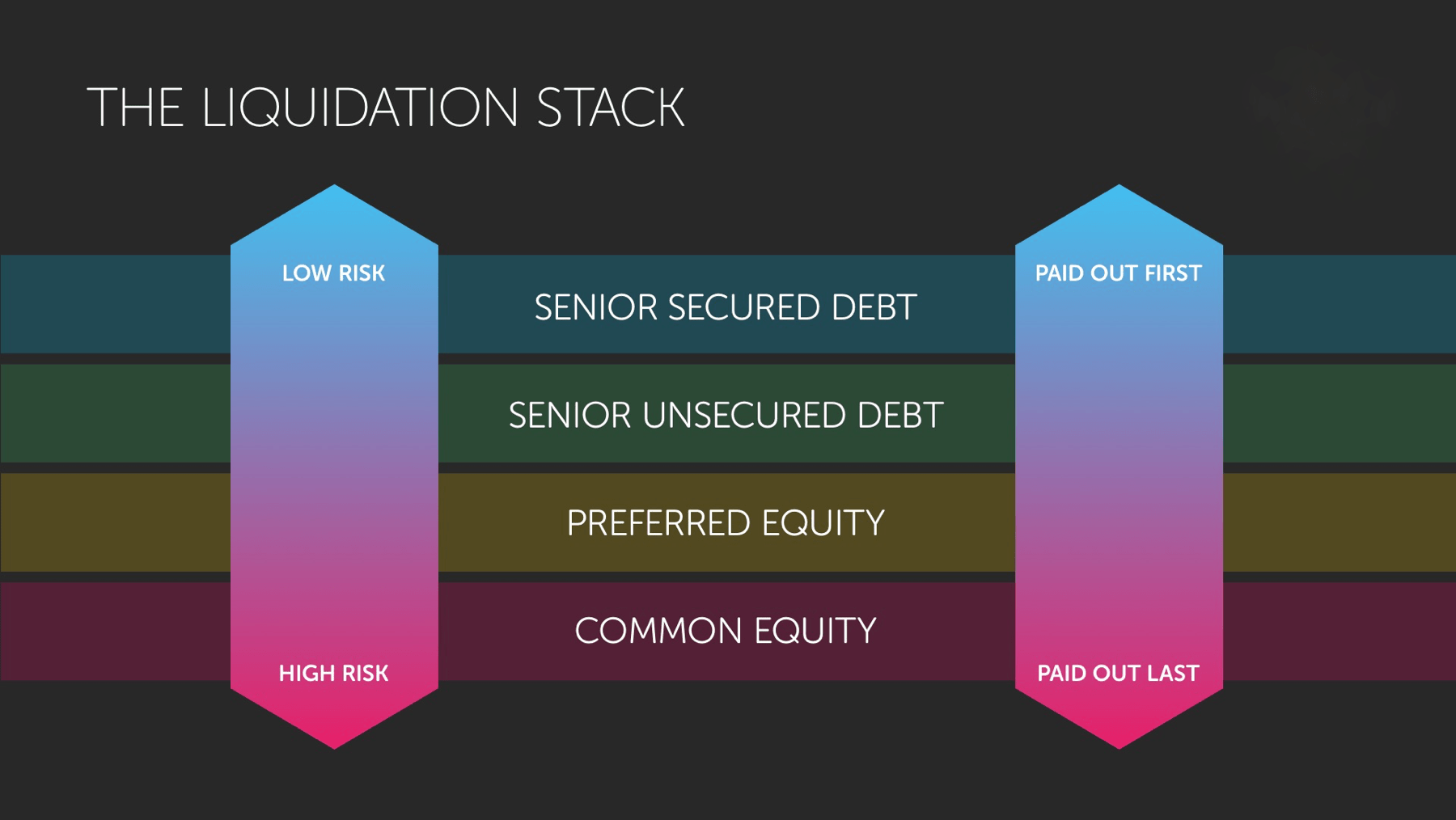
One of the keys to making the right financing choice is understanding the concept of liquidation preferences. When lending money, banks or venture debt providers will require you to pledge certain assets as security against the funds advanced. This is known in the U.S. as a lien (or a charge in the U.K.). Liquidation preference determines which creditors are paid out first if your company ends up in financial difficulties and goes into receivership.
In order to get paid in the event of insolvency, creditors must have a valid and properly secured interest in a specific business asset or assets. But these interests are not all equal. Typically, the ranking order of liquidation preference is as follows:
  • Senior secured debt: i.e. where there are liens over specific assets
  • Senior unsecured debt: loans made to a company without a specific security interest
  • Preferred equity: typically VC funds that get paid out first in a distribution, up to the point of the preference rights negotiated
  • Common equity: typically founders, angels and employees
  • pastedgraphic-1
When considering debt financing for your app business, it’s critical that you understand this order of liquidation preference. You also need to understand the specific assets you are pledging as security for your loan — because creditors holding liens on specific assets have liquidation preference over other creditors. This means that they get paid out first in the event of an insolvency situation. And once assets have been pledged as security to one lender, they can’t be pledged again to another lender.
The assets you pledge as security should be appropriate for how you’re going to use the money you borrow.
The assets you pledge as security should be appropriate for how you’re going to use the money you borrow. For example, if you’re borrowing money against your receivables to fund growth, you should only secure the loan against your receivables. Generally speaking, if an asset can be clearly defined, there’s no reason other assets should be included as security, although lenders will often try to include wider coverage as it improves their overall security position in the event of any default.
Here’s an analogy: When you take out a mortgage to buy a home, you must pledge your home as security for the loan. But the bank doesn’t ask you to also pledge other assets like your vehicles or your future earning capacity (in other words, your personal intellectual property).

Reporting and covenants

One area that often is overlooked when putting debt-based deals in place is the area of reporting and covenants (operational restrictions on running your business, like taking on other borrowings).
Depending on the sophistication of the lender, they most likely will ask for detailed financial reporting from the business in order to constantly monitor its financial health. This reporting requirement could be as often as every seven days, so startups should think through whether they have the available internal resources to produce and update these reports. The alternative is to factor in the time and costs of outsourcing this to their accountants.
The primary reason lenders look for this constant level of detailed reporting is to closely monitor the finances of the company — specifically, with regard to ensuring certain covenants are not breached. They typically will focus on the level of debt within the company, ensuring there is always enough cover for the lender to be repaid. It can take the form of an absolute level or a ratio, such as the debt service coverage ratio or receivables turnover ratio that will give trackable measures of the company’s ability to meet its repayments.

When things go wrong

When considering raising any form of debt, it’s important to always focus on the “downside” scenario. Lenders are wired for risk and downside, whereas early-stage companies — almost by definition — are focused on “upside” scenarios. So it’s important to really think through the downside scenarios and consider very carefully what security you are prepared to grant. You must protect not only company founders and management, but also your investors.
If covenants are breached, it’s likely that a lender will immediately call in the security they have in place in order to recover their funds. These situations can happen very quickly, with companies being forced into administration and having no time to put alternative arrangements in place or find additional investment.
The structural financing decisions you make now could have long-term ramifications on your business.
Consider a situation where the underlying health of a games company is good and a big new title is about to launch that has required significant capital investment to create. Early metrics look promising, but launch timings have run over and the company has sailed a little too close to the wind. Cash flow from their existing portfolio of apps or games has fallen short and payment on some project work had been delayed. As a result, the company breaches its debt covenants and the venture debt provider pulls the facility and calls in the security. This forces the company into receivership before it has time to secure alternative financing.
The receiver’s obligation is to the creditors — in this case, the venture debt provider — not to the venture capital equity investors. So the IP assets of the business end up in a fire sale situation in order to recover the amount of debt outstanding. Anything left over goes to the equity holders, founders and equity investors.

Ramifications of financing decisions

If you are considering raising any form of debt for your company operating in the app economy, it’s critical to work with a provider that intimately understands your business. For starters, you will achieve a lower cost of capital when the risks are better understood by a specialist lender. And by granting security over only the right portfolio of assets, you will not prejudice future financings.
Lenders that operate across a wider range of verticals typically do not have an intimate sector understanding, so they often look to charge higher fees and request a more all-encompassing security package to compensate.
If you need capital to help fund the growth of your app development business, be sure you understand these key financing concepts before you commit to any type of loan — especially when security is involved. The structural financing decisions you make now could have long-term ramifications on your business’ growth potential in the future.

Friday, 3 February 2017

The Road Ahead: Mobile Marketing Resolutions That Industry Leaders Should Keep

adotas.com

Last year was a spectacular year for the mobile advertising industry and it doesn’t seem to be slowing down anytime soon. Mobile ad spend is up 430 percent since 2013, and with more than 2 billion smartphone users worldwide, it’s becoming clear that the future of digital marketing is mobile. Globally, eMarketer predicts mobile will account for 71 percent of all digital spend (and 32 percent of all media) by 2020.
As we continue through 2017, here are three resolutions marketers should work to keep throughout 2017:
Realize Mobile Remarketing is the New CRM
Retaining users and keeping them engaged is more important than simply driving app downloads. According to a study from Localytics, after 30 days only 6 percent of people who installed an app were still using it. This is a big problem in the app ecosystem as retention rates continue to trend downward each year. In 2016, retention rates went from 42 percent to 37 percent, while cost of acquiring new users rose 117 percent.
Two years ago, advertisers were primarily concerned with acquiring as many new users as possible, but as data started coming in as many as 23 percent of users were abandoning the app after opening it just once. Mobile remarketing has become a central strategy for businesses today and is emerging as the new age CRM platform to customize value propositions for users across the lifecycle. In a fiercely competitive environment where smartphone users and app downloads continue to increase, marketers should shift their mindset to measure success based on outreach to lapsed and new users, ensuring apps are continuously used.
Vow to Unlock the Potential of Emerging Markets
Emerging markets present a tremendous opportunity for mobile advertisers. It’s estimated that advertising in emerging markets will be a $300 billion business by 2020. With mobile penetration nearing 80 percent in the US the market here is quite crowded, and it’s a good idea for brands to look closer at emerging markets.
Of all the emerging markets, China is the most exciting, fastest growing with a huge audience, and great purchasing power. According to iResearch, China’s mobile advertising industry has maintained grown more than 160 percent in recent years with advertising revenue expected to exceed $43.5 billion in 2018 up from $13.1 billion in 2015.
As internet usage and smartphone penetration skyrockets in emerging economies, advertisers cannot ignore the opportunity and scale these markets provide.
Embrace the Fact that AR & VR Are Set to Gain Momentum
The success Pokémon GO saw last year generated widespread interest from consumers in augmented and virtual reality apps, but this is just the beginning. As AR and VR become widespread, more developers will begin working in the space, and apps will expand beyond gaming and move into mainstream. The possibilities range from using a VR experience to test drive a car, to retail shopping via VR-enabled transmission to distance learning programs.
According to IDC, it’s estimated that the virtual reality sector reached $5.2 billion last year and is expected to grow to $162 billion in 2020. These numbers will continue to push brands to create revolutionary products over the coming years, and marketers should begin to think about incorporating virtual reality ads into their strategies.
With the constant advances in technology, marketing strategies that worked last year may not be as effective this year. Marketers should always be on the lookout for the next cutting-edge tech trend, and work throughout the year to push the boundaries and stay ahead of the competition.

Snapchat's IPO filing shows its advertising strategy is paying off

finance.yahoo.com
Snapchat parent Snap Inc. filed to go public on Thursday afternoon.
With a valuation reported to be as high as $25 billion, Snap is expected to be the largest public debut of any US-listed technology company since Alibaba (BABA) went public in 2014. 
Investors were able to get a closer look at several key numbers of the notoriously secretive company. According to its SEC filing, the company recorded revenue of $404.5 million and a loss of $514.6 million in 2016, compared to revenue of $58.7 million and a loss of $372.9 million for the year ending December 2015. This represents a year-over-year increase of more than 6 times.
And the company noted that it generates substantially all of its revenue from third-party advertising. In 2016, advertising revenue accounted for 96% of Snapchat’s total revenue.
Snap CEO Evan Spiegel
Snapchat’s advertising products include Snap Ads and Sponsored Creative Tools like Sponsored Geofilters — images that creatively communicate your location — and Sponsored Lenses — which dress up your boring photos by, say, giving you a taco head.
Companies like Pepsi and Taco Bell have quickly realized the colossal opportunity to tap into young minds and their wallets, given that so many millennials use the app. And they’re getting tons of ordinary people to advertise their stuff — whether it’s Gatorade or tacos — for free. And it’s happening on Snapchat.
In its SEC filing, Snap contended that it has also excelled at targeted advertising. It cited an ad campaign with a long-form video attachment to promote deodorant for men. Snapchat said it wanted to ensure that the message reached males between the ages of 13 and 34, and market research firm Millward Brown verified that a whopping 88% of the people who saw the ad fell in the advertiser’s target demographic.
Additionally, over 60% of all Snap ads are watched with the sound on, confirming the idea that the advertisements are highly targeted and engaging to users.
Meanwhile, the company, in an effort to monetize its playful Lenses feature, has given brands an opportunity to create their own sponsored lenses. By partnering with brands like Spotify, Kraft and bareMinerals, Snap enables users to interact with advertisers directly.
“The genius behind the sponsored lens is that Snapchat has created an advertising product that people actually want to see, use, and share,” notes Jefferies’ US internet research team.