Wednesday, 16 November 2016

Why video ads matter and how to maximise their potential

netimperative.com
Mobile technology has reached a point where digital marketers can now integrate high quality production values into mobile ad video content. Mark Rosner, CRO at AppLovin, looks at how brands and agencies can get the most out of mobile video.
Early mobile video ads were ugly, glitchy and impractical. They were slow-to-load, pushing 3G network technology to the max. When they did eventually manage to load, many smartphones simply couldn’t display them adequately. Flash forward to 2016 and 4G-powered tech, and we clearly see that mobile ads are an indispensable platform for brands and agencies. Video ads engage consumers better than any other mobile ad format, delivering fantastic click through rates and engagement.
Business Insider Intelligence report from June, 2016 notes that analysts project that mobile video ads will be the fastest-growing segment in digital advertising through 2020, with a compound annual growth rate (CAGR) of 30 percent.
In a recent data report we conducted with AppsFlyer, the mobile video format has grown from 23 percent to 66 percent of ad spend from January to August 2015, an increase of 190 percent. As you can see in the chart below:
applov
Mobile video ads have already surpassed desktop video ads, and they are expected to become even more popular in the future. This success is rooted in the level of engagement video ads have with consumers: they inform and excite consumers, showing what to expect from products or services. Mobile video offers a great way for consumers to discover and explore before buying, improving brand awareness of product and services. But it’s the best of both worlds because it’s a great brand advertising opportunity in a trackable, direct-response format.
Check out our video ad best practices to help optimise mobile video campaigns:
Watchability:
Ensure video ads are not just simple and entertaining, but paced well. The concept/idea for your video ad content should be simple and easy to grasp; it should also be fast-paced but not confusing. Video ads also need to be entertaining with captivating imagery and an audio soundtrack from start to finish. This video ad from Hotel Tonight is a great example: it entertains and clearly demonstrates how the app works.
Tell a story with clear messages:
To confidently describe the details of a product, static or animated CGI alone might not be enough to fully articulate the unique features and benefits of an app, game or brand. Brands can tell a story much better with video than they can with banners, interstitials or natives. Video ads are such a runaway success with brand and consumers because they can tell stories fast and effectively. Check out this great example from Foursquare:

Focus mobile video on the product:
Compared to all other mobile ad formats, with video, marketers need to very clearly show the benefits of a product or service. This helps consumers to educate themselves about what a game, service or app is all about. Mobile apps are extremely engaging because of the excellent experience they give consumers, because of advantages over web apps across disciplines like UX and UI. This ad from Wishbone demonstrates app functions and shows how prospective users could use it:
Optimise results by sharing data with ad partners
Many brands stall when it comes to sharing down-funnel data with ad partners. But data is vital for comprehending what’s been a success and what requires additional work. What advertisers share can vary based on return on investment objectives, but in general sharing data about how consumers engage in an app post-install can enable them to optimise future mobile video ad campaigns.
These data-points can include in-app purchases, game play for games, browsing behaviour, cart purchase/abandonment rates, and total sales if it’s a commerce app, all of which assist in the customization of ads for future installs. Following the same reasoning, by A/B testing the performance of video ads, digital marketers can capture and analyse core data to help them make smart and informed decisions about mobile video ad campaigns. Giving ad partners post-install data can help them to acquire new consumers and determine at what pace to acquire new users.
Conclusion
Mobile technology has reached a point where digital marketers can now integrate high quality production values into mobile ad video content. Because they beam video messaging into the hands of consumers in milliseconds, mobile video ads are often the most attractive format for brands, media agencies and consumers.
As with TV ads, mobile video ads can have a dramatic effect on brand recognition and awareness, but unlike TV ads, they allow for conversion and real-time tracking directly. Brands and agencies can fully demonstrate key features and benefits for products and services and track in real-time the installs they drive and actual ROI they return. Additionally, testing and sharing data with ad partners can help to further optimise video ad campaigns, helping brands to best support their key business objectives.

Netflix ups app install advertising on Facebook in US

netflix
mobileworldlive.com
Netflix entered the top 20 app install advertisers ranking on Facebook for Q3 2016 in the US, while Lyft topped the Instagram list, according to Sensor Tower.
Based on share of voice (SOV), a way of measuring how much a brand or product is talked about, Netflix increased its Facebook presence by upping advertising around its original content, as it faces slowing growth in the US, the report said.
Three of the top five Facebook advertisers were from the shopping category: Wish, Mercari, and OfferUp (click image to enlarge).
app-install-ads
Back in September, Facebook said it had more than 4 million businesses actively advertising on its platform, while Instagram had 500,000, up from 200,000 in February.
Lyft became the top advertiser on Instagram by share of voice in Q3, climbing from number 15 on the platform in Q2 2016. However, it didn’t make the top 20 on any other platform.
HBO Now was the top app install advertiser on Instagram by SOV in Q2, leading up to the sixth season of popular show Game of Thrones, but in Q3 it dropped to number 12.
Google and Pinterest
Meanwhile, shopping app maker Wish saw impressions surge on Google networks (AdMob, DoubleClick, Adwords, and AdX) in Q3, surpassing Amazon and placing the online retailer at number five for SOV leading into the holiday shopping season.
Ranked number seven in Q2 2016, the YouTube app moved to number 2 in Q3.
As for Pinterest, the number of brick and mortar retailers on its ad network’s top 10 declined slightly over Q2 as women’s clothing app Cupshe moved into the top spot, up from number nine in Q2.

Monday, 14 November 2016

Top 7 Ad Tech Trends in 2016

business2community.com
2016 isn’t over yet but as the year draws to a close, marketers and advertisers, alike, have witnessed trends within their industries that aren’t generally new but are still prevailing. New technologies, platforms and strategies are taking over the advertising world and keeping their authority as we all move into the new year.
But before we clink our glasses of champagne, blow our horns and make new resolutions that we at least plan to stick to until the end of January; lets take a quick look at the top 7 ad tech trends that revolutionized 2016 and are still going to be making strides in 2017.

1. Mobile Rules

This trend has been ongoing for a while now and is likely to continue to grow and expand in 2017.
According to “Marketing Land”, by 2019 72% of the U.S. digital advertising budget will be spent on mobile advertising. 71% of digital marketers who participated in a survey with SalesForce said that mobile marketing is the current core to their business.
With 80% of Internet users currently owning a smart phone, it isn’t a surprise that mobile will continue to rule the marketing and advertising realms.
house2.jpg

2. More Platforms, More Possibilities

Virtual reality has recently become the most exciting, immersive platform that has been released this year with Samsung Gear VR, PlayStation VR and others. For example, Patron Tequila, this year, released their first virtual reality video, which has engaged over 20,000 YouTube viewers.

With this advancement in technology, the rise in internet users connecting their television to the Internet, increase mobile spending, and more; advertisers are going to continue to face the challenge of creating more personalized, unique and engaging advertisement campaigns for their consumers.
pexels-photo-123335.jpeg

3. Messaging is The Future

Chat apps, including Whatsapp, Facebook Messenger, and WeChat, are on the rise and marketers are noticing. This year, more brands are actively utilizing chat-based marketing techniques and advertisements and they are right to do so.
By utilizing native advertising techniques and tailoring ads contextually relevant to each, individual user chat ads have an immediate connection to targeted consumers.
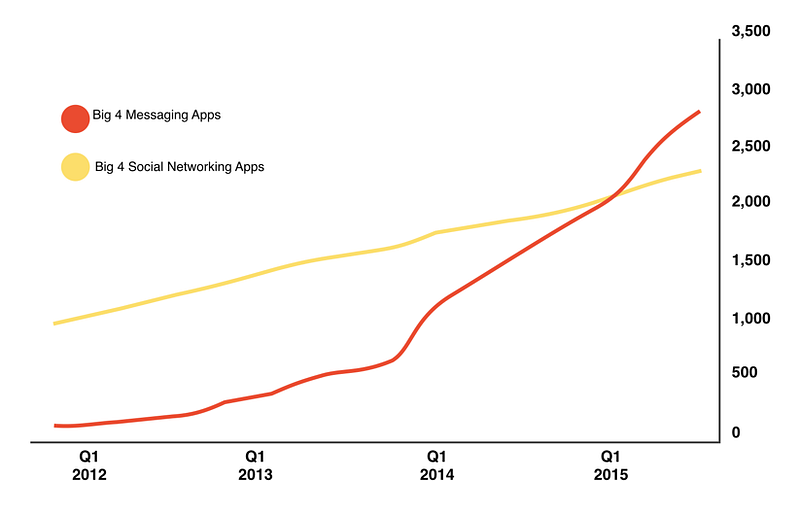
According to a graph provided by KPCB, from 2013 to 2015, the three chat apps listed above gained more active monthly users than Instagram, LinkedIn and Twitter combined!
pexels-photo-173125.jpeg

4. Interactive Ads

Along with native advertising, driving engagement and accessibility on multiple platforms, interactive advertising is the next step for quality content marketing and will have a place in every marketer’s 2017 strategy.
The Internet has created a fast paced world full of visuals, endless information and constant entertainment; it forces many potential consumers to have shorter attention spans. Interactive ads thrive in this world because they allow consumers to present their preferences or interests in a challenge inspired, fun platform.
It also provided marketing and advertising teams the specified data and information they need to create more personalized content and customer experience while also promoting their product.

5. Increased Personalization

As technology advances, data increases and the care for quality increasingly drives marketing and advertising, consumers have learned to expect more from their digital and customer experiences. They know that advertisers should know their every desire and when they have those desires.

Digital Advertising has become all about timing and relevancy, delivering the right ads to the right individual at the right time during their consumer journey. This trend will not likely change in the years to come as customers learn to expect more and more.
smile-color-laugh-black-157907.jpeg

6. Consumer Journey Has More Obstacles

Trends in consumer purchase behavior have increased in complexities. With multiple devices, longer time periods and access to competitors’ information and product research consumers have more to think about before they settle on a purchase.
According to a report by GFK that analyzed insurance buyers, buyers researched 5 different competitors with 9 website visits within 35 days. They spent a small 34 minutes researching these online channels.
This creates challenges for upcoming advertisers and marketers as they are forced not only to grab the consumer’s initial attention, but also maintain it throughout a lengthy consumer journey.
pexels-photo-110215.jpeg

7. Native Advertising For The Win

It seems to become more and more apparent that striking, obnoxious, in- your-face digital advertisements are simply annoying consumers and potentially doing the opposite of their purpose.
In-app advertising lends itself positively to the ad-blocking issue that has and is plaguing advertisers and marketers globally. But advertisers will also have to focus on advertisement content that blends in with the content the consumer already has an active interest in. The ad becomes a bit more sly and appealing to the eye of the consumer if it stays incognito.
city-marketing-lights-night.jpg

Conclusion:
As we move on to 2017 we should allow ourselves a lingering over-shoulder look at 2016 to gain insights on how to better prepare for the digital advertising era that will continue to grow and increase brand revenue. The above trends aren’t likely to fade away and disappear soon, more likely they will continue to alter and evolve the advertising and marketing industries.

Instant apps are publishers’ newest ‘frenemy’ when it comes to monetization

techcrunch.com

Since the dawn of the iPhone, Apple has been designing, revolutionizing and, to some extent, controlling the way people interact with their mobile devices through a marketplace known as the App Store. When the App Store first opened, there were 552 apps. Today, there are 2 million iOS apps, and 2.2 million apps available in Android’s Google Play store. Needless to say, getting a single app noticed in a sea of 4.2 million is far from simple. What’s more, individuals tend to use only a limited number of apps per month, and most of their time in apps is concentrated across a very small number of them, making the job of app marketers even more difficult.
Apps have become the foundation of mobile life. “There’s an app for that!” isn’t just a slogan, it’s a lifestyle. You want to easily book a hotel room from your phone? Download the app.
This could soon change, however, with Google’s introduction of Android Instant Apps, which let people use apps without having to fully download the app. Google’s Instant Apps seem positioned to disrupt monetization efforts for Android developers by blurring the lines on how to define engagement and chipping away at the broader app store economy — making it publishers’ newest frenemy on the block. Let’s explore the hows and whys…

You… you’ve got what I need

Google says it’s “just a friend” trying to help developers bring users into their Android apps quicker, but more likely, Google is working to redirect people’s attention back to the mobile web. As the leader in advertising and search, Google made its name (and money) on the web and wants to keep as many people using it, whether on desktop or mobile.
Currently, only 27 percent of app installs come from search, which is the third-ranking form of app discoverability behind friends and family and browsing the app store. By downloading apps, users are leaving their search engine, most likely Google, and giving the newly downloaded app their undivided attention. Up until a few years ago, Google was unable to index information within apps, so that content didn’t show up in search results and Google wasn’t able to fully monetize from apps.
By distilling down to a single app feature, Google is not only providing a quicker way for users to access the best feature of an app while saving phone memory, they are also able to keep customers in the Google mobile web ecosystem, allowing them to collect more information, enhance their services and make money through advertising. In this respect, Android Instant Apps may diminish a publisher’s opportunities to monetize through in-app mobile ads because people no longer need to spend time installing and using the app on a regular basis.

Publishers’ solution, disguised as a problem

The three most popular monetization strategies for mobile publishers are paid (where someone buys the app), in-app purchases (where someone pays to unlock content or remove ads) and in-app mobile advertising (which includes the videos and banners that pop up every so often). If popularized, Android Instant Apps runs the risk of threatening these three monetization pillars: Why would someone want to pay for an app if they can access it quickly and ad-free via Google’s mobile browser?
Every technological innovation brings with it new security concerns.
App developers face challenges larger than what falls under these three pillars, however. It’s no secret that app retention rates are low, with around 25 percent of users only using an app once after 90 days. Some have argued the app boom is over, as people have been shown to download zero new apps per month.
With Instant Apps, app sharing will involve less friction — when a friend shares a link to an app, you won’t have to go through the rigmarole of launching the app store and wondering if it’s worth using up space on your phone to install. Instead, users can quickly launch the Instant App and access its core features and content.
For example, when sharing a link to a Buzzfeed recipe with a friend, that friend then clicks the link and it launches the Instant App, where they can view the shared recipe quickly and easily. Android Instant Apps could also help publishers expand their existing user base by modularizing their app into different Instant App versions — and in the oversaturated app marketplace, a chance to increase discoverability is always welcomed.
Unfortunately, Android Instant Apps might simply discourage users from downloading the app altogether. And publishers may need to reassess the way they measure engagement — for a streamed instant app, publishers won’t be able to measure engagement by time spent using the native app, and so will have to measure by goal.
For example, a hotel app may see more rooms booked, or Starbucks may find more customers paying through their mobile platform — why take the time and space to download a ticket-booking app you only use a handful of times a year for concert tickets when you could stream it on Instant Apps? Apps that offer a service of this sort, then, may see increased sales as a result of Instant Apps.
While downloads might initially fall, user engagement and retention could increase once people are exposed to the value and usefulness of your app through the mobile web. And a more invested user may be more likely to make in-app purchases and stick around longer, increasing the number of impressions for ads.

What’s next?

At this time, Android Instant Apps are available on select devices running Android 7.0 Nougat, and are being tested by several large companies, including Disney, Medium and Hotel Tonight. Instant Apps, so far, have been loading as fast, if not faster, than mobile web hyperlinks, while providing similar functions as an app. If the speed and product continue to deliver, the future of app development might include Instant Apps as part of their core code, changing the way apps are discovered and delivered. Apple may even include a similar capability for iOS apps to stay competitive with Android.
However, every technological innovation brings with it new security concerns. Google has added pop-up permissions for apps that collect particularly sensitive information, but this feature could allow a malicious developer to run arbitrary app code on a device without prior user consent. What’s more, one may wonder if there’s an inherent inefficiency with web apps: The necessity to run JavaScript and the like instead of native code, the need for cross-platform compatibility and lackluster APIs compared to the ones available to native apps limit what can be done with web apps. Though it’s still too early to determine if Instant Apps are here to stay, one thing is certain: Users want their content delivered to them fast, and Google is on a mission to do just that.
The definition of a frenemy is someone you remain friendly with, often for potential gain, despite a dislike or rivalry. Android Instant Apps may mean that users download less and potentially spend less time in native apps, but they also break down barriers to entry and expose parts of your app to a broader audience, which may ultimately convert them to your product — for the long haul.

How Bots Will Completely Kill Websites and Mobile Apps

chatbotsmagazine.com
By Matt SchlichtCEO of Octane AI
I will explain.
I know… you’re reading this article because you think the title is ridiculous. Bots will never become more popular than websites and mobile apps.How could they?
Right? WRONG!
Not only do I believe that bots will dethrone websites and mobile apps, I actually believe that bots may replace websites and mobile apps altogether.
“But Matt, most people don’t even know what bots are! What are you talking about?! You are crazy.”
Maybe…but guess what? By the time you finish reading this article, I guarantee that you will agree with me. Then we can be crazy together.
Here are the three logical reasons why I believe that bots will completely replace websites and mobile apps.
Ready? Let’s do this.
1. Every business is going to have a bot.
You may not know this, but messaging apps are growing fast. Like, ridiculously fast. Facebook Messenger for example is used by over 1 billion people every month and it is growing faster than Facebook.
That is insane.
If messaging apps become the #1 way people communicate, then every business is going to need a way to engage on these platforms.
“Ok, that makes sense… but how does a business talk to people on messaging apps?”
Great question! There are two ways businesses can talk to people on messaging apps.
  1. The business sets up something similar to a call center where real people are chatting online all day long. This isn’t cost effective and 99% of businesses can never do this.
  2. The business uses a computer to talk to everyone. The computer can respond instantly, can communicate with any number of people simultaneously, and it’s incredibly cost effective. These computers are called bots.
If messaging apps become the #1 way people communicate, and every business needs a strategy to engage with people on messaging apps, and bots are the only scalable way to do this, then every business will eventually have a bot.
“Ok, ok, sure. Every business will have a bot. But why would I ever use their bot instead of their website or mobile app?”
This is where things get even more interesting. Let me explain.
2. Bots will be faster than websites and mobile apps.
Bots aren’t that smart yet. They don’t understand everything you are saying, they can’t teach themselves, and to be honest right now bots are more similar to lightweight apps than artificially intelligent personalities.
But one day we’ll get there.
Imagine a world where the experience of talking to a business via a bot is at least just as good as using its website or mobile app. I believe that in this situation people will choose to talk to the bot rather than go to the website or use the mobile app.
“Uhhh… no Matt. People won’t want to use the bot.”
I understand your skepticism! But I disagree. Here’s why I think people will choose to talk to the bot:
1.     It can take seconds, or even up to a minute, to load a website. Bots load instantly. As long as two products are comparable in value, people will always use the one that loads fastest. In this case, that would be the bot.
2.   Mobile apps need to be downloaded. They take up valuable real estate on your phone and they take time to download. Bots don’t need to be downloaded. You just send them a message and you’re using it.
“Matt, do you really think everyone will use bots just because they load fast and you don’t have to download them?”
No, there’s another reason, and it’s the most important one.
Ready?

3. Bots will be easier to use than any other technology ever created.

Every website and mobile app is designed with a visual interface. Buttons, text, images, and so on.
And guess what? Not every website and mobile app is designed the same. This means that you constantly have to learn new visual interfaces in order to use your favorite products.
Not ideal.
Now, take a second to think about “language” as if it was a different type of interface. Language as an interface is something everyone is taught the moment we are born. Our parents, and others, teach us how to talk, and that’s how we learn to interact with the world around us.
“Makes sense Matt, but where are you going with this?”
Language is the most natural interface humans understand, and that’s the interface that bots use. Instead of needing to constantly learn visual interfaces, bots will enable us to naturally use language, the first interface we were ever taught.
In the future, maybe 5 or 10 years from now, bots will be able to understand you completely. Not like Siri, or anything else you’ve ever used, I mean they will absolutely completely understand what you are saying. Not like a person, but infinitely better.
Think about this.
If you were going to plan a trip today you would go to a travel website. You would browse, find hotels, figure out which ones are in the right area, where the restaurants are, etc. You would have to mentally keep track of everything while figuring out what you want to do.
Now imagine that instead of scrolling through the website yourself, you could actually talk to the travel website via a bot, and it would understand everything you say perfectly. This is going to be one of the biggest shifts in how people interact with computers.
In the future, talking to a bot will be like talking to a real person who has instant access to entire databases of information and can process your thoughts and desires instantly.
This is where the world is going.
To summarize, this is what needs to happen in order for bots to kill websites and mobile apps:
1.     Every business needs to get a bot. This will likely happen because bots are the only scalable way for businesses to communicate with people on message apps.
2.   Bots need to provide as much value, in their own way, as a website or a mobile app.
3.   Machine learning and natural language processing, also referred to as artificial intelligence, need to get good enough so that talking to a bot is more powerful than talking to a human.

Friday, 11 November 2016

Chatbots gain more sophistication and popularity for business applications

zdnet.com
Chatbots have enjoyed wide adoption already, but with new developments in artificial intelligence and other technology, they will become even more useful to businesses
ai-machine-learning.png
Chatbots, computer programs that simulate human conversations through AI, in most cases communicate with real people -- but applications are being developed that enable them to communicate with each other.
The use of chatbots is on the rise, and they are becoming more sophisticated, said Jen Looper, a web and mobile developer and founder of Ladeez First Media, a developer of mobile apps specializing in education and fitness.
They have enjoyed wide adoption in already-popular applications such as Skype, Facebook Messenger, Kik, and Slack, Looper said, and Microsoft and Google have jumped into the development of conversational interfaces in a big way.
For example, Google has acquired API.ai, a platform for building bots, and Microsoft is developing its own Bot Framework, Looper noted. "Facebook's new ability to add payments via Messenger further ups the ante," she said. "Facebook is a particularly important name in the chatbot industry, as Messenger is very popular and it owns WhatsApp. As long as big companies with popular platforms such as these see value in bots, they will continue to grow."
Once a platform or app has started to be widely adopted, it provides a great opportunity for a chatbot integration, Looper said. "Popular apps such as WhatsApp are an ideal arena for the development of chatbots, as they have a vast array of users who use only a minimal number of apps during the day," she said.
If a chatbot can be integrated into those apps in wide use, Looper said, then their integrations allow those users to engage third-party APIs without obliging the user to open a second app. "The rise of chatbots has thus enabled a large segment of [people] to make use of services like Uber and Shopify from within their preferred app ecosystem, never exiting to use a third-party app," she said.
Despite advances in the technology, there are still hurdles to overcome. "Interacting with a chatbot can seem strange and uncanny," Looper said. "As long as artificial intelligence and machine learning continue to evolve as disciplines, so will chatbots."
Developers need tools to efficiently develop bots. "The user interface is minimal, but the actual design of the bot's functionality can be quite complex and difficult to get right," Looper said. "After all, you are trying to create an artificial human interaction that seems natural."
There's clearly potential for businesses to use chatbots for a variety of applications. For instance, a company could use chatbots to act as virtual assistants for visually-impaired people. "They could also be used to make a team more productive," Looper said, by reminding people of meetings, to dispense awards and accolades, and to organize workflows.
"Now that chatbots can handle payments in some apps, e-commerce integrations will surely follow," Looper said. "It's a great time to start developing chatbots."

Instagram Stories get better with new features

marketingland.com

Maybe they're not a Snapchat clone after all. These changes are certainly not like Snapchat


Twin Design / Shutterstock.com
Instagram has just released three new features to its Stories that show that the brand is unique enough to stand on its own. The features include allowing links, mentions and its unique video loop, Boomerang.
With the support for links, currently only available to verified Instagram accounts, a hyperlink can be added to an individual story, and viewers can tap on the link to view the website within the Instagram app. Links are created when the Story is uploaded, and a user will have to tap See More to get more context, allowing the user experience to seem less cluttered but to give content creators what they’re seeking. This is useful to support product purchases, linking a consumer directly to a website where an advertised product within a Story may be featured. Media publications can link to articles directly from their Story, too. There are plenty of marketing applications as well for the new feature, with brands and content creators clearly winning from this new addition.
Mentions is open to the public, not just verified users, and allows users to tag a user on the picture or video with the @ when adding a new Story. Usernames will autocomplete if they’re a contact; up to 10 people can be tagged per story. People who are mentioned will be notified via Instagram, and like mentions within comments, are tappable so that you can access the user’s profile page.
instagram-stories-mentions-functionality
The third and final feature of this rollout is Boomerang, a feature Instagram rolled out last year to create videos with up to five photos that play on a continuous loop. Those creating Instagram Stories can now do so within the app by swiping right to access the Boomerang mode under the record button, versus having to access the Boomerang app separately. This is only available, however, within Stories, and not within the Instagram app. Maybe that’s coming next.
All features are available today and can be utilized by everyone, except links — unless you’re a verified user. Then you get that, too.