Monday, 7 July 2014

Top 10 mobile in-store activations from the first half of 2014 (mobilecommercedaily.com)


Brands are increasingly turning to mobile for acquisitions-oriented solutions

Brands are increasingly turning to mobile for acquisitions-oriented solutions
Pepsi, Unilever and Sephora are among the top brands succeeding in a hyper-competitive environment whereby brands can no longer compete on price alone, and have been able to differentiate themselves with in-store experiences that inspire a new level of customer loyalty.
Mobile is empowering shoppers more than ever before and presents a causal increase in choices which has resulted in higher customer demands and expectations. As brands and retailers seek to help consumers define their own shopping experiences, marketers have changed the way they engage with in-store shoppers by integrating revolutionary mobile solutions during the first half of 2014.
As the holidays approach, in-store mobile touch points will be critical differentiators in enticing shoppers before and during purchase decisions. Here are the top 10 mobile in-store activations from the first half of 2014, in alphabetical order.
Bon-Ton drives in-store gift card redemptions with mobile offer
In response to observing that most retailers do not offer any mobile integration for gift cards, Bon-Ton department stores gave customers that redeemed a gift card in-store on New Year’s Day an extra 10 percent off their purchase via its mobile app.
bonton
Bon-Ton mobile offer
Retailers are on the cutting edge when it comes to mobile gift cards, but most merchants are still lagging in the space even as the opportunities take off thanks to Bluetooth LE, growing availability of NFC, social gift cards and Apple’s AirDrop. Bon-Ton’s high customer response rate to the promotion exemplifies that the digitalization of gift cards and rewards is an in-demand mobile feature that won’t cease.


Coca-Cola experiments with smart fridges to bridge in-store, mobile engagement 
Coca-Cola Australia tested a new type of interactive fridge that leverages augmented reality, facial recognition, social media and mobile to dole out relevant offers and content to specific consumers in-store.
20594
Smart fridge
The technology let marketers push out coupons, promotional material and games based on data that is gleamed from the appliance, such as a shopper’s emotion. Coca-Cola can then theoretically push out different offers to consumers based on demographic information that the fridges’ facial recognition features are picking up, such as age, gender or emotion.
In support of a well-rounded omni-channel strategy, the soda giant’s initiative is a great example of the growing momentum in mobile to extend the in-store shopping experience beyond smartphones and tablets into other types of devices.
Lowe’s strives for competitive advantage with life-size augmented reality experience 
The Lowe’s Holoroom is an immersive experience which enables shoppers to see how products will look in their bathroom using augmented reality and a specially designed tablet. The home improvement guru recognized the difficulty consumers have when trying to visualize a completed room or share their vision with another person, two hurdles which can cause added frustration and deter consumers from actually starting a project.

While Lowe’s is not the first home improvement retailer to leverage augmented reality and mobile to help customers visualize remodeling projects, the Holoroom takes the concept a step further with a more immersive experience. Competitor IKEA launched an augmented reality mobile app as well that enabled users to capture items from its 2014 catalog to see how they would look in their home, but did not offer a truly live experience.
Pepsi’s in-store displays deliver mobile offer with 48pc conversion rate
Pepsi Bottling saw a conversion rate of 48 percent on a  $5-off offer for hockey tickets that was accessible when in-store shoppers scanned or tapped their smartphones against display units.
These results are for the first in-market pilot test of reusable display shells that have QR code and near-field communication technologies built in. The program, which ran during the first quarter of 2014 in the Minneapolis area, delivered a 2.81 percent engagement rate and a 1.34 percent response rate. The consumer was instructed via an image on the transportation asset to ‘tap or snap’ either an NFC logo or a QR code.
Screen-Shot-2014-06-26-at-1_21_08-PM
Pepsi hockey
Pepsi delivered targeted content in the form of an interactive display making use of reusable transportation items already ubiquitous in the retail environment and that Pepsi already owns and uses every day. While much of the focus has been on in-store apps and the use of hardware such as iBeacons to deliver hyperlocal content, the Pepsi campaign shows how brands can enable point-of-sale engagements using assets they already own.
RadioShack looks to spark sales with in-store mobile integration
In its first custom concept store in Manhattan, RadioShack leveraged mobile technology to enhance the in-store experience with the hopes of spurring better sales for the company.
RadioShack-Speaker-Wall
Speaker demo center
The interactive store let consumers discover new products in a new way featuring a speaker wall that could be controlled by in-store tablets to help consumers get a more in-depth feel for the different offerings, and interactive displays that allowed consumers to compare products such as headphones, remote control toys and camera models.
According to a recent Accenture survey, 40 percent of shoppers said the experience retailers need to improve most is in-store, while only 16 percent said online. Additionally, one in five U.S. shoppers plans to increase their in-store purchases in the future. It is obvious RadioShack is working hard to facilitate play in their retail environment. The challenge for all retailers that dedicate more of their space to interaction areas is converting interaction into purchase.
Sephora augmented reality mirror reflects sales potential of digital sampling
Sephora’s Milan location was the first to launch a new 3D augmented reality mirror by ModiFace that simulates cosmetics on a user’s face photo-realistically in real-time, with expectations to transform how women shop for cosmetics.
ModiFace_opt-1
Platform interface
The augmented reality technology, which was first debuted at the 2014 International CES in Las Vegas, expects to make color testing easier by simulating makeup products on a user’s face to show what they would look like in real-time and without having to upload a photo. Created by ModiFace, the technology is also being introduced  to standalone retail kiosks equipped with a touchscreen monitor and camera, as well as a mobile application that can be used on tablets at beauty counters or on consumers’ own handheld devices.


Deciding between beauty products can be daunting, as traditional experimentation consists of applying different products, removing them, and then repeating the process. In traditional, 2D try-on, the goal is that interacting and virtually trying on makeup or skin products will lead to an increase in sales. In many cases, this works well, especially with mobile apps. However, in retail settings, 2D can be slow and cumbersome since you have to wait, pose for a photo and wait for the result. Sephora’s mirror-like real-time 3D virtual simulation will be the ultimate marketing tool.
ShopRite streamlines in-store checkout via customer-facing app 
ShopRite piloted a program that leveraged mobile scanning to simplify the checkout experience for consumers through the Mobile Scan app that saves consumers time by removing the need to wait in line for a cashier. Consumers can buy groceries on their own schedule by simply scanning the bar code on products to add them to their cart.
shoprite2
ShopRite’s Mobile Scan
The grocery vertical has been experimenting with a number of different ways to leverage mobile, as retailers like ShopRite have been investing in personal point-of-sale systems to improve the shopping experience. Now most shoppers are already walking in the door with their own POS device – their smartphone. This kind of application decreases hardware costs and allow grocers to communicate in a personal way with each of their shoppers.
Unilever’s Knorr powers in-store giveaway with mobile 
Knorr brand targeted Hispanic shoppers via an in-store promotion linking mobile to a World Cup soccer toy figure giveaway, which involved placing vending machines in participating Northgate Markets. The glass front of the vending machine functioned much like a mobile device’s touch screen.
After purchasing Knorr chicken flavor bouillon at a Northgate Market, a consumer would type a code from the receipt and his or her mobile phone number into the Knorr vending machine. The vending machine then dispensed a two-inch toy figure, one of three World Cup soccer players.  As the Spanish-speaking population in the United States grows and gains power, marketers are findings ways to target and track it.
Wheaties hands over packaging design via MapMyFitness partnership
In an example of how mobile and social are disrupting traditional packaging design strategies, General Mills’ Wheaties let mobile consumers choose the next athlete to appear on the cereal brand’s packaging by logging workouts on MapMyFitness, a social network for fitness enthusiasts.
21211
The Challenge community
While Wheaties’ association with health and fitness goes back a long time, by leveraging mobile – a popular way for MapMyFitness users to track their workouts and engage with others on the platform – the cereal brand initiated a conversation maintained and owned by consumers themselves. While brands continue to experiment on best practices to reach the mobile consumer, many have found success in placing messaging in and around the context or by actually becoming part of the context, and General Mill’s brand architecture does will in constantly questioning, “what is our purpose?”
Social network use has reached a point of near ubiquity, and the smartest marketers follow their audiences. Brands who create campaigns centered around social are simply positioning themselves for the greatest levels of success.Creating and utilizing unique campaigns for the channels at their disposal is a marketing best practice; generating engagement is all about delivering relevant content to an audience – segmenting the audience based on their preferred channels only stands to strengthen the likelihood of success
Zatarain’s is first CPG brand to leverage beacons in-store 
McCormick & Co.’s Zatarain’s claims to have been the first consumer packaged goods brand leveraging beacon technology to engage directly with shoppers while they are inside a retail location.
The in-app beacon campaign enabled shoppers to receive grocery list reminders and loyalty points from the food and spice brand on their mobile phones. The network leverages beacons to recognize when consumers are nearby a retail location and works with shopping apps to alert users to relevant shopping-related content on their phones when they need it.
20223
A pushed notification
Users experienced an ad encouraging them to try one of the brand’s items, enabled them to tap to get recipes or find the Zatarain’s section inside the store. In 2014, the shopping ecosystem has many relationships with the consumer. And as CPG brands already have robust relationships with their consumers in-store, so do the apps.
It is a two-way conversation that has been happening in the aisles since smartphones and shopping apps became popular and beacons enhance the experience for everyone in the ecosystem by creating an unprecedented opportunity for marketers; for consumers in that they’re receiving highly relevant offers at the point-of-sale; and for retailers because it increases the overall basket size.

How to Remove Likes From Facebook and Why You Should Do It for Your App's Page (sensortower.com)

Some app marketers think that more Likes on their Facebook Page is better because it looks more impressive to new potential customers and it means that you are reaching more people. Having hundreds or even thousands of followers can also give you a warm and fuzzy feeling.
Since you are reading this blog, you know that App Store Optimization is a lower cost way to get more downloads of your app. When done properly, social media can also be a low cost lead generator.
When it comes to Facebook however, more followers can actually be a bad thing. This post will show you exactly why this is the case and how to remove Likes from Facebook Pages to increase the effectiveness of your app marketing.

It’s Not Only About The Money

Some businesses have complained that Facebook is getting too greedy and is reducing the frequency that Page posts appear in follower’s News Feeds, in order to increase ad revenue.
While Facebook does want to increase their revenue, they actually have a bigger problem when it comes to displaying content. With over a billion active users worldwide, that is a lot of potential content.

According to Facebook, the typical user has about 1,500 stories that could show up in a person’s News Feed on every visit. Since that is way more than anyone will ever see, they need to have a way to display the most interesting information first.

How Facebook Determines What Is Displayed

To figure out which posts would be most interesting to an individual, Facebook has an algorithm that scores each potential post and displays the content with the best scores first.
This algorithm used to be called EdgeRank and had three components:
  • (User) Affinity – How likely a user will be to be interested a piece of content, based on their current interests and actions
  • (Content) Weight – How valuable is the content? For example, a comment would have more weight than a Like and is thus more likely to be displayed.
  • (Time) Decay – Recent posts are scored higher than older posts.
While this basic structure is still in place, Facebook stopped calling it EdgeRank and now, more generically, calls it the News Feed ranking algorithm. There are also over 100,000 factors that go into scoring each individual piece of potential display content, instead of just three.

Engagement Is The Key

There is one more thing that wasn’t explicitly mentioned in the previous section: engagement. When a person likes one of your posts or leaves a comment, they not only show their affinity for posts like yours, but that interaction can bump your post up in the News Feed of others that are close to them and have similar interests.
Stories with more likes or comments can get moved up to the top of a News Feed even though it may have been ranked much lower the first time. The same goes with stories that are related to the last 50 actions that a person has taken.
This means that you need to be creating content that people like and will comment on, in order for your posts to be seen as more interesting and to get displayed more often. A more engaged audience also helps when you run paid ads to your followers.
So if you have 300 followers, but are able to reach 100 people with most of your posts because they are very engaging, that is far better than having 3,000 followers and only reaching 10 people because of low engagement. Poor audience engagement can also be a result of fake followers, assuming that you post interesting content on a regular basis and interact with your followers.

Fake Followers You Didn’t Ask For

This then brings up the topic of buying Facebook Likes. You obviously shouldn’t do it because it lowers the engagement with your posts and therefore will be seen by fewer real people.
Fake accounts don’t engage.
But you can also get fake likes organically. People who set up fake Facebook accounts to use in these “Like farms” will try to make their account look as real as possible to try to fool Facebook spam algorithms. Therefore, they will randomly like a bunch of pages so a ton of fake profiles aren’t all liking the same pages.
So how do you combat this? Manually remove those fake Likes from your app’s Facebook Page.

How To Remove Likes From Facebook Pages

Log into Facebook and go to a Page that you are an Admin for. Click on the Settings tab at the top of the screen and click on the Banned Users menu item on the left.

Then you will see a button for a drop down menu that defaults to Banned. Click on the button and select People Who Like This.

Next, you will see a list of people who like your page. Click on the gear to the right of each profile you want to remove and select Remove. The only two options are: Remove and Make Admin, so be careful to choose the right person and option, both are pretty extreme choices.

The next window will verify your choice and you can ban the person permanently by checking the box. If you are sure that the follower is a fake account, you should ban them permanently to save you the trouble of them Liking your page again. You can always add them back, if they are a real person and contact you personally.

What To Look For

If you look at enough Facebook accounts, you can tell which accounts are real and which are fake. But if you are just getting started, there are a few telltale signs:
  • An profile picture that could be of anyone or looks like it was purchased from a stock photo site
  • Only a few posts, usually of random pictures
  • If they aren’t even trying, they won’t have any posts or pictures
  • From a country that is notorious for Like farms, generally India or China, but fake Likes can come from anywhere and they could obviously be lying about their location.

The Downside

If you have a small audience, with only a couple of hundred Likes, then going through all of them is pretty easy. But if you have thousands of Likes, then it will take a lot of time to get rid of the fakes. In this case, hiring someone on a site like Elance can help you sort through your followers for a very reasonable price.
There is also the risk that you could remove real people who are actively sharing and commenting on your content. So before you start pruning your followers, go through your old posts and see who has contributed in the past.

Conclusion

That is how you can remove Likes from your Facebook page, thereby giving your content a better chance of reaching real people. You can also change other options in the General menu of your Page Settings. Restricting viewing to certain countries can be another way that you prevent fake Likes.

We hope that this has been helpful and you can use it to improve the quality of your Page followers. On Facebook, quality trumps quantity…and that is how it should be. So be sure to post quality content, engage and curate the quality of your followers.

Friday, 4 July 2014

App inflation to challenge marketers — Fiksu (mobileworldlive.com)

App marketers are being hit by ‘app inflation’ as the cost of acquiring users and download volumes on Apple’s App Store soars.
According to app marketing company Fiksu, the App Store competitive index, which measures the aggregate daily download volume among the top 200 ranked apps, grew 24 per cent in May to reach 6.6 million. The figure was 5.34 million in April but more than seven million in March.
In addition the cost per loyal user Index in May rose by 17 per cent compared to the previous month to $1.78. This was a 34 per cent year-on-year increase.
Fiksu said that with this increasing download volume, app marketers will need to find more creative ways to find and retain users. Improvements in granular targeting options and optimised app marketing should boost these efforts.
“The increased quality and growing popularity of apps continues to fuel ever-increasing demand, meaning marketers must continually hone their new strategies and spending in the quest to cost-efficiently acquire loyal and engaged users,” said Micah Adler, CEO of Fiksu.
Fiksu also found the cost per launch for apps fell in May. It fell 5 per cent to $0.20 for iOS while Android saw a 20 per cent drop to $0.10.
This was attributed to ‘super users’ who launch apps numerous times during the day, increasing total launches without app marketers needing to acquire new users.
This engagement pattern creates a challenge for marketers, Fiksu noted, as it makes it harder to gain mindshare with users and convert them to loyal fans. This is also likely to have driven the rise on the cost per loyal user.
Fiksu also announced integration of its mobile ad optimisation products with Twitter’s recently-launched Mobile App Promotion technology.
The company participated in Twitter’s beta programme in which it generated more than 80 million impressions and 500,000 clicks on new ads.
“Our integration with Twitter means our mutual clients can take advantage of our deep experience in mobile app install ads combined with Twitter’s immediacy, massive mobile reach and audience targeting possibilities,” Adler noted.

Facebook Touts 1 Billion App Links Served, Adds Support For Mobile App Ads (marketingland.com)

facebook-app-links
Facebook’s App Link program, an open-source, cross-platform standard for linking on mobile devices, has been widely adopted since the program was introduced on April 30 at the F8 Developers conference.
Today Facebook announced in a blog post that developers had enabled more than 1 billion of the links that drive users directly to apps, or specific content within apps. The links can be published from an app, a Facebook page or copy-pasted URLs and have been adopted by apps such as Spotify, Mailbox, Quip, Hulu, Redfin, Goodreads, Live Nation and Vimeo and third party SDKs such as the Xamarin SDK and the Facebook.NET SDK.
“When you are on your phone and click on a Redfin link, App Links takes you to the Redfin app for a more seamless home shopping experience,” Redfin CTO Sasha Aickin said the Facebook blog post. “This is obviously great for our customers and it solves a frustrating development problem that my team — and every other mobile developer — has faced over the years.”
Facebook also announced that App Links can be used within mobile app adds, at least those placed using one of Facebook’s Preferred Marketing Developers.

7 More Apple App Store Categories Now Hand Curated in Europe (sensortower.com)

In the US and Canada, we are used to seeing curated apps come up when we open any category on desktop iTunes or on the iOS App Store. But this isn’t the case in other countries.
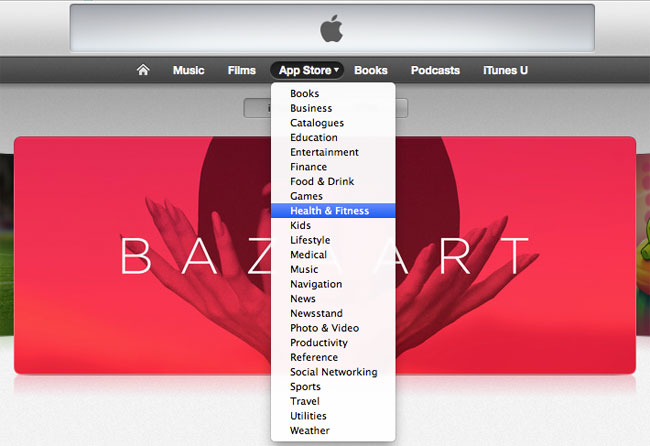
For example, Apple only used to curate apps in the games, kids, education, food and Newsstand categories in Europe. As of this month however, the editorial team is now recommending iOS apps in the productivity, photo & video, sport, music, lifestyle, health and travel categories, bringing the total to 12 out of the 24 primary categories.
This post will show you why this can be beneficial to app publishers and how to research this opportunity for your app.

What Happens Without Curation

If you are not used to seeing what a non-curated category looks like, here is one example. This is the iPhone Books category on the UK App Store.
As you can see, six of the 16 apps displayed at the top are in Chinese and not useful to a majority of the population in the UK. Human curated content would solve this and bring higher quality, UK specific apps into the spotlight.

Now compare that with a category that is curated. Here is the iPhone Lifestyle category in the UK. It is a much more useful experience to users and better publicity for the publishers of these apps.

What This Means To App Publishers

As you probably know, it is almost impossible to get on a curated list in the US unless you know somebody at Apple or your app goes viral. Both options aren’t something you want to hinge the success of your app on.
However, in a smaller market, it can be easier to get noticed, especially if you have an app that is highly localized for a particular country. There are a lot of variables involved, such as: the competitiveness of a category, what the editorial team chooses to feature and how closely they monitor the App Store of that country.
Even though there is no guarantee that you will get featured, being in as many countries as possible increases your chances of getting free publicity by being featured in one of these newly curated categories.
So if you are trying to decide on which country to localize your app for next, studying the size of an app market and which countries curate apps for your category can be something that helps you decide.

How To Research

The easiest way to see what is happening in other countries is to use desktop iTunes. Switching countries on an iOS device can be a little tricky because Apple requires you to have a valid credit card for that country on file.
When you start up iTunes on your desktop or laptop and navigate to the App Store, you will see a very similar homepage across all countries. However, when you navigate to the individual categories, that is when you will start to see country specific apps.
To change the country you are viewing, scroll down to the bottom of the App Store screen and click on the flag bubble in the lower right corner.

From there, you will be able to choose from any of the available App Store countries.

Click on the country you want to examine and you will be brought back to the iTunes home screen. Then choose the App Store category you want to browse from the menu at the top.

Now take a look at the categories that are curated and ones that are not. What kind of opportunities do you see in the curated categories? What types of apps are being featured? How are these featured apps getting noticed by the editorial team?
Curation may actually be a disadvantage in some country/category combinations. Be sure that keep that in mind too.
Your research may give you some great insight or it may be inconclusive. But when optimizing your app for the App Store, you want to leave no stone unturned and these newly curated categories are certainly worth examining for opportunities.

Conclusion

The announcement to add more curated categories to App Stores outside the US and Canada is good news, not only for users in these countries, but also for app publishers who have already published in these countries or are looking to localize their app and expand internationally.
Just like the curated app lists in the US and Canada, there is no guarantee that you will be able to get your app on one of these lists. But they can give you the opportunity to be become a big fish in a smaller pond.
The bottom line is that Apple is taking steps to improve app discovery in any way they can and adding curated categories to foreign App Stores is another way that they are doing it. Localization can help you leverage these improvements to get more downloads.

Thursday, 3 July 2014

Better Creative, Analytics and Reporting Needed to Improve Mobile Ad Effectiveness (emarketer.com)


Marketers consulted by eMarketer gave mobile ads a B-minus for effectiveness 
Multiple factors need to be taken into account when gauging the effectiveness of mobile display advertising. All told, marketing and digital advertising experts consulted for a new eMarketer report gave mobile display advertising a B-minus for effectiveness.
eMarketer estimates steep growth (82.3%) in the amount spent on mobile display advertising in the US this year. Still, spending on mobile advertising lags the time spent with mobile devices, so the uptick in expenditure will not necessarily translate into dramatic increases in mobile display CPMs. Supply will likely continue to outpace demand, which will keep CPMs relatively stable. However, eCPMs, which signal the effectiveness of campaigns, are expected to rise further as marketers push agencies for tailored creative assets—ads that leverage mobile device features and take consumers’ mobile behaviors into account—and push the industry for better tools to measure and optimize return on investment (ROI).

When the marketing and digital advertising experts consulted for our report, “Mobile Advertising Scorecard: Marketers Give Mobile Display a B-Minus for Effectiveness,” were asked what it would take for the effectiveness of mobile display advertising to improve further, answers revolved around four key areas:
Standards: Guidelines for creative development, user tracking and results reporting across devices need to be more cohesive. Benchmarks are also needed to enable marketers to compare the effectiveness of mobile display advertising with advertising in other media.
Measurement tools: Better analytics and measurement solutions are needed to gauge ROI and lifetime value. Off-the-rack-type tools that enable marketers to measure ad engagement and attribute investments made in mobile display ads to sales across channels would be ideal.
Improved creative: A migration away from static banners toward interactive formats that make use of all the capabilities on the device and are integrated with the content experience is necessary.
Data integration: The ability to tie mobile users back into other data sets that marketers already own requires significant improvement. Most of these items have been on marketers’ wish lists for several years, and it’s not likely all five items will be checked off this year. However, given the migration of ad dollars to mobile, most expect to at least see improvements in all five areas in 2014, particularly with respect to creative execution and analytics tools.

Mobile-First Is Dead, Says Google Display Ad Chief Neal Mohan (forbes.com)

“Mobile-first” has been the battle cry in the last couple of years for every company online, from startups to Facebook, as more and more people flock to apps and the mobile Web from smartphones instead of their computers. The idea is that if you don’t design your website or ad to work on mobile devices first, you’re an idiot.
But a top Google ad executive says that’s no longer good enough, at least for advertisers, app makers, online publishers and, most of all, consumers. Speaking at the semi-private RampUp online ad conference today in Mountain View, Neal Mohan, Google’s vice president of display advertising, said the key now and going forward is to develop ads that work across multiple screens.
“If you’re just focusing on mobile, you’re solving yesterday’s problems,” Mohan said at the conference, put on by the ad data firm LiveRamp. Throughout the day, he said, consumers are flitting back and forth among many devices, from smartphones to desktops and laptops to tablets to TVs.
“90% of consumers start a task on one device and finish it on another,” he noted. “Consumers are way ahead of where advertisers and publishers are.”
As a result, he said, ad formats need to work on multiple devices simultaneously. “It needs to be something that can seamlessly take advantage of the characteristics of each device,” he said. “Our messages need to adapt to that. When I talk to brand and advertisers and agencies, I don’t talk about something that’s device-specific.”
A skeptic might wonder if Mohan’s insistence that multi-device rather than mobile-first advertising is self-serving, since Google has seen falling ad prices largely blamed on advertisers paying less for mobile ads. But it’s clear that people are growing increasingly comfortable juggling their online activities among many devices–with more, such as smart watches and Google Glass, still to come.

Google’s not alone, either. “In two years, we won’t be talking about mobile,” Greg Coleman, president of ad tech firm Criteo, said at conference panel. “We’ll just talk about reach.”
At the same time, this multiple-device behavior is affecting automated advertising variously known as programmatic or real-time bidding, in which ads are targeted to people in real time. ”That concept should apply regardless of the device,” Mohan said. “We’ve seen a lot of success with advertisers shifting from desktop programmatic to multiple screens. I’m just as bullish on programmatic selling on a multi-device world.”
Overall, Mohan said, the key to more advertising flowing from traditional channels such as television and print is not better technology but better ads. “All of this technology doesn’t matter unless the message is something that resonates with consumers. There’s no way of getting around that,” he said.

LiveRamp CEO Auren Hoffman and Google Display VP Neal Mohan

One way Google is forcing that issue is offering people the option not to watch an ad on YouTube or its display-ad network of some 2 million websites. TrueView ads on YouTube and Engagement Ads on the Google Display Network let people skip an ad or opt to see a bigger one, and while many skip ads, many do not. “We see a 3% engagement rate [on Engagement Ads], compared with a 0.1% click-through rate” of most display ads. That’s the way most advertising will happen in the digital world.